Black Hairstyles Over 50: 9 Options Compared by Upkeep

The best Black hairstyles over 50 are the ones that match your texture, your scalp and the time you want to spend on your hair. For most people that means a short natural cut, twists, a wash-and-go, locs or a low-tension braided style. Below, we compare nine options side by side, then show you how to preview them before you commit.
I have sat in the chair hours before the first section was parted, wondering if the style in my head would look like me. That wait is the part nobody talks about. Past 50, the stakes feel higher, and you want a look you can love for weeks, not one you regret by Tuesday.
TL;DR
- Low-manipulation styles such as Bantu knots, two-strand twists and a TWA are the ones stylists in AARP’s guide recommend for hair over 50.
- Aging can reduce scalp oil and luster, so curly hair may feel drier. Pick styles that let you moisturize easily.
- Braids and extensions are fine, but tight braids, glue and heavy extensions can damage hair and scalp.
- Gray hair works in almost every style here, from a salt-and-pepper TWA to gray locs.
- Preview any cut or braid on your own photo first with our try-on, which starts with 2 complimentary credits.
Table of Contents
- What changes after 50, and why it matters for your style
- Nine hairstyles compared
- Short cuts: TWA, taper and pixie
- Natural styles with length: wash-and-go, twists and Bantu knots
- Braids, locs and protective styles
- Wearing gray and silver
- Which styles are quickest to wear and maintain?
- Care that keeps any of these looking good
- Perspective
- Preview your next look before you commit
- FAQ
- Sources
What changes after 50, and why it matters for your style
Turning 50 does not mean wearing a particular hairstyle. One of the guides we reviewed puts it simply: choices can reflect your texture, lifestyle, personality and maintenance preferences. I agree with that completely.
What does change is the hair itself. A peer-reviewed dermatology review explains that aging can reduce sebum and hair luster, and that curly African hair may be drier because scalp oil has a harder time coating the full strand. If your hair feels thirstier than it did at 35, that is not in your head.
So the question shifts. It is less about what is trending and more about three things:
- Moisture access. Can you reach your scalp and strands easily?
- Tension. Does the style pull on your edges or hairline?
- Time. How many mornings do you want to spend on it?
Stylists quoted by AARP recommend low-manipulation styles and warn against daily restyling and high-tension looks. Keep those three questions in mind as you read the comparison.
Nine hairstyles compared
This table is a starting point. Upkeep and tension depend on your stylist, your texture and how the style is installed.
| Style | Daily effort | Scalp and edge comfort | Good fit if you want |
|---|---|---|---|
| TWA (teeny weeny afro) | Low | No tension, easy to moisturize | A bold, clean look that is simple to maintain |
| Tapered cut | Low to medium | No tension | Shape and polish with length left on top |
| Pixie or curly crop | Medium | No tension | Softness and a styled finish |
| Wash-and-go | Medium | No tension | Defined curls and natural volume |
| Two-strand or mini twists | Low once installed | Gentle if not pulled tight | Weeks of easy wear |
| Flat twists and updos | Low | Scalp stays reachable | Polished looks for work and events |
| Bantu knots or twist-outs | Low to medium | Gentle | Curls without heat |
| Locs or Sisterlocks | Low once established | Gentle if retightening is not aggressive | A long-term, signature style |
| Knotless or box braids | Low once installed | Depends on size, weight and tension | Length and a break from daily styling |
Short cuts: TWA, taper and pixie
Short styles are popular for good reason. They are light, they take moisture well and they put your face front and center.
TWA
A TWA is a very short cropped afro, commonly around two inches or less. It is the simplest option here. Wash, moisturize, shape, go. A salt-and-pepper TWA is one of the most striking gray looks around, and it needs very little from you.
Tapered cut
A natural taper keeps the sides and back close while leaving length on top, which makes it adaptable to curly and coily hair. If you want something sharper than a TWA but still easy, this is the one to ask your barber or stylist about.
Pixie
The pixie has cropped sides and back with longer top layers. It can go sleek or textured. The risk is that a pixie is a real commitment: you cannot un-cut it. That is exactly why we built a catalog of short styles you can try on first. Our guides on short pixie cuts for Black hair and previewing short natural hairstyles walk through how to match a cut to your texture.
Natural styles with length: wash-and-go, twists and Bantu knots
If you are not ready to cut, there is a lot of room between a TWA and long braids.
One guide lists wash-and-go curls, twist-outs, braid-outs, two-strand or mini twists, puffs, buns, flat twists, layered curls and Bantu knots as popular choices. Another gallery adds finger coils and flat-twist updos.
What I like about this group is access. Essence’s expert roundup points out that flat twists and similar low-tension designs keep the scalp easy to hydrate and monitor. When your scalp is drier than it used to be, that matters.
Flat twists also dress up well. A twisted updo works at the office and at a wedding. If an event is coming, half-up ideas for different hair lengths can spark variations on your natural texture. Our own guide to natural updo hairstyles for every texture and length goes deeper, and the one on twist hairstyles, sizing and care helps you choose a twist size.
Braids, locs and protective styles
Braids and locs give you the longest break from daily styling. They also deserve a clear-eyed look at tension.
Locs and Sisterlocks
Locs are versatile and potentially low-maintenance, and shorter loc lengths are an option too. Gray hair locs beautifully. If you want something that grows with you for years, this is the long game.

Box braids and knotless braids
Braids, weaves and extensions may be worn for weeks to months, but dermatologists note that tight braids, adhesives and excessive extension weight can damage hair and scalp. The same source separates truly protective styling from styling that only hides your hair. Ask your braider for a lighter size and a gentler install, especially around the hairline.
Essence’s experts list knotless braids, flat twists, braided buns, halo braids, crochet styles and low-tension sew-ins as low-manipulation choices. Our guides cover knotless braid styles, scalp-safe box braids and braided ponytails that protect your edges. If you are torn on timing, see braids versus twists for how long each tends to last.
If you add extensions, how you care for them matters as much as how they are installed. This extension care guide covers aftercare basics.

Wearing gray and silver
Gray is not a problem to solve. It is a texture and a color that suits almost everything above. A gallery of gray looks shows a salt-and-pepper TWA, tapered natural, gray afro, gray box braids, gray locs and gray faux locs.
If you want to color instead of going silver, AARP’s guide says semipermanent color can suit hair that is about 30% gray, and the stylist it cites says demi-permanent color lasts through about 20 to 25 shampoos. The same piece reports that permanent color and lifting can be more damaging, and advises avoiding permanent color on relaxed hair because both are harsh chemical treatments. Talk to a stylist who works with textured hair before you color relaxed hair.
If you are growing out gray and thinking about a big chop, one stylist suggests growing the silver in several inches, around six months, before choosing a short cut. That gives you more to work with and a clearer picture of your gray pattern. It is also a perfect moment to preview cuts before you sit down.
Which styles are quickest to wear and maintain?
If time is your priority, rank your options like this.
- Fastest: a TWA or tapered cut. Moisturize, shape, done.
- Fast once installed: twists, flat twists and braided buns. You leave them alone for weeks while still reaching your scalp.
- Moderate: wash-and-go and twist-outs. They look great but need some product and a little time on wash day.
- Longest-lasting: locs and braids. Little daily styling, but regular cleansing and moisture still count. Guidance on crochet locs, for example, stresses cleansing, moisture and controlling weight.
No protective style is maintenance-free. That is not a flaw, just how hair works.
Care that keeps any of these looking good
A few habits carry across every style:
- Moisturize in layers. For natural gray hair, one gallery suggests sulfate-free shampoo, a rich conditioner, deep conditioning every one to two weeks, then sealing with butter or light oil.
- Skip daily restyling. Less handling means less breakage.
- Watch your edges. If a style feels tight, it is too tight. Ask for it to be redone.
- Keep your scalp clean. Protective styles still need washing.
If you have scalp pain, thinning at the hairline or sudden shedding, see a dermatologist. That is a medical question, not a styling one.
Perspective
I started StyleMyCrown because choosing a hairstyle should not feel like a gamble.
So many of us have walked out of a salon with something that looked great on the inspiration photo and strange in the mirror. Hair photos rarely show your texture, your face shape or your gray. After 50, that gap feels bigger, because you know your time, your budget and your scalp are worth protecting.
That is why our catalog holds over 528 styles curated for different textures and types, with Black hair at the center and not as an afterthought. You can see a TWA, a taper, flat twists or gray locs on your own photo before anyone picks up a comb.
We also built it with dignity in mind. Face data is processed securely and is never retained or used for AI training.
You do not need permission to change your look at any age. You just deserve a clear picture first.
Christelle
Preview your next look before you commit
Our AR try-on lets you see styles from over 528 options on your own photo, built for Black and textured hair. Start with the 1 Week Trial at $0 and use your 2 complimentary credits to test a TWA, a taper, twists or braids.
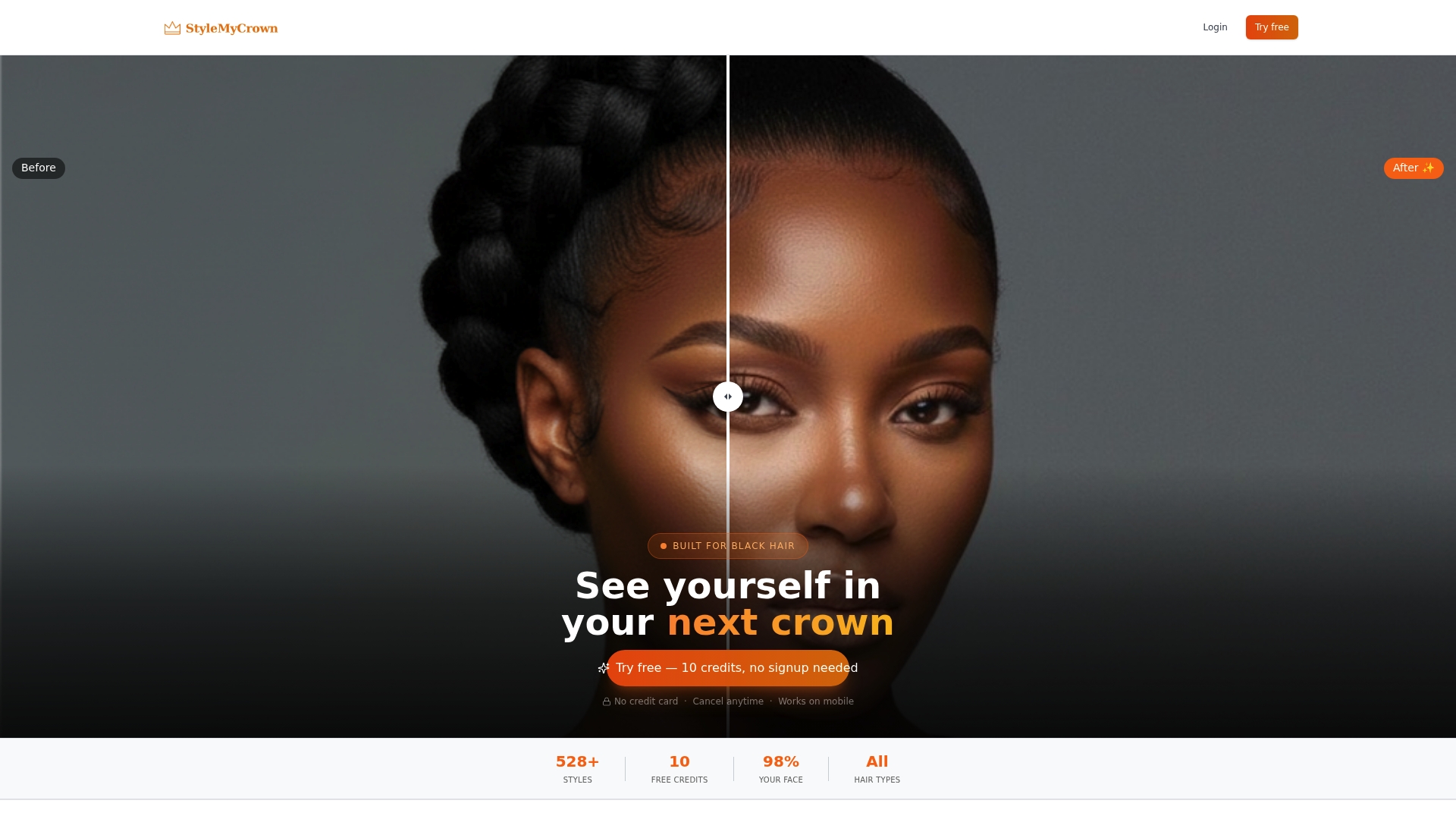
If you love it, the 4 Week Plan is $38.73 per 4 weeks. See the details on the pricing page, or try the virtual try-on now. Stylists can browse the Stylist Catalog to show clients options and shorten consultations.
FAQ
What is the easiest Black hairstyle over 50 to maintain?
A TWA or tapered cut is the simplest, since there is little to style and moisture reaches your scalp easily. Twists and flat twists are close behind once they are installed. Stylists cited by AARP recommend low-manipulation options like these.
Can I wear braids after 50?
Yes. Choose a lighter size and a gentle install, and avoid tension at the hairline. Dermatology guidance warns that tight braids, glue and heavy extensions can damage hair and scalp, so tell your braider if anything feels tight.
How do I wear gray hair in a natural style?
Gray works in a TWA, taper, afro, twists, locs or braids. You can also color it: semipermanent color can suit hair around 30% gray, per AARP’s guide. If you plan to cut short, consider growing it out a few inches first.
How can I know a style suits me before I cut or braid?
Preview it on your own photo. Our try-on covers over 528 styles for Black and textured hair, and you can start with 2 complimentary credits.
Sources
- 7 Tips for African American Hair Care for Women Over 50, AARP
- Hair Aging in Different Races and Ethnicities, Journal of Clinical and Aesthetic Dermatology
- A Primer to Natural Hair Care Practices in Black Patients, MDedge
- 50 Hairstyles for Black Women Over 50, Hairobics
- Natural Hairstyles for Black Women Over 50, InStyle
- The Cutest Short Haircuts for Black Women, InStyle
- Short natural haircuts for black females over 50, Taper.ca
- Natural Hairstyles for Black Women Over 50, Afro By Daisy
- Best End-of-Summer Protective Styles and Tips, Essence
- 22 Classy Gray Hair Ideas for Black Women Over 50, ChicnStylish
- How to Embrace Your Silver Hair, Cindy Hattersley Design
- How Do I Care for Crochet Locs?, NaturAll Club


