Locs vs Braids: Maintenance Checklist and Virtual Try On

Locs vs Braids: Maintenance Checklist and Virtual Try On
Locs make the most sense when you want a long-term commitment and less daily manipulation once your hair matures. Braids make more sense when you want to switch up your look every few weeks or need a protective style with an easy exit. The real trade-off isn’t beauty, it’s rhythm: locs ask for patience and a maintenance schedule that stretches over years, while braids ask for more frequent salon visits but give you total freedom to change your mind.
TL;DR:
Locs are a long-term hairstyle that takes 12 to 24 months to fully mature and require less frequent manipulation once established.
Braids typically last 4 to 8 weeks per install and offer greater versatility for changing styles or colors regularly.
Product use for locs should focus on lightweight, residue-free oils and weekly clarifying washes, while braids need scalp moisturizers and gentle cleansers to prevent tension.
Transitioning from braids to locs is easier than reversing mature locs into braids; consult a professional to avoid damage during conversion.
The decision involves cultural history and personal identity, with locs linked to spiritual and cultural expression and braids historically serving as symbols of social status and resistance.
Table of Contents
Locs Vs Braids: What Actually Separates These Styles
Before you can decide between locs and braids, you need to know what you’re actually comparing. These aren’t just two hairstyles, they’re two completely different relationships with your hair.
Locs form when hair strands coil, mat, and lock into permanent rope-like sections over time. There’s no “starter” and “finished” loc, there’s a starter phase (usually called baby locs) and a mature phase that can take over a year to fully lock. Common starter techniques include:
-
Two-strand twists: two sections wrapped around each other, the gentlest starting method
-
Comb coils: small coiled sections using a cattail comb, popular for finer hair
-
Interlocking: a tool pulls hair through the loc’s base in a knot, which speeds up locking but requires a skilled hand
-
Palm rolling: rolling the loc between your palms to encourage coiling, low tension but slower results
Braids are woven, not locked, which means they can be taken down whenever you want. Box braids, cornrows, and knotless braids are the most common styles, and each carries different weight and tension depending on whether you add extensions. Knotless braids in particular start with your natural hair before feeding in extension hair, which reduces tension at the root compared to traditional box braids.
Then there’s the middle ground. Faux locs wrap synthetic or human hair around your natural hair to mimic mature locs without the years-long commitment, and they come out just like a braid style would. Braidlocs use a braiding pattern instead of a twist to start permanent locs, giving you a flatter, more uniform base while still locking for good.
How Do Maintenance Routines Compare Day to Day?
The daily grind is where locs and braids really part ways, and it’s usually the deciding factor for people choosing between them.
Washing frequency and products. Locs need washing every one to two weeks with a residue-free, clarifying shampoo, since regular shampoo can leave buildup trapped inside the coil that’s nearly impossible to rinse out later. Braids can go two to three weeks between washes because the protective style is meant to reduce daily manipulation, but a diluted shampoo applied at the scalp still matters for keeping the roots clean.
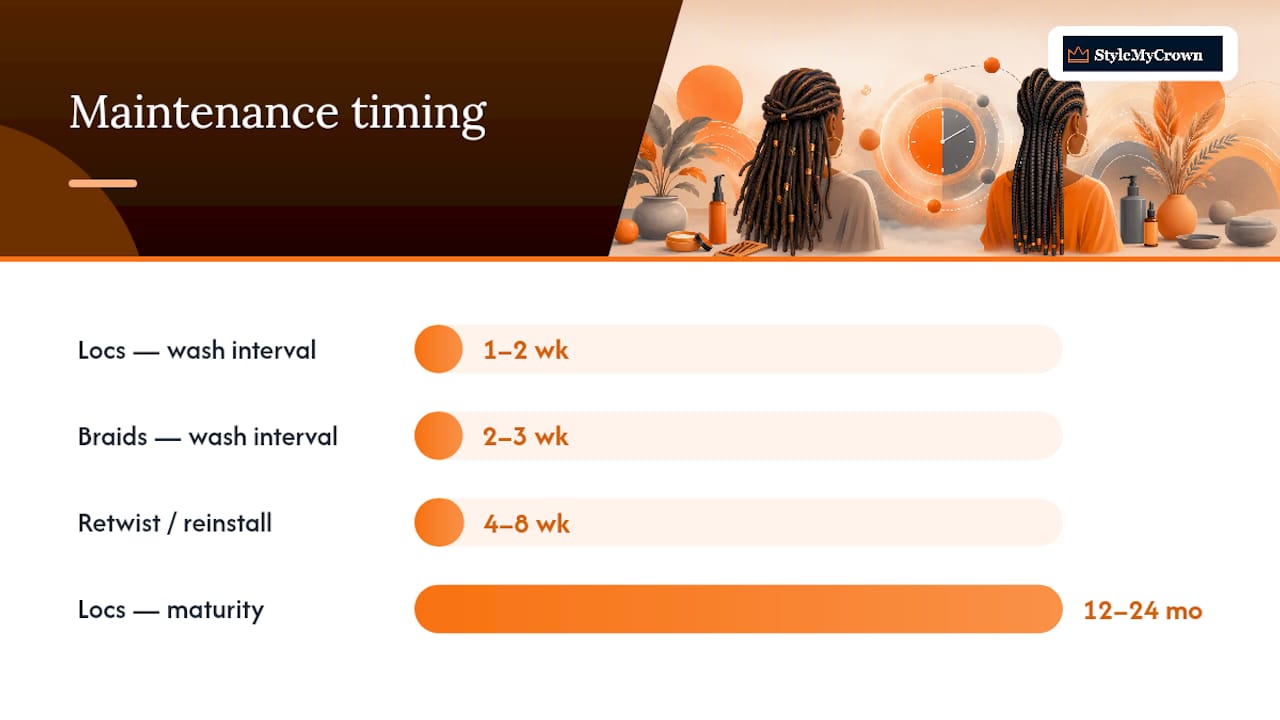
Retwisting and reinstallation. Locs typically need a retwist or interlock session every four to eight weeks to keep new growth neat and prevent frizz at the root. Braids follow a similar four to eight week window before they need to come down and get redone, mostly because new growth loosens the pattern and extensions start to look worn. Full loc maturity, meanwhile, commonly takes 12 to 24 months, which is a much longer runway than any single braid install will ever last.
Here’s a simple way to think about the rhythm:
-
Weeks 1 to 4: Locs stay low maintenance, minimal product. Braids need edge protection and occasional root moisturizing.
-
Weeks 4 to 8: Locs get their first retwist or palm roll touch up. Braids typically reach the end of their wearable life and come down.
-
Months 12 to 24: Locs reach maturity and begin locking on their own. Braids have cycled through several fresh installs by this point.
Buildup is the hidden enemy for locs specifically. Heavy butters and waxes trap lint, dead skin, and product residue inside the coil, which leads to that musty odor stylists warn about. Lightweight, water-based moisturizers applied before a light oil work far better than heavy pomades.
Pro Tip: If your locs start smelling off between washes, don’t reach for more oil. An apple cider vinegar rinse once a month strips residue without stripping moisture, and it’s gentler than a full clarifying wash every week.
Sleep protection matters for both styles. A satin bonnet or pillowcase prevents the frizz and friction that undoes days of careful styling, whether you’re protecting a fresh braid pattern or a set of maturing locs.
Locs Vs Braids Side By Side: The Full Comparison
Numbers make this decision easier than opinions do. Here’s how the two styles stack up across the factors that actually affect your daily life.
| Factor | Locs | Braids |
|---|---|---|
| Permanence/timeline | Permanent once mature; 12 to 24 months to fully lock | Temporary; each install lasts 4 to 8 weeks |
| Maintenance frequency | Retwist or interlock every 4 to 8 weeks | Reinstall every 4 to 8 weeks |
| Styling versatility | Limited once locked; updos and accessories still work | High; endless sizes, colors, and parting patterns |
| Traction/edge risk | Low once mature, higher during tight starter phases | Higher with heavy extensions, lower with knotless technique |
| Installation time and cost | Hours for a retwist; higher upfront investment over years | 2 to 8 hours per install; recurring cost every cycle |
Two things jump out here. If low daily effort and a long-term look matter more than variety, locs win once you get past the starter phase. If you want to change your hair color, length, or texture every month without growing anything out, braids are the better fit.
A few nuances matter more than the table shows. Starter locs behave nothing like mature locs, they need far gentler handling and less product. And knotless braids with modest extension weight carry meaningfully less traction risk than a heavy, extension-loaded box braid install, so “braids” as a category isn’t one uniform risk level.
How To Choose: A Decision Checklist For Your Consultation
Picking between locs and braids gets a lot easier when you walk into your consultation with the right questions instead of just a picture on your phone.
Run through this checklist first:
-
Commitment level: Are you ready for a style that’s part of your identity for years, or do you want the freedom to change your mind next month?
-
Edge history: Have you dealt with thinning or traction alopecia before? If yes, lean toward lighter techniques regardless of style.
-
Budget shape: Can you handle a bigger upfront investment for less frequent visits, or would you rather spread cost across more frequent, shorter appointments?
-
Appointment availability: Does your schedule support a stylist who books out weeks in advance for retwists, or do you need more flexible booking?
-
Drying needs: Do you have time for the longer drying window locs sometimes require after washing, especially in humid climates?
Once you’re in the chair, ask directly:
-
“What starter technique do you recommend for my hair texture and why?”
-
“What’s your product policy, do you use wax or residue-heavy products?”
-
“How do you prevent tension at the root during installation?”
-
“What’s the realistic maintenance schedule you’d put me on?”
Pro Tip: If a stylist can’t answer the tension question specifically, or reaches for heavy wax as their default product, that’s your cue to keep looking. A skilled loctician or braider should talk about prevention before you even ask.
Watch for red flags: heavy wax use, insistence on tight installs “for longevity,” or a stylist who brushes off aftercare questions. Those habits are exactly what dermatology sources point to when explaining traction alopecia risk.
Your First Year Care Plan And The Mistakes That Undo It
The first six to twelve months set the tone for how your locs or braids age, and most damage happens from small habits repeated too often.
Build this into your weekly routine:
-
Protect your style with a satin bonnet or pillowcase every night, no exceptions.
-
Mist with a light, water-based spray between washes instead of piling on oil.
-
Massage your scalp gently during wash day to keep circulation healthy at the root.
-
Stick to your wash schedule (weekly to biweekly for locs, every two to three weeks for braids).
If you’re starting locs, limit manipulation in the first few months. Constant retwisting or palm rolling before the hair is ready to lock actually slows the process down and stresses the root. If you’re wearing braids, keep tension light around your hairline and take them down on schedule rather than pushing past eight weeks just to save a salon trip.
The mistakes that cause the most damage are almost always the same ones: over-oiling locs until they trap buildup, over-manipulating a starter loc before it’s ready, skipping satin protection at night, installing braids too tight “so they last longer,” and letting product residue sit for months without a clarifying wash. Every one of these is preventable with a little discipline and the right product choices.
Can You Switch Between Locs And Braids Safely?
Yes, and it’s more common than most people think. Braids are often used as a transition style into locs because they stabilize new growth during the awkward early months and cut down on the daily detangling that comes with loose natural hair.
Going from braids to locs is the easier direction. Once your braids come out, you can start two-strand twists or comb coils right away since your hair is already used to being sectioned and handled less. Many people use a set of braids specifically to grow out damage or heat-styling stress before committing to locs, treating the braid phase as a runway rather than a final destination.
Going from locs to braids is trickier and depends entirely on how mature your locs are. Baby locs can sometimes be gently unraveled with patience, a lot of conditioner, and a rattail comb, since they haven’t fully matted yet. Mature locs, on the other hand, generally cannot be undone without cutting, because the hair has locked into a permanent structure. If you have mature locs and want braids again, most stylists will recommend a full cut rather than hours of painful, damaging unraveling.
If you’re unsure which category your locs fall into, a consultation with a loctician before you attempt anything at home saves you from turning a simple style change into a hair health emergency. This is also where trying a look on your own photo first can save you from a decision you can’t easily reverse, since previewing braid styles before committing shows you what you’re actually signing up for.
The Cultural Weight Behind Locs And Braids
Neither of these styles started as a beauty trend, and understanding that context changes how you think about the decision.
Braiding patterns trace back thousands of years across West African cultures, where specific styles communicated tribe, age, marital status, and social rank. Cornrows in particular carried practical meaning too, some historians point to braided maps used to help enslaved people remember escape routes, a legacy that turns a protective style into an act of survival and resistance.
Locs carry their own layered history, tied to Rastafarian spiritual practice, ancient Egyptian and Nubian traditions, and a modern reclaiming of natural hair texture that rejects decades of pressure to chemically straighten it. For a lot of people, locking their hair isn’t a style choice at all, it’s a statement about identity and self-acceptance after years of being told their natural texture needed to be altered. Community discussions consistently point to this identity dimension as a bigger factor in the decision than any maintenance chart could capture.
Both styles have also weathered real discrimination, from school dress codes to workplace grooming policies that painted natural styles as “unprofessional.” That history is part of why choosing locs or braids today still feels like more than a beauty decision for a lot of people. It’s worth sitting with that weight, not just the practical side, when you’re deciding what your hair is going to say about you.
What Products Actually Work For Each Style
Product choice makes or breaks both styles, but the right products for locs and the right products for braids aren’t the same, and mixing them up is a common source of frustration.
For locs, lightweight is the rule. Oils like jojoba, rapeseed, or sweet almond seal moisture without weighing the coil down, unlike heavier butters that sit on the surface and attract lint and dust. Pair that with a water-based leave-in spray for daily moisture, and save wax entirely, it’s one of the biggest culprits behind stubborn buildup that no amount of washing seems to fix. A residue-free clarifying shampoo, used every few weeks rather than every wash, keeps the inside of the loc genuinely clean instead of just rinsed on the surface.
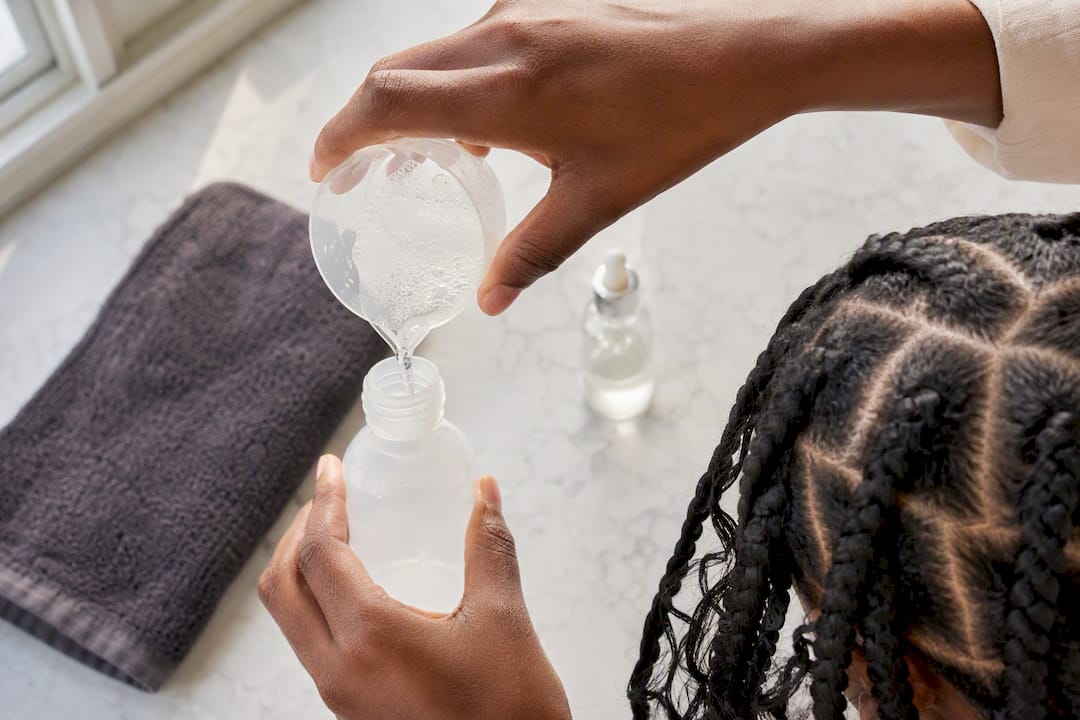
For braids, the priorities shift toward scalp comfort and edge protection. A lightweight, oil-based scalp serum applied directly at the root helps with itchiness without making the braids greasy. An edge control with a lighter hold, rather than a stiff gel, reduces the tension that contributes to traction alopecia around the hairline. Diluted shampoo in a applicator bottle lets you clean the scalp at the root without unraveling the braid pattern itself.
One rule applies to both: skip anything marketed as “extra hold” or “maximum shine” if it’s alcohol heavy, since drying ingredients undo the moisture balance both styles depend on to stay flexible and breakage resistant.
Should You Go To A Professional Or Try It Yourself?
DIY starter locs and DIY braids are both possible, but the risk level isn’t equal, and it matters which one you’re attempting.
Professional installation for locs makes the biggest difference with interlocking or loc extensions, techniques that require skilled placement to avoid uneven locking and root stress. A trained loctician can read your hair density and texture and adjust section size accordingly, something that’s genuinely hard to judge on your own head in a bathroom mirror. Two-strand twists and comb coils are more forgiving for a DIY attempt, especially with a friend helping with the back sections.
Braids are more commonly done at home successfully, especially cornrows and simple box braid patterns, but tension control is the real skill gap between a salon install and a DIY one. It’s genuinely difficult to judge how tight you’re braiding your own hairline when you can’t see it directly, which is exactly the situation that leads to traction alopecia over repeated installs. Knotless braids in particular are hard to execute well without practice, since the feed-in technique that makes them lighter also makes them more technical.
The honest trade-off is time versus risk. DIY saves money and salon wait times, but a professional brings both the technical skill and the objective eye to catch tension problems before they become permanent damage.
Publisher Perspective: Why Preview Before You Commit
The hardest part of choosing between locs and braids usually isn’t the maintenance schedule, it’s the fear of picking wrong and being stuck with it. That’s exactly why previewing a style on your own photo matters more than it sounds like it should. Seeing a wide variety of curated looks on your actual face, using complimentary credits, turns an abstract decision into something concrete before you ever sit in a chair. Pair that preview with the consultation checklist above, and you walk in already knowing the look you want, not just hoping your stylist gets it right.
— Christelle
Try Hairstyles Risk-Free With Stylemycrown
If you’re still torn between a loc install and a fresh set of braids, seeing the look on your own face beats scrolling through someone else’s photos. A virtual hairstyle try-on service lets you upload your picture and preview locs, faux locs, and dozens of braid styles using augmented reality, so you know what actually suits your features before you spend hours in a chair or money on extensions you might not love.
With complimentary credits, you can test a set of locs and a braid style side by side and compare them honestly, no guessing based on someone else’s face shape or hair density. Once you’ve narrowed it down, browse the stylist catalog to find looks that match what you previewed and bring that reference straight into your next consultation. Start your preview today and walk into your appointment already knowing what you want.
Sources
For deeper detail, the traction alopecia guide covers root-level risk factors, while the locs product and care guide breaks down washing and residue prevention in more depth.
FAQ
Do Locs Last Longer Than Braids?
Yes. Mature locs are permanent once fully locked, while braids typically last four to eight weeks before needing removal or reinstallation, according to stylist guides.
What Are The Disadvantages Of Locs?
Locs require patience during a 12 to 24 month maturation period, can trap product buildup and odor if you use heavy waxes, and are difficult or impossible to remove without cutting once fully matured.
Are Locs Considered Braids?
No. Braids are woven and can be undone by unweaving them, while locs form through coiling and matting that locks the hair into a permanent structure. Some starter techniques, like braidlocs, use a braid pattern to begin the locking process, but the end result is not reversible the way a braid is.
What Does The Bible Say About Locs?
Historical and religious commentary connects long, unshorn hair, sometimes described as locs, to Old Testament figures like Samson in the Book of Judges, though interpretations vary widely across denominations and scholars. The topic is more cultural and interpretive than settled doctrine, so treat any specific claim with that caveat.
Which Is Better, Locs Or Braids?
Neither is objectively better, it depends on your priorities. Locs suit people who want a long-term, low-manipulation style, while braids suit people who want frequent change and styling versatility.


