High Porosity Hairstyles: Styles That Hold Moisture

The best hairstyles for high porosity hair are low-tension, low-manipulation looks that keep your ends tucked away and your moisture in: twists, flat twists, chunky cornrows, loose updos and well-moisturized braids. Pick the style around how your hair behaves, then preview it before you sit in the chair for hours. That second step is where we come in: StyleMyCrown lets you try styles on your own photo first, free, and the face never changes, only the hair.
TL;DR
- High porosity hair takes in water fast and loses it fast, so the best styles protect the ends and cut down on daily handling.
- Twists, flat twists, chunky cornrows, braids without heavy extensions and loose updos are the safest starting points.
- Heat, chemical processing and tight, tension-heavy installs are the things to limit.
- A style only works if the hair under it is moisturized, so leave-in conditioner and a satin bonnet matter as much as the style itself.
- Preview the look on your own photo before you book, so you do not spend a whole day on a style that is not you.
Table of Contents
- What high porosity means when you are choosing a style
- Hairstyles that work well for high porosity hair
- Protective styles for high porosity hair
- What to go easy on
- Build the care around the style
- Is 4C hair usually high porosity?
- For parents, men and anyone going natural
- See the style on you before you book
- Try it free
- Our perspective
- FAQ
- Sources
What high porosity means when you are choosing a style
Porosity is how easily your hair lets water in and out. Think of the cuticle as the outer layer of tiny overlapping scales on every strand. When those scales sit flat, moisture moves slowly. When they are lifted, moisture rushes in and escapes just as quickly.
That is high porosity. Healthline’s guide describes hair that absorbs water and products fast but does not retain moisture well. It may feel dry, look frizzy or dull, tangle, break easily and air-dry quickly.
It is also not always something you were born with. The New York Society of Cosmetic Chemists explains that tight curls and coils can have cuticle lifting at the bends of the strand. Grooming friction, repeated wetting and drying, chemical processing and UV exposure can add to it. Health.com adds that it can be natural or come from damage, and that it is common in textured hair.
Why does this matter for hairstyles? Because every style is a decision about how much your hair gets touched, pulled, wet, dried and exposed over the next days or weeks. High porosity hair has less margin for rough handling. A style that suits it does three things:
- It keeps the ends, the oldest and driest part of the strand, protected.
- It limits tension at the root and along the length.
- It lets you add moisture without undoing the whole look.
Porosity can also vary along one strand, according to the same NYSCC overview. Your ends may behave differently from your roots. That is why one style can feel great at the crown and tough at the nape.
Hairstyles that work well for high porosity hair
I have sat through enough long salon days to know this: the style that photographs best is not always the style your hair will thank you for. These are the ones that tend to do both.
Two-strand twists
Two-strand twists are a classic for a reason. Each twist wraps the ends inside the style, so they are not rubbing on your collar or snagging on knits. The Fulham Scalp and Hair Clinic lists two-strand twists among its low-manipulation, low-tension recommendations for afro-textured hair.
You can wear them chunky or small, on short hair or long. They also take leave-in conditioner well, which is the point with high porosity strands.
Flat twists
Flat twists lie against the scalp in rows or patterns. They are tidy, they look intentional, and they keep your hair gathered while you go about your week. The same clinic guidance includes them too. They also work as a base for a twist-out later, so you get two looks from one sitting.
Chunky cornrows and French plaits without extensions
Fewer, larger cornrows put less strain on each section than a head full of tiny ones. The clinic’s guidance specifically names chunky cornrows or French plaits without extensions for hair that needs a gentle approach. For men, this is also a great way to get a defined, neat pattern with a short hair length.

The key word is chunky. A smaller braid means more tension per root, and hair that breaks easily does not need extra pull.
Loose updos
A loose updo such as a puff, a bun or a twisted top knot keeps the length off your shoulders and the ends hidden. It is also on the clinic’s list. Keep the hold soft. Use a snag-free, scrunchie-style tie rather than a tight elastic, and change where the style sits from day to day so one spot does not take all the strain.
Braids and twists with extensions, done lightly
Box braids, knotless braids and Senegalese twists are loved for a reason, and many people with high porosity hair wear them beautifully. What matters is the weight and the tension. Ask for a lighter install, moderate sizes and a smooth, comfortable fit at the roots. If your scalp feels tight or sore, the style is too tight and it should be loosened.
Locs and loc styles
Locs are a long-term commitment, and the style choices around them (updos, barrel twists, pinned styles) can be adjusted to how your ends feel. Because locked hair is not washed or detangled the same way as loose hair, keep the scalp clean and the length moisturized with lightweight products.
Wash and go
A wash and go can be gorgeous on high porosity hair, but it is the most exposed style on this list. The ends are out, the hair dries fast, and frizz shows. If you love it, pair it with a good leave-in and a plan for the next day. If you want something lower maintenance, a twist-out or braid-out gives you definition with more of your hair protected between wears.
Protective styles for high porosity hair
A protective style is a look that tucks your ends away and reduces daily handling, so your hair is not combed, brushed or restyled every morning. Braids, twists, cornrows, buns and wigs worn over a smooth, braided-down base all fall in this family.
For high porosity hair, a few habits make the difference:
- Moisturize before you install. Starting with a clean, conditioned, detangled head gives the style something to hold in.
- Keep the size and weight in check. Heavy installs add stress, and so does leaving a style in far past its best days.
- Use leave-in conditioner for moisture and slip. The Fulham clinic’s guidance recommends it, and slip is exactly what lifted cuticles need when you take a style down.
- Take down short-term styles on time. The same guidance says finger coils should come out after no more than a week to avoid tangles.
- Treat the take-down as part of the style. Rushing it is where much of the breakage happens. Give yourself time, work slowly with conditioner and your fingers, and go section by section.
Wigs deserve a mention here too. A wig can be a very good protective option because your natural hair stays braided down and untouched. The base underneath still needs moisture and a gentle band, and the wig itself should sit comfortably, not pull at your edges.
What to go easy on
High porosity hair is more vulnerable to extra stress. Health.com recommends limiting heat styling and chemical treatments and handling the hair gently to avoid more damage. In styling terms, that means:
- Flat ironing and blow-drying on high heat as your regular routine.
- Frequent color or relaxer touch-ups with little recovery time in between.
- Very tight, very small braids, tight ponytails and slicked-back styles that pull on the hairline.
- Taking styles in and out every few days.
This is not about giving up any look you love. It is about spacing out the hard-on-hair looks and wearing gentler ones in between. If you color your hair, a protective style between appointments gives your strands a rest.
Build the care around the style
A good style on dry hair is a short-lived style. Here is what tends to matter most.
Moisture first, then seal. High porosity hair absorbs products quickly, so layering a water-based leave-in with a cream or oil on top helps keep that moisture in. On the coconut oil question, a 2022 study found coconut-based hair oils prevented increases in measured hair porosity. A textured-hair specialist quoted by Who What Wear said coconut oil may suit high porosity hair better than low porosity hair, but that how your own hair responds is what counts. Start with a small amount on a few sections and see how your hair feels the next day.
Protect at night. Friction from cotton pillowcases roughs up the cuticle. A satin or silk bonnet, scarf or pillowcase is a small habit with a big payoff, and it keeps twists and braids looking fresh longer.
Watch what else touches your hair. Strong fragrance sprayed straight onto strands can dry them. If you like to smell good between wash days, a hair mist instead of perfume is a gentler way to do it.
Trim when it is time. High porosity hair breaks more easily, so dusting off split ends helps your styles look sharper and last longer.
Wash on a rhythm that suits your style. How often you wash depends on your scalp, your style and your routine, so there is no single right number. Keep your scalp clean under braids and twists, and condition the length every time you wash.

Is 4C hair usually high porosity?
Often, but not always. Tightly coiled hair has many bends along each strand, and the NYSCC overview notes that cuticle lifting can happen at those bends. That is one reason high porosity shows up so often in coily and kinky textures. Still, texture and porosity are two different things. You can have 4C hair that is low or medium porosity, and looser curls that are high porosity from color or heat.
The practical takeaway: do not decide your porosity from your curl pattern alone. Notice how your hair behaves. Does it soak up water and products fast? Dry quickly? Frizz and tangle? Those are the signs that matter, and the ones Healthline lists.
For parents, men and anyone going natural
Parents. Kids’ hair is still hair that can dry out and tangle. Soft, loose styles such as chunky twists, flat twists and cornrows with no heavy extensions are kind to little heads, and a short preview helps your child choose what they actually want to wear to school.
Black men. Twists, cornrows and a tapered cut with a defined top all work with high porosity hair. If you are growing your hair out, previewing a style helps you decide whether to go for twists, braids or a cut before committing.
Transitioning or after the big chop. Short natural hair often shows its true porosity for the first time, because the older, more processed lengths are gone. Short twists, twist-outs and flat twists are gentle ways to wear your new hair while it grows. It is an emotional season, and seeing yourself in a style before you try it can make the next step feel less like a leap.
See the style on you before you book
Here is the part nobody talks about. You can do everything right on the hair side and still sit in a chair for six hours, look in the mirror and think, this is not what I pictured.
A preview takes that guesswork out. On StyleMyCrown you upload a photo and see braids, locs, twists, wigs and other styles on yourself. The catalog has over 528 hairstyles, and the Style Catalog is the place to start browsing. Try a chunky twist against a small knotless braid, a flat twist updo against a puff, and see which one feels like you.
Photos are voluntary, never stored, never used for training or sale, and never used for facial recognition.
A few ways to use it with this article:
- Pick two or three low-tension styles from the list above.
- Preview each one on your own photo.
- Save your favorite and bring it to your stylist, so you both start from the same picture.
Stylists, this also helps on your side of the chair: a shared picture can shorten the consultation.
Try it free
The try-on is free for shoppers, with complimentary credits to experiment. Salons can license it for their booking flow at $49 per month, and wig sellers and hair brands can license it so shoppers buy with confidence. You can see every plan on the pricing page.
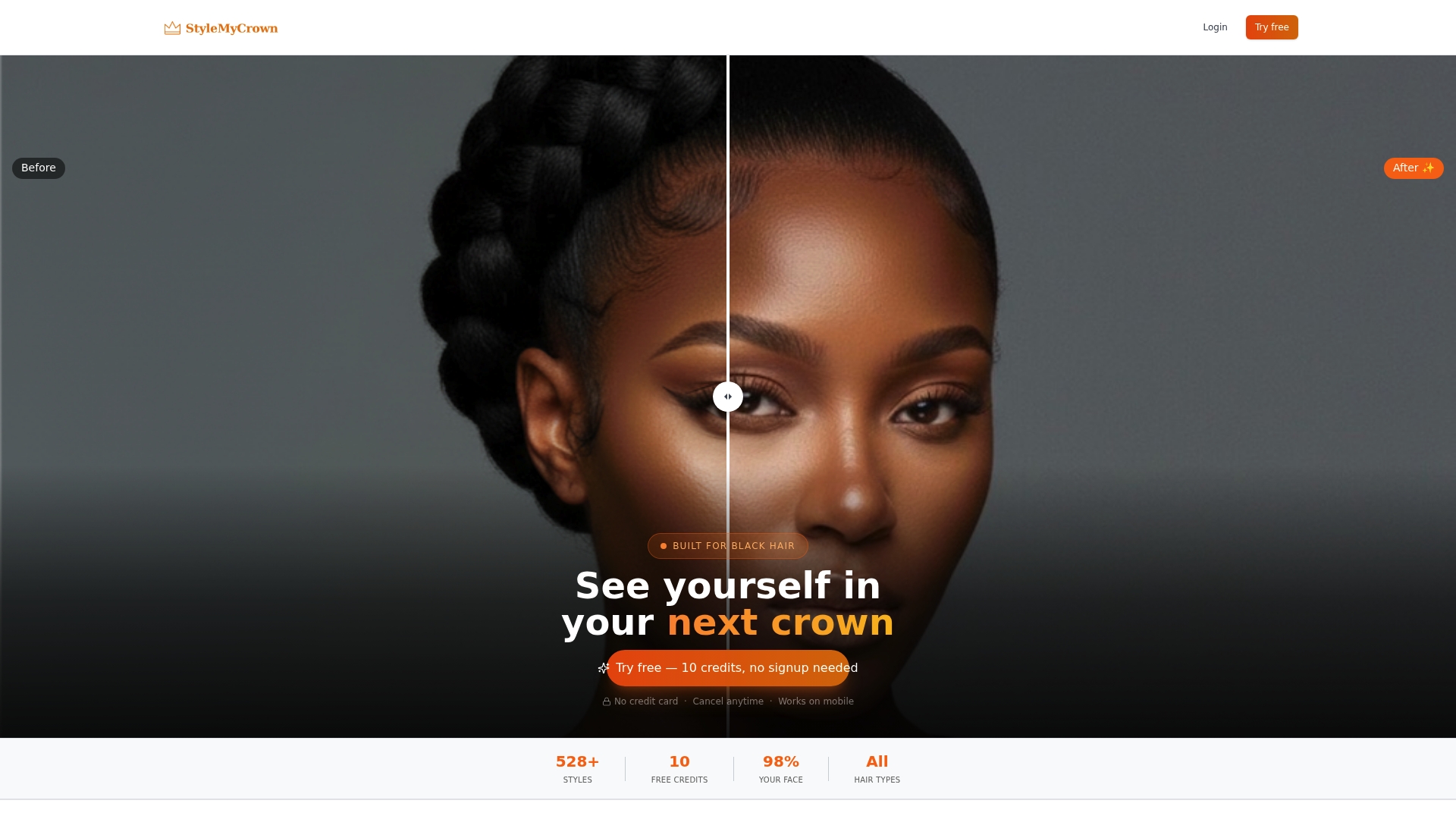
If you are choosing a style for high porosity hair this week, start with your photo and a few twists. It takes a few minutes, and your hair stays in its best shape while you decide.
Our perspective
I remember how much planning went into a single hair appointment. The saving, the booking, the hours before the chair even turned. And the quiet worry underneath it all: will this actually look like me?
That worry is bigger when your hair is high porosity. Your hair is already telling you it needs care. You cannot afford to guess on a style that is heavy, tight or all wrong for your face.
This is why we built StyleMyCrown. We started with textured hair and deep skin tones, where AI fails hardest, because that is where people have been let down the most. The face never changes, only the hair. We built our calibration layer on top of GPT Image 2 so that you see yourself, not a stranger.
We believe the choice should come before the commitment. See the style, feel good about it, then book. That is better for you, and it is better for your stylist too.
Which style are you curious about but have been afraid to try?
Christelle
FAQ
What is the best protective style for high porosity hair?
There is no single best one, but low-tension styles such as two-strand twists, flat twists, chunky cornrows and loose updos are the safest places to start. They keep the ends protected without pulling hard on the roots. Add leave-in conditioner for moisture and slip.
Is coconut oil good for high porosity hair?
It may be. A 2022 study found coconut-based hair oils prevented increases in measured hair porosity, and a textured-hair specialist told Who What Wear it may suit high porosity hair better than low porosity hair. Your own hair’s response is what counts, so try a small amount first.
Is 4C hair usually high porosity?
It often is, because tight coils have many bends where cuticles can lift. But porosity and curl pattern are separate, so judge by how your hair behaves with water and products. Fast absorption, quick drying and frizz point to high porosity.
How long can I keep a protective style in?
That depends on the style, your scalp and how well you keep the hair moisturized. Short-term styles like finger coils should come out after about a week at most to avoid tangles. For longer installs, keep the scalp clean and take the style down slowly with conditioner.
Can I preview a style before I book?
Yes. Upload your photo to StyleMyCrown, try styles from the catalog and see them on yourself before you book or buy. It is free for shoppers.
Sources
- High Porosity Hair: Characteristics, Products, and Tips (Healthline)
- An Overview on Hair Porosity (New York Society of Cosmetic Chemists)
- High Porosity Hair Care Tips and Characteristics (Health.com)
- Protective Styling For Afro-Textured Hair (Fulham Scalp and Hair Clinic)
- Benefit of coconut-based hair oil via hair porosity (PubMed)
- Coconut Oil Dried Out My Thick, Curly Hair (Who What Wear)
- Can You Spray Perfume on Hair? (So…? Fragrance)


