Preview Braids vs Twists for Black Hair: 1–3 vs 4–8 Weeks
Preview Braids vs Twists for Black Hair: 1–3 vs 4–8 Weeks
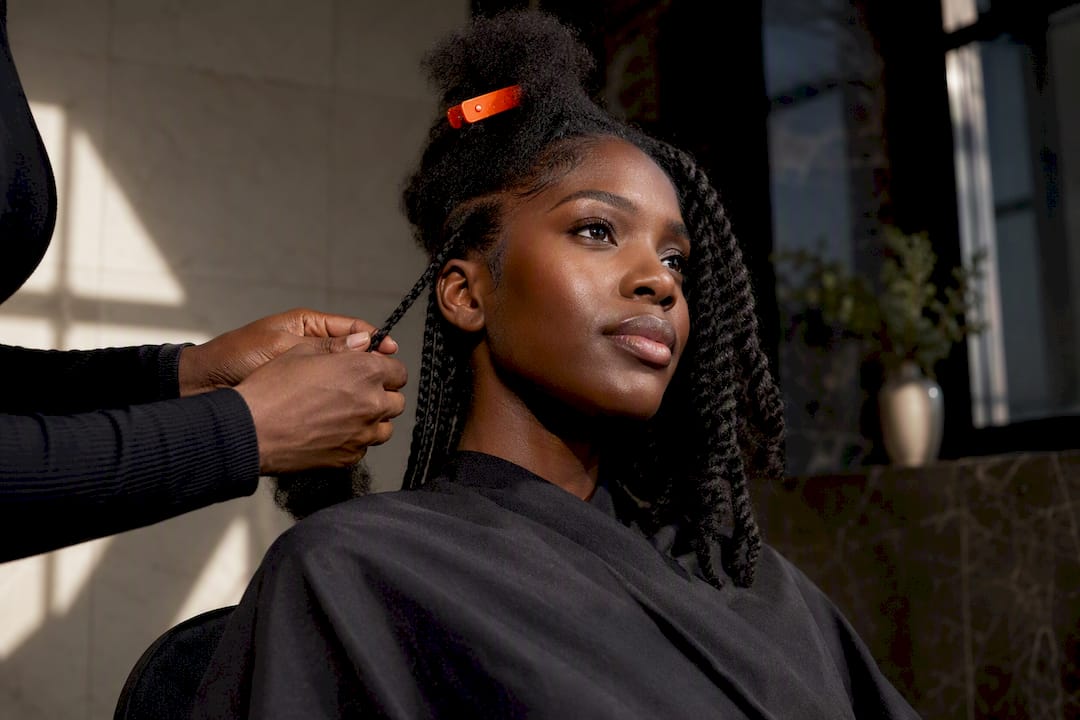
If your priority is scalp health and easy moisture access, twists win. If you want a style that lasts longer with less daily fuss, braids win. Twists install faster and feel lighter, but they need more frequent touch-ups. Braids hold longer and travel well, but tight installs or heavy extensions put more strain on your hairline. The right choice depends on your edges, your schedule, and how your hair actually behaves under tension.
TL;DR:
- Braids typically last longer than twists, with a lifespan of 4 to 8 weeks compared to 1 to 3 weeks, due to their tighter, more structured weave.
- Tension and weight of extensions significantly impact scalp health, with heavy or tight braids increasing the risk of scalp and hairline damage.
- Twists install more quickly, generally in 2 to 4 hours, but require more frequent touch-ups and careful moisture access for scalp health.
- Experimenting with virtual try-on tools helps predict how styles will look on your face and hair, reducing dissatisfaction and guiding better choices.
- Proper tension control, extension selection, and maintenance routines are crucial for protecting your hair during either style, especially if you have sensitive edges.
Table of Contents
- Braids vs Twists: What Each Technique Actually Does to Your Hair
- Braids vs Twists in Technique: What Braiding Actually Involves
- Comparing Longevity, Tension, Maintenance, and Cost
- Choosing Between Braids and Twists Based on Your Actual Life
- Keeping Your Scalp Healthy While Wearing Braids or Twists
- Kanekalon, Marley, and Havana: How Extension Choice Changes Everything
- Traction Alopecia, Frizz, and Buildup: What to Watch For
- Why I Think Previewing Beats Guessing
- Preview Your Next Style Before You Sit in the Chair
- Sources
- FAQ
Braids vs Twists: What Each Technique Actually Does to Your Hair
The difference starts with the strand count. Twists use two strands wrapped around each other. Braids use three strands woven over and under. That extra strand in a braid creates a tighter, more locked structure; this is exactly why braids tend to hold their shape longer while twists can loosen or “fuzz” sooner.
Twist types you’ll see most often:
- Two-strand twists (no extensions, done on natural length)
- Senegalese twists (smooth, rope-like, usually with Kanekalon)
- Marley twists (textured, mimics natural type 4 hair)
- Havana twists (thicker, chunkier version of Marley)
- Flat twists (twisted flat against the scalp, like a twisted cornrow)
- Mini twists (small, dense, more natural-looking without extensions)
Type 4 hair holds a twist well because its natural coil grips the twisted strands without much slippage. Shrinkage also means a twist that looks shoulder-length wet might sit closer to your ears once it dries and locks into its curl pattern. That’s not damage. It’s just your hair doing what it does.
Twists usually take 2 to 4 hours to install for medium sizes, and on natural hair without extensions, they typically hold for one to three weeks before needing a refresh.
Braids vs Twists in Technique: What Braiding Actually Involves
Braids get their durability from that three-strand weave. Once it’s tight, it stays tight, which is why braids can be worn for six to eight weeks with the right care.
Popular braid styles and what they offer:
- Box braids (classic squared parts, versatile length and thickness)
- Knotless braids (feeder-hair method, less tension at the root)
- Cornrows (braided flat to the scalp, great base for updos)
- Micro braids (thin, natural-looking, but time-intensive to install)
Install time runs 4 to 8 hours depending on size and complexity, with micro braids often stretching into a full day. Extension choice changes everything about how a braid wears. Synthetic Kanekalon gives you a sleek, uniform finish. Coarser, textured extensions blend closer to natural hair but can add more weight per braid.
That weight matters. Heavier extensions on smaller, tighter braids create more pull at the root, and tight installs with heavy extensions exert more tension on the scalp and hairline than a looser, lighter style would.
Comparing Longevity, Tension, Maintenance, and Cost
Here’s how the two stack up when you put them side by side on the factors that actually affect your day-to-day experience:
- Install time. Twists average 2 to 4 hours. Braids run 4 to 8 hours, sometimes longer for micro sizes.
- Lifespan. Twists typically last 1 to 3 weeks on natural hair, longer with extensions. Braids commonly last 4 to 8 weeks.
- Daily upkeep. Braids need less daily attention once installed. Twists often require more frequent touch-ups to keep edges and new growth neat.
- Moisture access. Twists give you easier access to your scalp for applying oils and leave-in treatments, since the strand structure is looser.
- Visual aging. Twists blend new growth more naturally into their looser coil. Braids show new growth contrast sooner against the tight, structured part.
- Tension risk. Twists are generally the gentler option on edges. Braids carry more tension risk, especially with dense extensions.
Cost swings widely by region and stylist, but the drivers are consistent: length, density (how many strands you’re getting), extension type, and how experienced your stylist is. Knotless braids and Havana twists tend to cost more than standard box braids or two-strand twists because they take longer and use more product. A stylist who’s booked out weeks in advance is usually priced higher, but that demand often reflects real skill in tension control, which is worth paying for.
Choosing Between Braids and Twists Based on Your Actual Life
Ask yourself these questions before you book a chair:
- How long do I actually want to wear this style?
- Are my edges currently strong, thinning, or recovering from a past style?
- How much time can I realistically spend on maintenance each week?
- What’s my budget, and does that change which style makes sense?
- Am I traveling, working out heavily, or need something low-touch for the next month?
Decision rules that hold up in most cases:
If you’re traveling or want to set styling aside for six weeks or more, braids are the better call. If your edges are stressed, thinning, or recovering from a tight previous install, twists are the gentler choice. If you want daily scalp access for treatments or you’re actively working on growth, twists again. If low daily maintenance matters more than moisture access, braids win. Stylists generally frame the choice this way too: braids for maximum protection with less daily fuss, twists for scalp health and frequent moisturizing.
Watch for red flags when booking. A stylist who braids so tight it hurts during the install, who adds heavy extensions without asking about your hair’s current strength, or who promises unusually long wear times (think ten or twelve weeks on tiny braids) is setting you up for breakage, not protection.
Pro Tip: Ask your stylist for a single test braid or twist before they do your whole head. If it feels too tight at the root within the first hour, speak up immediately. That early check saves your edges more than any product ever will.
Keeping Your Scalp Healthy While Wearing Braids or Twists
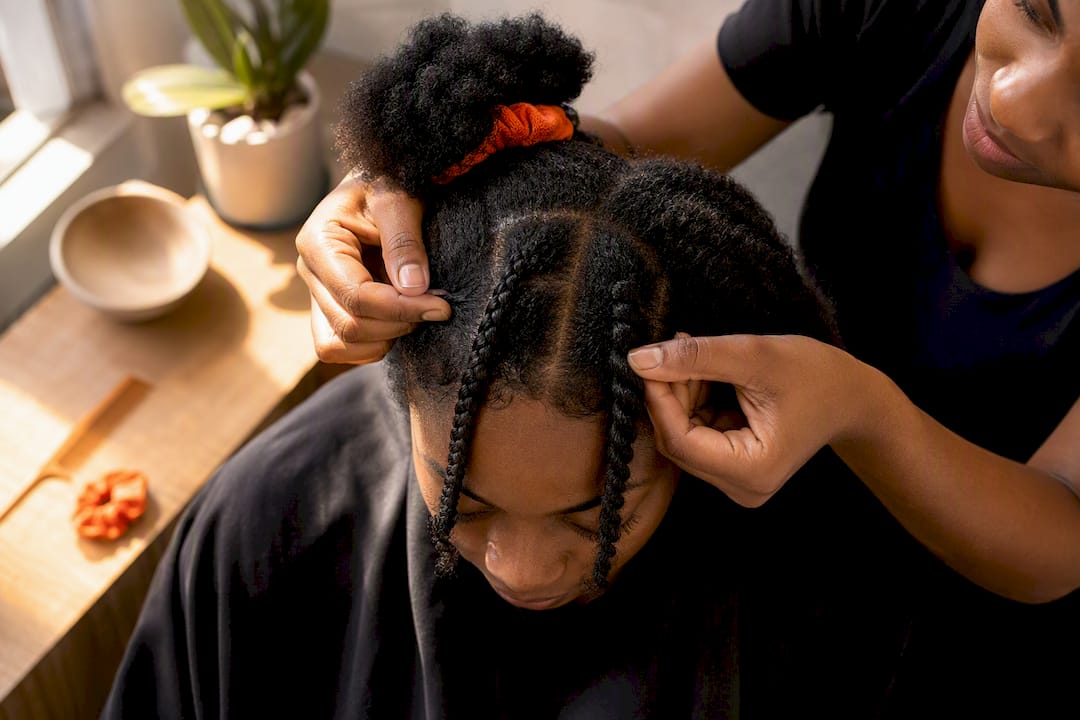
Both styles are protective when installed and maintained correctly. The routine that keeps them that way follows a simple rhythm.
- Daily: Sleep in a satin or silk scarf or bonnet to cut friction. Apply a light oil directly to the scalp, not the strands, to avoid buildup and greasy roots.
- Weekly: Use a diluted shampoo in an applicator bottle to cleanse the scalp between the parts without unraveling the style. Re-twist or smooth any frizzed sections as needed, more often with twists than braids.
- Takedown: Detangle section by section, never rushing through the whole head at once. Deep condition immediately after removal, and give your hair a rest period, generally one to two weeks, before installing another protective style.
Twists need slightly more weekly attention because their looser structure frizzes faster, but that same looseness is what makes scalp treatments so much easier to apply.
Kanekalon, Marley, and Havana: How Extension Choice Changes Everything
Extension material shapes more than the look. It shapes how the style feels and how long your edges stay comfortable.
- Kanekalon gives a smoother, sleeker finish, favored for Senegalese twists and classic box braids.
- Marley and Havana extensions are coarser and closer to natural texture, which is why they’re the go-to for twists that need to blend seamlessly with type 4 hair.
- Lighter density extensions reduce the pull on each individual strand, an easy trade if your edges are sensitive.
- Denser extensions create a fuller look but add real weight, especially over a six to eight week wear period.
If your edges have ever felt sore after a past install, ask your stylist about pre-stretched or lighter density blends, and consider knotless braids, which distribute tension more evenly at the root than traditional feed-in methods.
Traction Alopecia, Frizz, and Buildup: What to Watch For
Traction alopecia shows up as thinning at the hairline, small bumps along the part, or a scalp that stays tender days after installation. If you notice any of that, the style needs to come out, not “get used to.”
- Persistent tenderness beyond the first 48 hours is not normal; that’s a sign to loosen or remove the style.
- Matting and loc formation happen most often with long wear on textured extensions that haven’t been properly sectioned or maintained.
- Scale back your wear time if you notice flaking, itching that won’t quiet down, or visible thinning at the temples.
- See a dermatologist or trichologist if hair loss continues after you’ve removed the style and rested your scalp.
Both braids and twists are genuinely protective styles. The real risk isn’t the technique itself, it’s poor installation or excessive tension, regardless of which style you choose. If you’ve dealt with postpartum shedding or unusual sensitivity, gentler, lower-tension styling matters even more during that recovery window, similar to the care recommended for postpartum hair loss.
Why I Think Previewing Beats Guessing
I’ve watched too many people commit to a style based on a photo of someone else’s hair, only to feel disappointed when it doesn’t translate to their own texture, density, or face shape. That’s the real gap in most braids vs twists advice: nobody tells you what it’ll actually look like on you until you’re already in the chair.
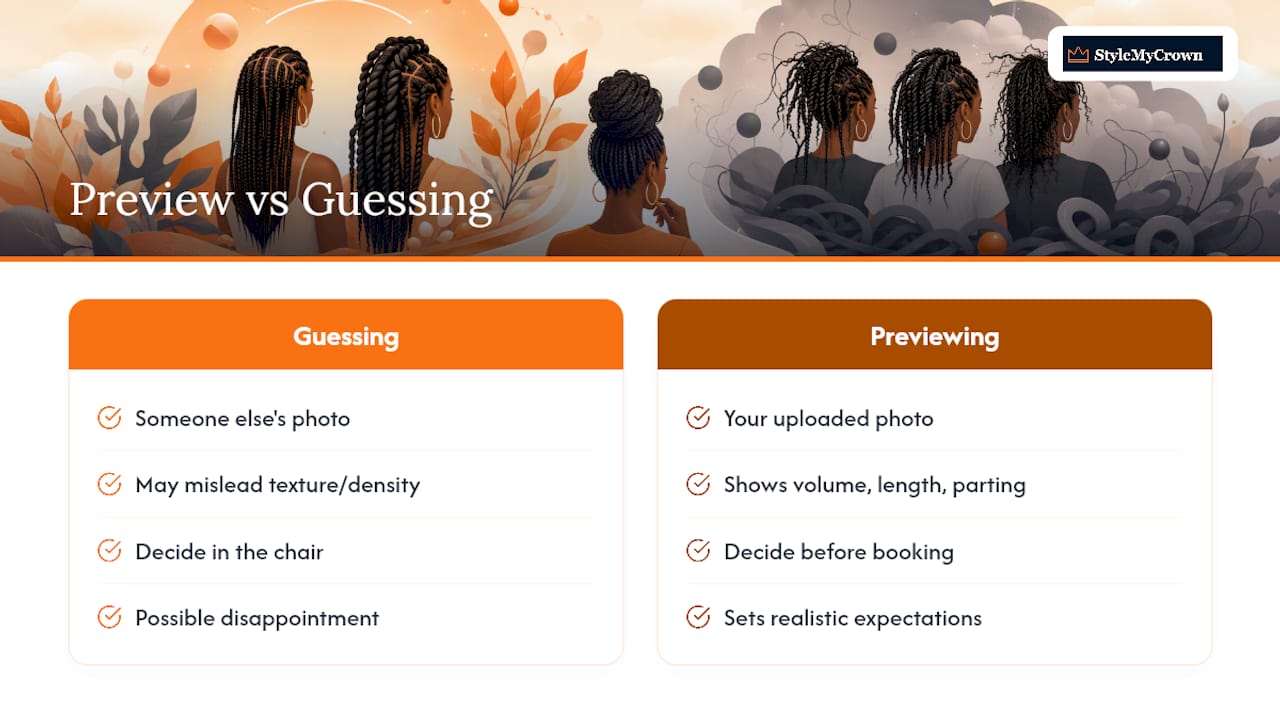
Stylemycrown’s virtual try-on tool exists for exactly that moment of uncertainty. You upload your own photo and preview braids, twists, and twist variations on your actual face and hairline before committing to hours in a chair or a stylist’s rate. Seeing knotless box braids or Havana twists mapped onto your own features tells you more about volume, length, and parting than any inspiration photo ever will.
That said, no app checks how tight your stylist’s grip is or whether your scalp can handle another six weeks of tension. Visualization sets expectations. A qualified stylist protects your edges.
— Christelle
Preview Your Next Style Before You Sit in the Chair
Stylemycrown is the alternative to guessing from someone else’s inspiration photo: you preview braids and twists on your own face and hairline first, using AI virtual try-on built specifically for Black and textured hair, not a generic filter that ignores texture and density.
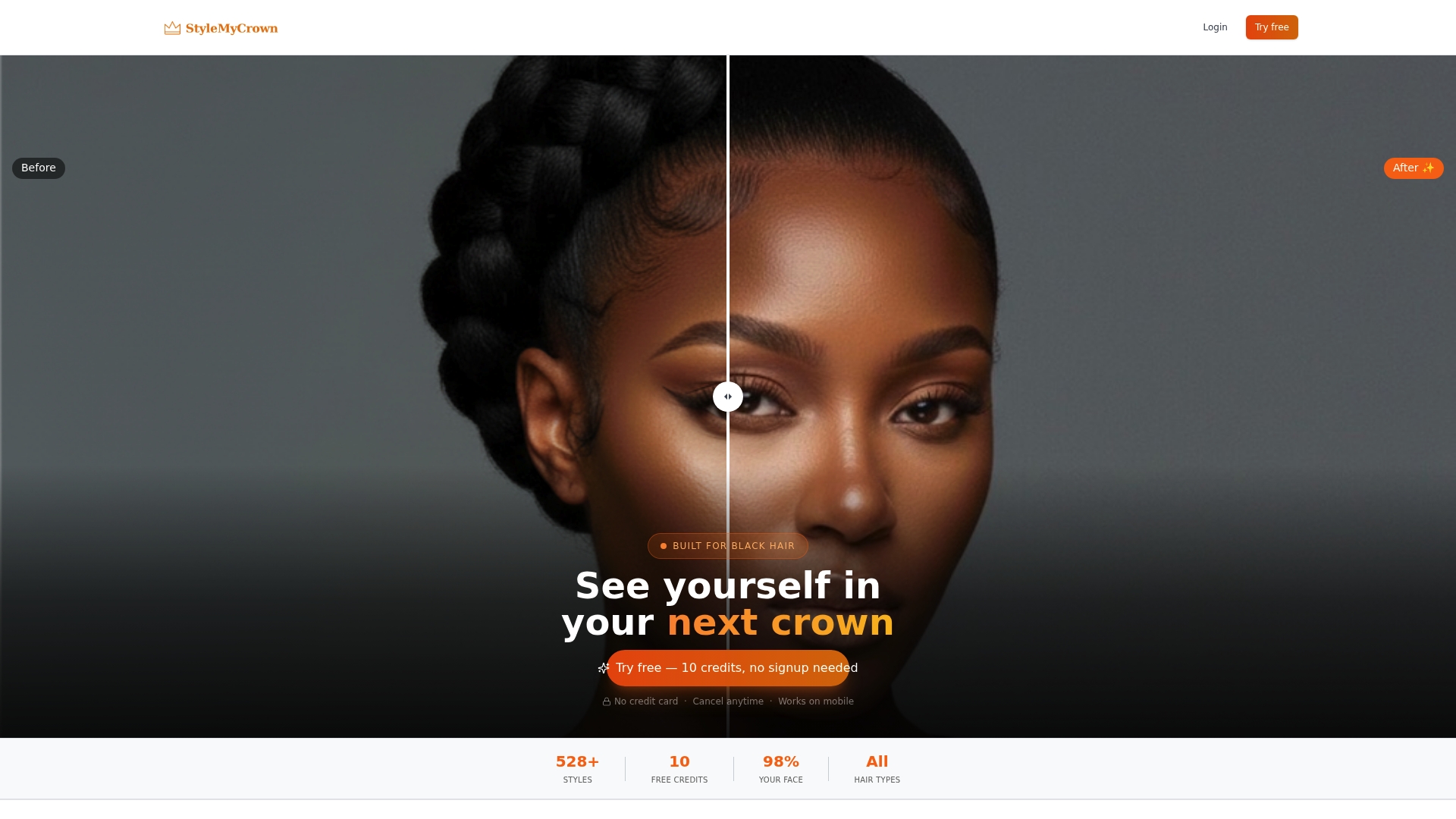
Every new account gets two complimentary credits, so you can test a few looks risk-free before spending a dollar. From there, the 1 Week Trial runs $17.48 per week, or you can move into the 4 Week Plan at $38.73 per 4 weeks if you’re planning ahead for a bigger style change. Browse the full style catalog to see the range of braid and twist looks available, from knotless box braids to Havana twists, before you upload a single photo. Face data is generally processed with attention to privacy, allowing users to experiment with virtual styles without concerns about data usage. Head to the pricing plans page to start your first try-on today.
Sources
- Braids vs Twists: What’s The Difference? – Carol’s Daughter
- Twist vs Braid: Which Hairstyle Supports Hair Growth Best? – Root2Tip
- Here’s everything you need to know about getting braids & twists, according to stylists that do them – Bustle
FAQ
Which Lasts Longer, Box Braids or Twists?
Box braids generally last longer, typically 4 to 8 weeks compared to 1 to 3 weeks for natural twists. The tighter three-strand structure of braids resists loosening better than the two-strand twist, especially with quality extensions.
What Is the Healthiest Hairstyle for Your Hair?
Both braids and twists count as protective styles that support length retention when installed correctly and maintained well. Twists tend to be gentler on the scalp and edges, making them the better pick if you’re recovering from tension damage or thinning.
Does Hair Grow Faster in Braids or Twists?
Neither style speeds up actual growth, but both reduce breakage from daily manipulation, which helps you retain the length you already have. Twists offer easier scalp access for oils and treatments, which some people find supports a healthier growth environment.
Do Cornrows or Twists Last Longer?
Cornrows, like other braid styles, typically outlast twists because the tighter weave holds up longer without loosening. Expect cornrows to hold for 4 to 6 weeks versus 1 to 3 weeks for twists on natural hair.
Can I See How Braids or Twists Will Look on Me Before Booking?
Yes. Stylemycrown’s virtual try-on tool lets you preview both braids and twists on your own photo before committing to an install, using a wide catalog of curated styles for different hair textures. It’s a planning aid, not a substitute for a stylist’s tension and scalp safety check.


