Face Framing Black Hairstyles: 7 Cuts Compared by Face Shape

The best face framing Black hairstyle is the one whose shortest piece lands where you want attention, on your hair in its real, dry texture. For most people that means choosing between curtain bangs, C-shape layers, a butterfly cut, a shaggy lobe, a chopped bob, a curly crop or a wolf cut, then matching the cut to your face shape, density and length.
I remember sitting in a chair, phone in hand, showing a photo of a stranger’s hair and hoping. Hoping her curls were my curls. Hoping the layer by her cheekbone would land at mine. Sometimes it did. Sometimes I walked out with a frame that sat somewhere I never asked for.
This guide is the conversation I wish I’d had before those appointments. We compare seven options side by side, then talk about shrinkage, dry cutting, and how to preview a look before anyone picks up scissors.
TL;DR
- Face framing means the shortest layers sit around your eyebrows, cheekbones, jaw or collarbone, so where they land decides the effect.
- Round faces tend to love length and vertical lines, square faces soften with curved layers, and heart shapes love weight near the jaw.
- Curly and coily hair should be cut dry whenever possible, because shrinkage changes where every layer ends up.
- Fine hair wants fewer layers and thick hair can carry more, so match the cut to your density, not just a photo.
- You can preview many styles on your own photo with Stylemycrown before booking, starting with 2 complimentary credits.
Table of Contents
- What face framing actually does
- Seven face framing Black hairstyles compared
- Match the cut to your face shape
- Texture changes the rules
- How to talk to your stylist
- Preview it before you cut it
- Try it with 2 complimentary credits
- Perspective
- Making face framing last
- FAQ
- Sources
What face framing actually does
Face framing is a placement decision. The shorter pieces around your face sit at a chosen point, and the rest of the hair falls behind them. According to Glamour’s guide to face-framing layers, those shorter pieces can be placed around the eyebrow, cheekbone, jawline or collarbone to accentuate the features you want to highlight.
That is why two people can ask for the same “face framing layers” and leave with very different results. One is highlighting the cheekbones. The other is drawing the eye down to the jaw.
On Black hair, one more factor changes everything: texture. A layer that looks sleek on a straight photo can spring up two inches on a 4C twist-out. We will keep coming back to that.
Seven face framing Black hairstyles compared
Here is the quick view. The sections after the table explain each cut in plain terms.
| Style | Best for | Where the frame lands | Works best on |
|---|---|---|---|
| Curtain bangs | Round, square, heart faces | Forehead to cheekbones | Medium to long, stretched or defined curls |
| C-shape layers | Anyone wanting lift at the cheeks | Temple to chin along the cheekbone | Medium to long natural or silk-pressed hair |
| Butterfly cut | Those wanting volume and movement | Face sections plus shorter crown layers | Medium to long, thicker hair |
| Shaggy lob | Square and oval faces | Choppy edges at the jaw and collarbone | Shoulder length, wavy to coily |
| Chopped bob | Heart and oval faces | Chin | Short to chin length, any texture |
| Curly crop | Strong features, low maintenance | Around the whole face | Short natural hair |
| Wolf cut | Those who like drama | Shaggy layers throughout, shorter near the face | Medium length, thick hair |
Glamour lists the layered lob, butterfly cut, curly crop, wolf cut and chopped bob among the face-framing options that add movement, texture and volume. Curtain bangs and C-shape layers round out the list for good reason, and we’ll cover them first.
Curtain bangs
Curtain bangs part in the middle and sweep to each side, tapering toward the cheekbones. They soften a forehead without hiding it, and they are one of the easiest ways to try face framing without committing to a full cut.
On natural hair, the big question is how you wear them. Stretched or blow-dried, they hang long. Defined and curly, they spring up and sit much shorter. Ask your stylist to cut them dry, in the state you plan to wear them most days. If bangs are the part that excites you, our guide to texture first bangs for Black hair walks through 18 styles you can preview.
C-shape layers
Picture a soft letter C that follows your cheekbone from the temple down to the chin. That is the idea. These layers add dimension and create the look of lifted cheekbones, which is why they show up so often on silk presses and stretched natural hair.
They are forgiving. If the frame lands a half inch off, it still reads as intentional. They are a good first face-framing cut if you have never worn layers before.
Butterfly cut
The butterfly cut pairs shorter layers on the crown with face-framing sections in front. The result is a big, airy shape with lots of bounce through the middle and ends.
It asks for density. On very fine hair, the shorter top layers can thin the overall look. On thick hair, it is a showstopper. If you have been told your hair is “too much,” this is where that becomes a gift.
Shaggy lob
A lob with choppy, uneven layer edges. It sits around the collarbone and has a lived-in look that does not need to be perfect. It is a strong fit for square faces, because the uneven edges blur an angular jawline instead of outlining it.
On textured hair, the choppiness comes mostly from the curl pattern itself, so you need fewer visible steps in the cut than you would on straight hair.
Chopped bob
A chin-length bob with textured face-framing layers. It puts the spotlight on your jawline, cheekbones and neck. People with heart-shaped faces often love it because the weight lands near the chin, where the face narrows.
Our heart face shape hairstyle guide goes deeper on that shape.
Curly crop
Short, shaped, defined curls that frame the face all the way around. It is the boldest version of face framing, because the frame is the whole cut. If you are in the middle of a big chop, or thinking about one, our look at short natural hairstyles and the guide to pixie cuts for Black hair cover the shorter end in detail.
Wolf cut
Shaggy, heavily layered, with shorter pieces near the face. It is a high-drama shape that works with volume rather than against it. Like the butterfly cut, it rewards thick hair and a confident attitude.
Match the cut to your face shape
Stylists tend to follow a few shape-based rules of thumb. For round faces, the goal is usually vertical elongation, with layers that draw the eye down instead of out. Square faces typically benefit from curved, soft-edged layers that blur the jaw. Think of these as starting points, not laws. Your hairline, your features and your own taste matter as much as the geometry.
| Face shape | Layers to start with | Try asking for |
|---|---|---|
| Round | Long, vertical layers; side-swept volume | C-shape layers that start below the cheekbone |
| Square | Curved, soft-edged layers | Shaggy lob or curtain bangs |
| Heart | Weight near the jaw and chin | Chopped bob or chin-level layers |
| Oval | Nearly everything | Whichever cut you like most |
If you have a round face and want more examples, see our collection of round face Black hairstyles.
Face shape is also a bigger conversation than hair. If you are curious about how professionals think about facial balance more broadly, this piece on complementing your face shape is a good place to see the proportions stylists and clinicians both look at.
Texture changes the rules
This is the part many generic guides skip.
Coily hair shrinks, and it can shrink a lot. A piece that measures five inches stretched may sit at two when it dries and springs back. If your stylist cuts your face-framing layers while your hair is stretched wet, the shortest layer can land far higher than you planned.
Stylist Cal Ellis makes this point in Allure’s big chop guide: dry cutting is critical for natural, curly textures, because cutting stretched wet hair leads to unpredictable, uneven lengths. We agree, and we hear it from our community all the time.

Density matters too
Vogue’s pros advise that fine hair does best with minimal layers that keep weight at the bottom, while thick hair can handle more layers, and undercutting can remove weight and create movement. So the same butterfly cut photo can be a dream on one head and a disappointment on another.
Length matters most at the face
For medium to long hair, graduated layers from cheekbone to jawline are what create bounce. On short hair, you have fewer options but each one is more dramatic. Always decide where you want the shortest layer to fall when dry, and say so out loud.
How to talk to your stylist
A good consultation saves a lot of regret. Here is what we suggest bringing and asking:
- Photos of the cut on a similar texture. A photo of straight hair tells your stylist very little about your curl pattern.
- Your shortest-layer spot. Point to it on your own face: eyebrow, cheekbone, chin or collarbone.
- Your real routine. Be honest about wash days, heat, and how much time you give your hair each morning.
- Your hair history. Color, relaxers, recent protective styles and breakage all change what is possible.
- The cutting method. Ask whether the stylist cuts curly hair wet or dry, and why.
If you wear protective styles or are managing thinning edges, share that too. Face framing near the hairline needs a gentle plan, and our guide to low tension looks for thinning edges can help you decide what is right for now.
Preview it before you cut it
Here is the truth I keep returning to. The hardest part of any new cut is not the cut. It is the not knowing.
That is why we built Stylemycrown. It is an augmented reality try-on made for Black and textured hair, so you can see styles on your own photo before you commit. Our catalog holds over 528 styles curated for different textures and types. Face data is processed securely and is never retained or used for AI training.
The cutting-room-floor version of this is simple. Save the looks you love, notice which ones keep pulling you back, and walk into your appointment with your own preview instead of a stranger’s picture.
Stylists can use it the same way: as a digital catalog that shortens the consultation and gets everyone picturing the same thing.

Try it with 2 complimentary credits
You can start with a 1 Week Trial at $0 per week and 2 complimentary credits, with no commitment. If you want to keep exploring afterwards, the 4 Week Plan is $38.73 per 4 weeks. A 12 Week Plan is also available on the pricing page.
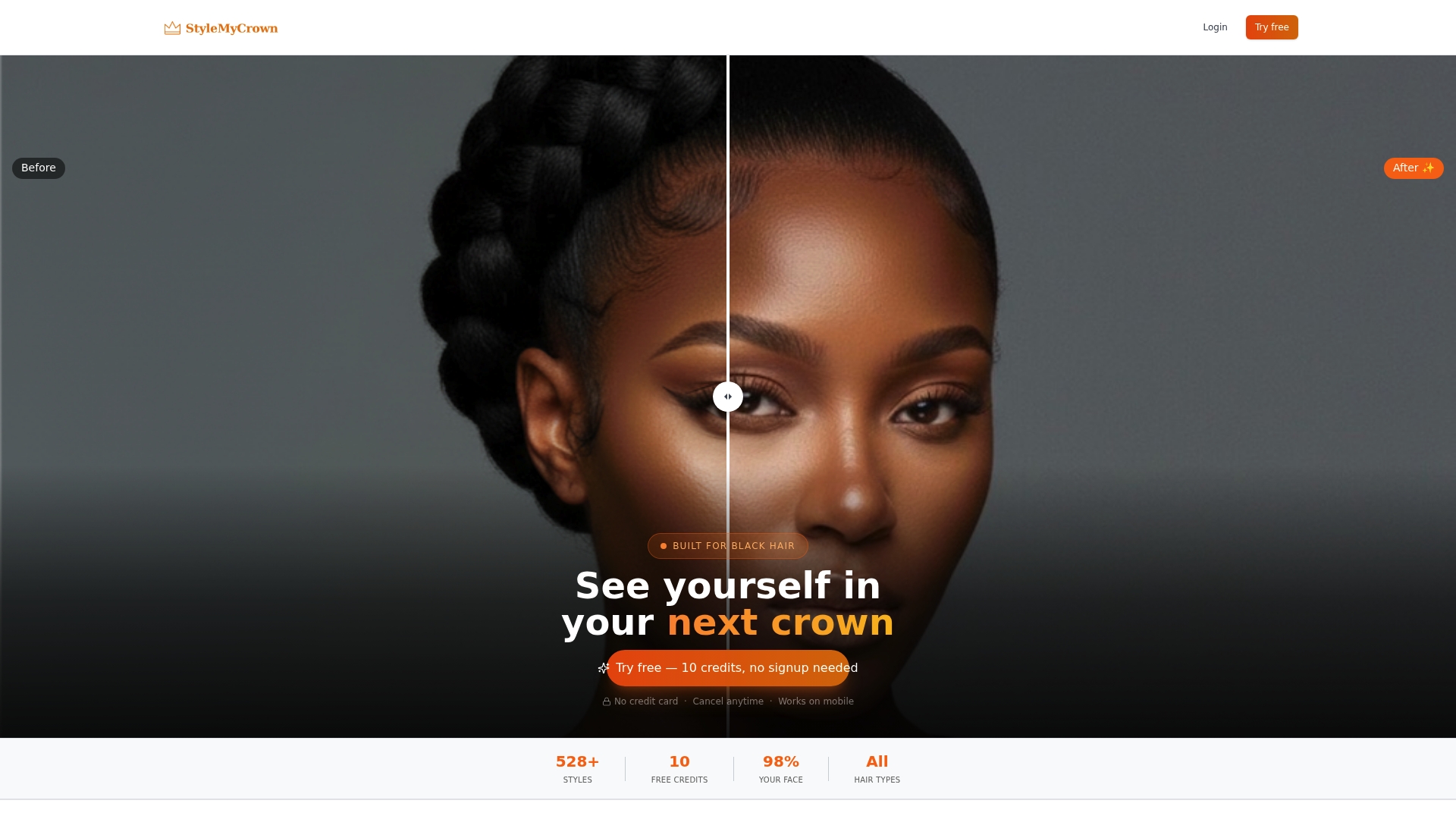
Open Stylemycrown’s AI try-on for Black and textured hair, upload a photo, and test curtain bangs, C-shape layers or a chopped bob on your own face first.
Perspective
Most hair tools are built around one kind of hair, and then everyone else is expected to imagine the difference. We built Stylemycrown because that never worked for us.
Face framing is the perfect example. It looks effortless in a photo, but on textured hair it depends on shrinkage, density and how you actually wear your curls. A flat inspiration picture cannot tell you any of that.
That is why we focus on Black and textured hair, with a catalog of more than 528 styles reflecting the Global Diaspora. When you can see a layer land at your cheekbone, on your face, you walk into the salon with clarity instead of hope.
You deserve to feel sure before the chair turns.
Christelle
Making face framing last
Once you have the cut, small habits keep the frame looking intentional.
Apply your curl products to damp hair and define the face-framing curls individually before you style the rest of your hair, as Bold Hairstyles suggests. Those front pieces are what everyone sees first, so give them the most attention.
Protect your edges while you do it. Heavy tension near the hairline works against any frame, and our piece on protecting your edges and 2026 texture-first trends covers what to watch.
Book small trims between bigger cuts. Face-framing pieces are short, so a little growth changes the shape faster than you would expect.
Planning something special, like a wedding? See our notes on Black bridal hairstyles so your frame photographs the way you imagine. And if you wear braids or twists between cuts, our protective hairstyles guide helps you plan the in-between.
FAQ
What is the most flattering face framing style for Black hair?
There is no single winner. Curtain bangs and C-shape layers are the easiest starting points because they flatter most face shapes and are forgiving. Pick based on where you want the shortest piece to land and how your texture behaves when dry.
Should face framing layers be cut wet or dry on curly hair?
Dry whenever possible. Stylists such as Cal Ellis, quoted by Allure, point out that cutting stretched wet hair can lead to uneven lengths on natural textures. Dry cutting shows the real curl pattern and shrinkage, so the layers land where you expect.
Can fine Black hair have face framing layers?
Yes, with a lighter touch. Vogue’s pros recommend minimal layers for fine hair so the weight stays at the bottom. A few well-placed pieces around the face often look better than layers throughout.
Can I see a face framing cut on myself before the salon?
Yes. Stylemycrown lets you try styles from its 528-plus catalog on your own photo with augmented reality. You get 2 complimentary credits to start, so you can experiment and bring your favorite looks to your stylist.
Sources
- 21 Face-Framing Layers That Look Flattering on Everyone, Glamour
- The 10 Best Layered Hairstyles, According to the Pros, Vogue
- Big Chop: How to Make the Cut, Allure
- 20 Face Framing Curls for Natural Hair, Bold Hairstyles
- Choosing injectables for your face shape: a complete guide


