Texture First Bangs for Black Hair: Preview 18 Styles With AR
Texture First Bangs for Black Hair: Preview 18 Styles With AR
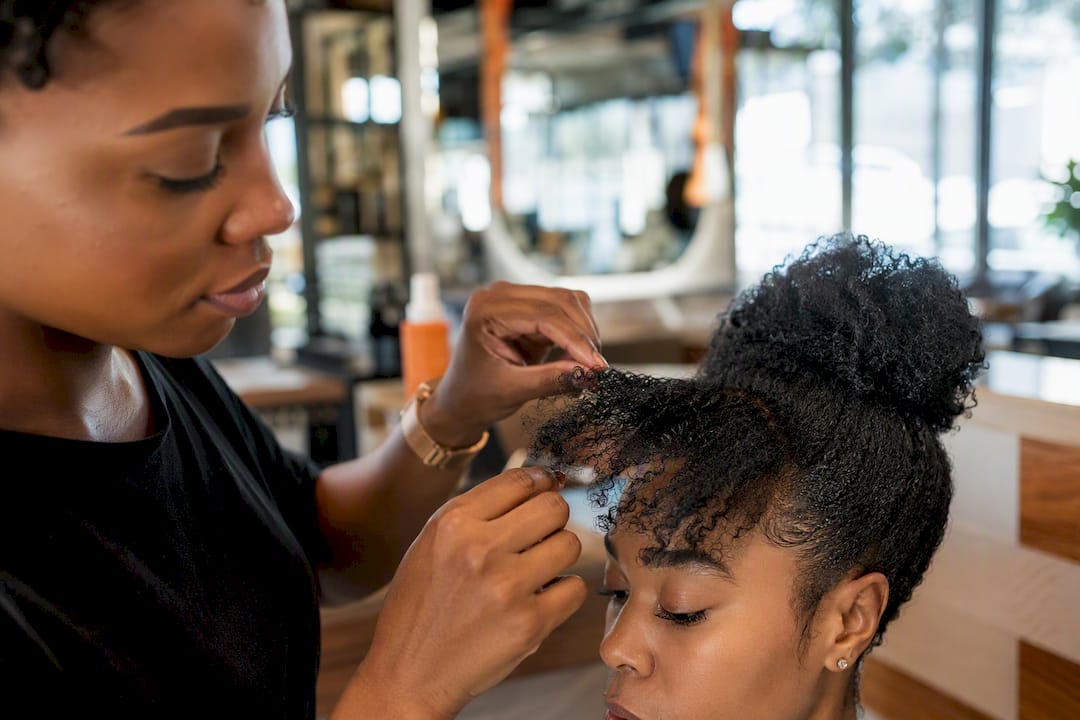
Bangs work on Black hair when the cut accounts for shrinkage, density, and curl pattern instead of fighting them. The single move that prevents regret: match a bang shape to your texture first (curtain for waves, shorter and chunkier for coils), then preview it on your own face before any scissors touch your hair.
TL;DR:
- Bangs on Black hair should be cut on stretched or dry hair to account for shrinkage and show true fall length.
- Thick densities can support blunt bangs, while finer strands benefit from wispy or feathered styles to avoid flatness.
- Curly bangs require regular point-cut trims every four to six weeks to maintain shape and density, especially for 3a to 3c patterns.
- Virtual try-on tools help preview various bang shapes and densities, reducing decision-making uncertainty before visiting a stylist.
- Choosing a stylist experienced in texture work and asking about their cutting techniques significantly reduces the risk of bangs looking wrong or sparse.
Table of Contents
- Choosing Bangs on Black Hair: What Actually Works
- Curated Bangs Gallery: 18 Styles Worth Trying
- Styling and Protection for Bangs on Textured Hair
- How to Pick Bangs by Texture, Density, and Face Shape
- Preview Bangs Risk-Free With StyleMyCrown
- Finding a Stylist Who Understands Bangs on Black Hair
- A Stylist’s Honest Take on Bangs and Identity
- Try Bangs Virtually Before Your Next Salon Visit
- Sources
Choosing Bangs on Black Hair: What Actually Works
Every curl pattern can carry bangs. The failure point isn’t texture, it’s cutting a shape designed for straight hair and expecting coily strands to behave the same way. Shrinkage can significantly reduce visible length once curls spring back, which is why a fringe that looks perfect wet or stretched often ends up noticeably shorter once it dries.
That single fact explains most of the “bangs disasters” you’ve probably seen online. The stylist cut for the length in hand, not the length after shrinkage. Curly bangs on Black hair need to be cut on stretched or dry hair, with point-cutting to soften the edges, so the true fall length shows up before the scissors stop.
Density matters just as much as curl pattern. Thick 4a or 4b hair can carry a heavier, blunter fringe without looking flat. Fine or lower-density strands usually look better with wispy, feathered pieces that don’t sit like a solid curtain. Neither one is more work to maintain than the other. They’re just different tools for different starting materials.
Curated Bangs Gallery: 18 Styles Worth Trying
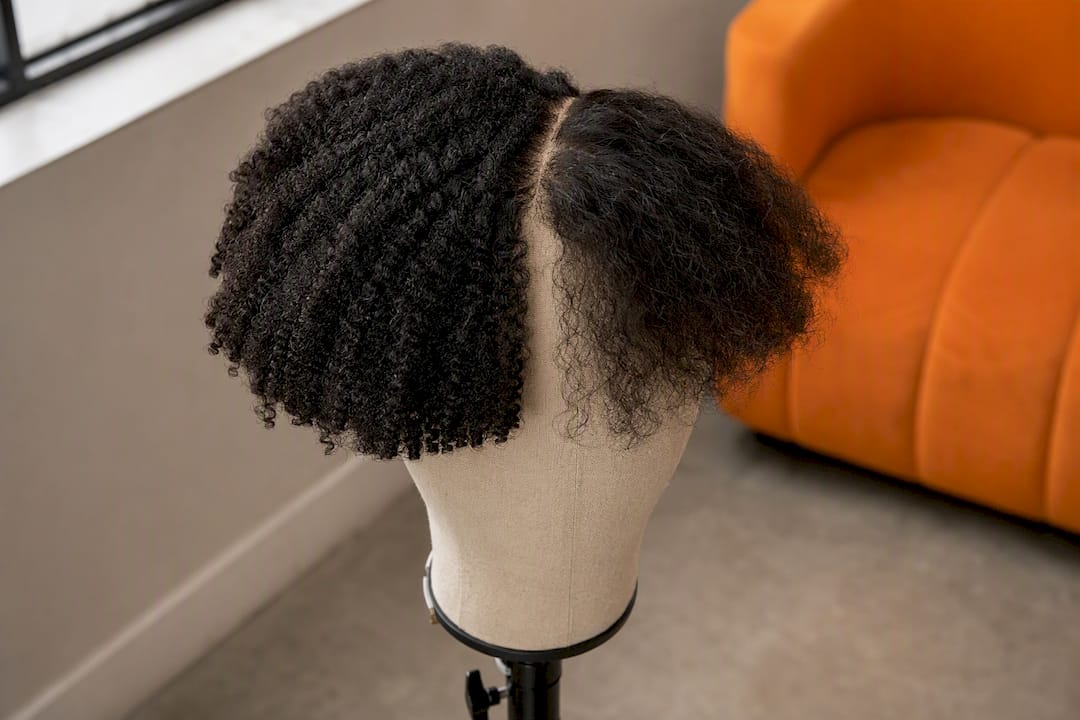
Here’s a working list organized by length, with texture and maintenance notes so you can narrow down fast.
Short hair options
- Blunt bob bangs — A crisp, straight-across line that pairs with a chin-length bob; best on straightened or blown-out hair; medium maintenance.
- Micro bangs — Cropped high above the brow for maximum impact; works on any texture but especially striking on coils; medium to high maintenance.
- Pixie bangs — Short, textured pieces that blend into a pixie cut; ideal for fine to medium density; low maintenance.
- Baby bangs — Wispy, ultra-short pieces that blend into natural texture rather than standing apart; forgiving on nearly every curl pattern; low maintenance.
- Side-swept micro fringe — Angled shorter pieces that sweep to one side; flattering on round or square faces; low maintenance.
Medium-length options
- Curtain bangs — Center-parted, face-framing pieces that soften the look on dense hair by avoiding a hard line; great on loose waves and blowouts; medium maintenance.
- Curtain bangs with a natural fade — The same center-part shape blended gradually into layers instead of cut sharply; excellent for 3c to 4a curls; medium maintenance.
- Wispy bangs — Thin, feathered strands that never fully commit to a solid fringe; low commitment, low maintenance.
- Layered bob with bangs — A face-framing fringe integrated into bob layers so weight distributes evenly; works on medium to thick density; medium maintenance.
- Side-swept bangs — Longer pieces angled across the forehead; good for heart or oval faces; low maintenance.
- Blunt bangs on a bob wig — A precise, geometric line that reads editorial on a straight bob wig; zero heat commitment since it’s a wig; low maintenance.
Long hair and curl-specific options
- Curly bangs — Full-density curls left natural, point-cut and micro-trimmed every four to six weeks to hold shape; best for 3a to 3c patterns.
- Layered curly bangs — Curly bangs blended into longer layers so weight distributes and grow-out looks intentional; medium maintenance.
- Side-swept curtain bangs — Longer, asymmetrical curtain pieces that work with waist-length hair; medium maintenance.
- Feathered fringe — Soft, choppy ends that move with loose curls; low to medium maintenance.
Protective styles and wig versatility
- Braided bangs — A fringe-shaped section of box braids or knotless braids left loose at the front; heat-free and low daily effort.
- Blunt bob wig with bangs — A full wig cut with a straight fringe, ideal for testing the look before committing your natural hair; zero damage risk.
- Layered bob wig with curtain bangs — Combines curtain movement with bob layering on a wig unit; great for special occasions or a trial run.
Styling and Protection for Bangs on Textured Hair
A good bang routine starts before you ever pick up a flat iron. Layer your products in this order: leave-in conditioner first, then a curl cream, then a light oil to seal, then a heat protectant if you’re using tools at all. Skipping the heat protectant is the fastest way to turn a soft curtain fringe into a brittle, overprocessed mess.
Heat settings by texture
- Fine or color-treated bangs: 250°F to 300°F, one pass, no repeated strokes.
- Medium density, natural: 300°F to 325°F with a ceramic or tourmaline plate.
- Thick 4a to 4b density: up to 350°F max, and only with a heat protectant applied first.
Heat-free shaping options
- Banding overnight with a light gel or cream trains curtain bangs to fall in a natural part without daily flat-ironing.
- Two-strand twisting the front section overnight gives curly bangs definition by morning.
- Finger-coiling with a curl cream works for a quick refresh between wash days.
Between salon visits, a damp refresh with a spray bottle and a dime-sized amount of curl cream revives shape without a full restyle. If a few strands go rogue, a mini dry trim with sharp shears on the ends (never a chunk in the middle) buys you another week or two.
Pro Tip: Never cut curly or coily bangs while they’re soaking wet. Cut on stretched or fully dry hair so you see the true fall length, since wet curls can spring up an inch or more once they dry.
How to Pick Bangs by Texture, Density, and Face Shape
Match the bang shape to what your hair actually does, not what you saw on someone else’s feed.
- Coily hair (4a to 4c): Go shorter and chunkier than you think you want. Shrinkage will pull the visible length up, and thinner pieces tend to look sparse against dense coils.
- Loose waves (2c to 3a): Longer curtain bangs work well here since the wave pattern already creates movement without extra cutting.
- Straightened or relaxed hair: Blunt bangs or a micro fringe read cleanest, since there’s no curl pattern fighting the line.
- Round or square faces: Longer, side-swept styles elongate the face better than a hard blunt line.
- Oval or heart-shaped faces: Curtain bangs or a soft fringe complement the existing proportions without adding width.
Plan on a trim every four to eight weeks. Coily and curly bangs drift toward the higher end of that range because micro-trims preserve density better than a full cut. If you’re growing bangs out, clip them back or pin them into a twist-out during the awkward middle stage rather than forcing them into a ponytail, which stresses the hairline.
Preview Bangs Risk-Free With StyleMyCrown
Cutting bangs is close to permanent for months. Previewing them first removes almost all of the guesswork. Virtual try-on tools that show multiple density and length options reduce hairstyle regret and give you a visual reference to hand your stylist instead of trying to describe a look in words.
StyleMyCrown offers augmented reality try-on across 528 curated hairstyles built specifically for Black hair textures, with 10 complimentary credits to start.
- Upload a photo and test curtain bangs against blunt bangs side by side.
- Adjust length and density settings to simulate shrinkage before you commit.
- Save your favorite results as screenshots to show your stylist at your next appointment.
Finding a Stylist Who Understands Bangs on Black Hair
Not every stylist has experience cutting bangs for coily or curly density, and that’s the single biggest reason bangs go wrong. Look for someone who specifically advertises curl-cutting or texture work, not just a general salon listing. A stylist who dry-cuts or cuts on stretched hair, point-cuts rather than blunt-cuts curls, and talks openly about shrinkage before the first snip is showing you they understand the texture in front of them.
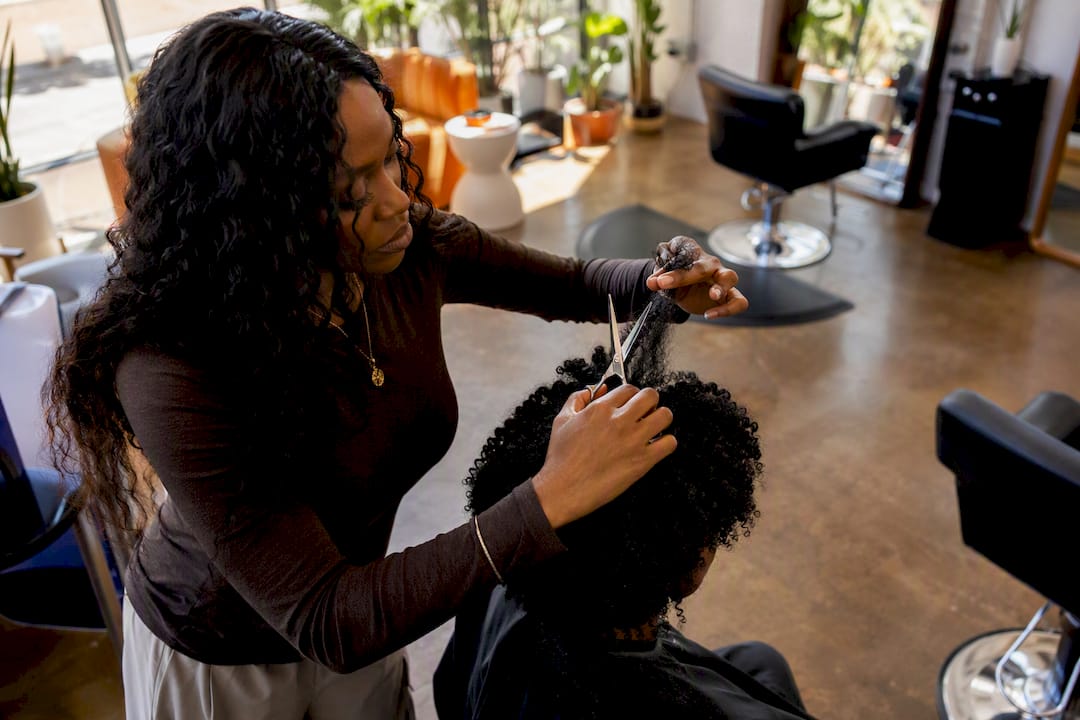
Ask to see their portfolio specifically for bangs on textured hair, not just braids or protective styles. A stylist skilled at box braids isn’t automatically skilled at cutting a curly fringe, since the techniques barely overlap. During a consultation, a good stylist will ask about your wash-day routine, how often you straighten, and whether you plan to wear the bangs curly, blown out, or both, because that changes the cut.
If you’re using a light styling cream to define the front section between appointments, something like the QAI Texture Ultra Light Styling Cream can hold curl definition without weighing down a shorter fringe. Bring product notes to your consultation. The more specific you are about your routine, the more precisely your stylist can shape the cut around it.
A Stylist’s Honest Take on Bangs and Identity
Bangs aren’t a trend you borrow from someone else’s texture. They’re a framing choice, and on Black hair they can be one of the most expressive cuts there is. My one hard rule: never dry-cut coily bangs in the moment they look “too long” wet. Wait, stretch, then decide. Point-cutting beats a hard blunt line almost every time on curls, and a four-to-six-week trim schedule keeps the shape honest without stripping density. Experiment before you commit permanently, and trim on a schedule, not on impulse.
— Christelle
Try Bangs Virtually Before Your Next Salon Visit
Every style in the gallery above looks different depending on your exact density, part, and face shape, which is exactly why a screenshot beats a screenshot of someone else’s hair. StyleMyCrown gives you 10 complimentary credits to test curtain bangs against blunt bangs, compare a curly fringe with a micro fringe, and see how each one actually sits on your face before you sit in a stylist’s chair.
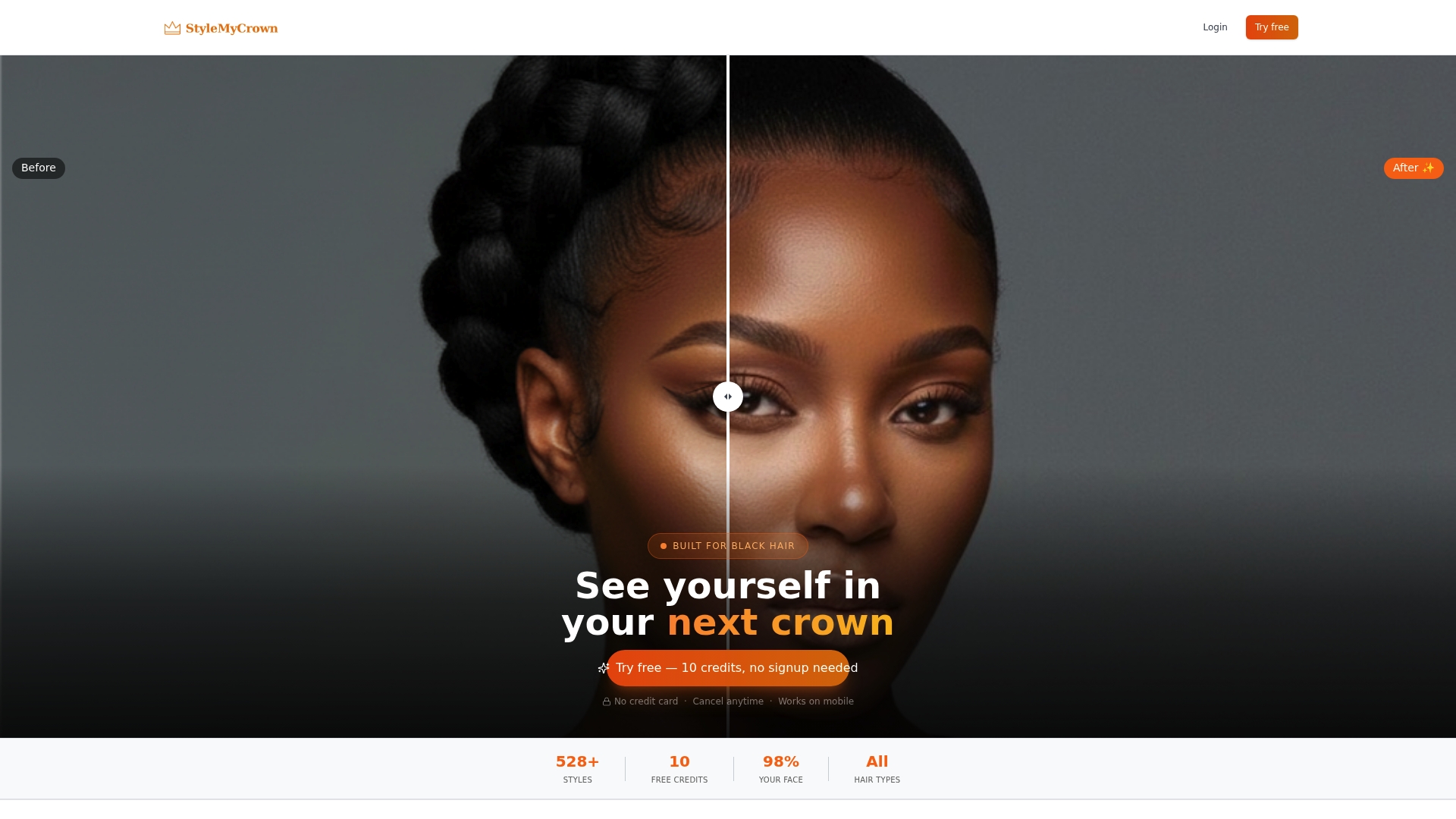
Start by uploading a clear, front-facing photo. Try at least three shapes, curtain, blunt, and one shorter option, so you have real contrast to compare. Save the two or three results you like best and bring them to your consultation instead of a folder of other people’s photos. Browse the full Style Catalog to see all 528 styles curated for Black hair textures, and start your free trial today.


