Hairstyles for Damaged Black Hair That Let It Recover

The best hairstyles for damaged Black hair are low-tension, low-manipulation styles: two-strand twists, flat twists, twist-outs, braid-outs, Bantu knots and loose, chunky cornrows on your own hair. They keep your fingers, heat and tight pulling away from fragile strands. They also give your scalp room to breathe while the damage grows out. Before you sit in a chair for hours, you can preview many of these looks on your own photo with the StyleMyCrown virtual try-on, which has over 528 styles curated for textured hair.
I know the feeling of looking at your ends and your edges and wondering whether anything you wear will make it worse. This guide gives you the styles, the rules for wearing them and the signs that it is time to take a style down.
TL;DR
- Choose low-tension styles such as twist-outs, flat twists, braid-outs and Bantu knots, and keep extensions out while your hair is fragile.
- Wear braids no longer than 6 to 8 weeks, and take a real break between installs.
- Pain, stinging, crusts or tight, lifted skin mean the style comes down today.
- Trim split ends up to where the strand is whole, or the split keeps traveling up the shaft.
- Preview a style on your own photo before you commit to hours in the chair.
Table of Contents
- What damaged Black hair actually looks like
- Why Black hair breaks in the first place
- Low-tension hairstyles that work for damaged hair
- How to wear a protective style without causing more damage
- Styles that cover thinning edges without adding stress
- Does a haircut help damaged hair?
- Caring for your hair while it is in a style
- See the style on you before you commit
- Our perspective
- FAQ
- Sources
What damaged Black hair actually looks like
Damage is not always dramatic. Most of the time it shows up in small ways that you start to normalize. Common signs include:
- Split ends that keep reappearing, even after a trim
- A change in texture, where curls that used to coil now stay limp or stretch out
- Hair that feels dry and brittle no matter how much you moisturize
- Strands that tangle easily and snap when you detangle
- Short broken pieces around the hairline, the nape or the crown
- Loss of elasticity, where a wet strand stretches and does not spring back
If you see several of these together, your hair is telling you it needs a different routine and a different kind of style. If you see patchy thinning, scalp pain or bumps, talk to a dermatologist, because that can be hair loss rather than surface damage.
Why Black hair breaks in the first place
Breakage is not a personal failing. Afro-textured hair is more fragile than Caucasian or Asian hair because of its curl pattern and differences in the hair shaft. Every bend in a coil is a place where the strand can weaken under stress.
The same NHS hospital guidance notes that damage from harmful styling practices is additive. Each tight style, each round of heat and each chemical process adds to a gradual weathering of the shaft. That is good news in a way. It means that each gentle choice you make also adds up.
The habits that do the most harm are well documented. A 2026 narrative review of Afro-textured hair care found that flat ironing, hot combing and blow drying damage the hair, and that chemical straighteners permanently disrupt the hydrogen and disulfide bonds that give hair its structure. Tight braiding, heavy extensions and styles that pull at the edges add mechanical stress on top.
So the goal for a damaged head of hair is simple: less heat, less pulling, less handling.

Low-tension hairstyles that work for damaged hair
Low-tension styles keep the pull off your follicles and your edges. Twist-outs, flat twists, braid-outs and Bantu knots reduce scalp tension and can help maintain hair integrity and minimize breakage. Here is how each one works for hair that needs a break.
Two-strand twists without extensions
This is the one I reach for first. A dermatologist rating natural hairstyles for Blavity described two-strand twists without extensions as a suitable option because they need low manipulation, usually add no tension to the edges and allow access to the scalp.
Where it goes wrong: twisting too small, too tight or on very dry hair. Keep the sections medium to large, twist on damp, moisturized hair and leave the edges soft.
Flat twists and twist-outs
Flat twists lie against the scalp and give you a neat, finished look without needing gel or tight pulling. Take them out after a few days and you have a twist-out with definition and volume. A twist-out is also a style where your hair is not hidden away, so you can see and feel how it is doing.
The common mistake is redoing the twists again and again to refresh them. Every redo is more manipulation. Let the style carry you for several days before you touch it.
Braid-outs
A braid-out uses loose braids on damp, moisturized hair to set a wavy, stretched pattern once you take them down. Make the braids medium sized and do not pull them taut at the root. The less you comb or fluff afterward, the longer it lasts and the less your hair is handled.
Bantu knots
Bantu knots coil sections of hair into small knots against the scalp. Worn as a style, they are fun and sculptural. Worn overnight, they give you a defined curl pattern the next morning with no heat. Keep the knots loose and avoid anchoring them with tight elastics at the base.

Chunky cornrows or French plaits on your own hair
For a more polished look, chunky cornrows or French plaits on natural hair avoid the added weight of extensions, according to a Fulham Scalp and Hair Clinic guide to protective styling. The same source says to wear them loosely and to avoid doing braids back to back.
Where it goes wrong: braiding tight so the style looks crisp for longer. Crisp today can mean traction on the follicle by next week. You should be able to move your scalp and forehead comfortably after the style is done.
A crown braid or low bun
When you want something dressed up, a crown braid wraps your own length around the head and tucks the ends away. A low bun does the same job with less structure. Both keep ends protected from friction against clothing. Use soft, snag-free hair ties and few pins, and keep the bun loose enough that you are not feeling it pull by the afternoon.
How to wear a protective style without causing more damage
Protective styles are meant to keep your ends tucked away and reduce daily handling. A 2026 academic review says popular protective styles can minimize interstrand friction, retain moisture and ease hair management, and also notes that some styling methods and maintenance practices are implicated in hair and scalp conditions. The way you wear the style matters as much as the style.
Use these rules:
- Keep it light. With damaged hair, skip heavy extensions and use your own hair or very light additions.
- Keep it loose. If the style feels tight on day one, it is too tight. Your hair should not feel pulled at the hairline.
- Set a time limit. The American Academy of Dermatology recommends wearing braids for no longer than 6 to 8 weeks.
- Take a real break between installs. Black Health guidance on protective styles says that back-to-back styles give the follicle nothing to recover with.
- Moisturize the hair and the scalp while the style is in, not just before you install it.
Signs a style needs to come down
The AAD says to remove a weave immediately if it causes pain or scalp irritation, and to change a hairstyle right away if you feel pain, stinging, crusts or tenting of the skin. Tenting means the scalp is visibly pulled up at the base of a braid. That is not a sign the style is fresh. That is traction.
If you notice persistent soreness, bumps, or thinning at the hairline, see a dermatologist. Thinning that appears in your 40s or 50s can also have hormonal causes alongside styling ones, so it is worth a doctor’s visit, and perimenopause hair care is one more area to look at for support during that stage of life.
Styles that cover thinning edges without adding stress
Thinning edges are painful to look at, and the instinct is to slick them down with gel and a brush. That habit is often what keeps them thin. Edge-care advice from Un-Ruly says to avoid repeatedly slicking thin edges with gel or edge control, which can cause more hair loss, and to keep styles loose.
What works instead:
- Bangs or a side swoop that sit over the hairline without pulling on it
- A loose twist-out or braid-out with soft, natural volume around the face
- Headwraps and scarves tied gently, never knotted tight at the temples
- Soft, undefined baby hairs instead of hard, brushed-down edges
If your edges are thinning, treat the cause too. Ask a dermatologist about traction alopecia before you assume it is a styling problem you can fix by yourself.
Does a haircut help damaged hair?
Yes. Split ends do not mend. Medical News Today explains that you should trim split hair up to the point where the shaft is whole. Otherwise the split can continue up the shaft, causing breakage and further damage.
You do not have to cut everything at once. Many people with damaged hair trim in stages: take off the worst ends now, protect the rest with a low-tension style, and trim again as the healthier hair grows in. If you are in the middle of a big chop or transitioning to natural hair, this staged approach lets you keep length where you can and still remove what is holding the rest back.
An updo or twist set can hide rough ends for a while, but it cannot repair them. Plan a trim into your calendar so the style is not carrying weak hair for months.
Caring for your hair while it is in a style
A low-tension style only helps if the hair underneath gets care. The St George’s guidance on Afro-textured hair describes a basic routine that includes washing every one to two weeks. While wearing braids, it suggests cleansing the scalp with a damp sponge and mild shampoo to reduce buildup.
A few habits make the difference:
- Detangle gently, from the ends up, on damp hair with plenty of slip
- Moisturize regularly, because dry hair breaks even when it is tucked in a protective style
- Sleep with a satin bonnet or pillowcase to reduce friction
- Put the flat iron, the hot comb and the relaxer on pause while your hair recovers
- Keep your hands out of your style, because constant touching is manipulation too
Think of recovery in months, not days. Damage built up slowly and it will leave slowly.
See the style on you before you commit
One of the hardest parts of choosing a style for damaged hair is the commitment. A new install can mean hours in the chair and weeks of wear. If you pick wrong, you either live with it or take it down early, and both are hard on hair that needs a break.
That is why we built StyleMyCrown. You upload a photo and try styles on yourself using augmented reality, from a catalog of over 528 styles curated for different textures and types. New users get 2 complimentary credits, so you can explore without committing. The 1 Week Trial costs $0 per week, and the 4 Week Plan is $38.73 per 4 weeks. You can see the full list on the plans page.
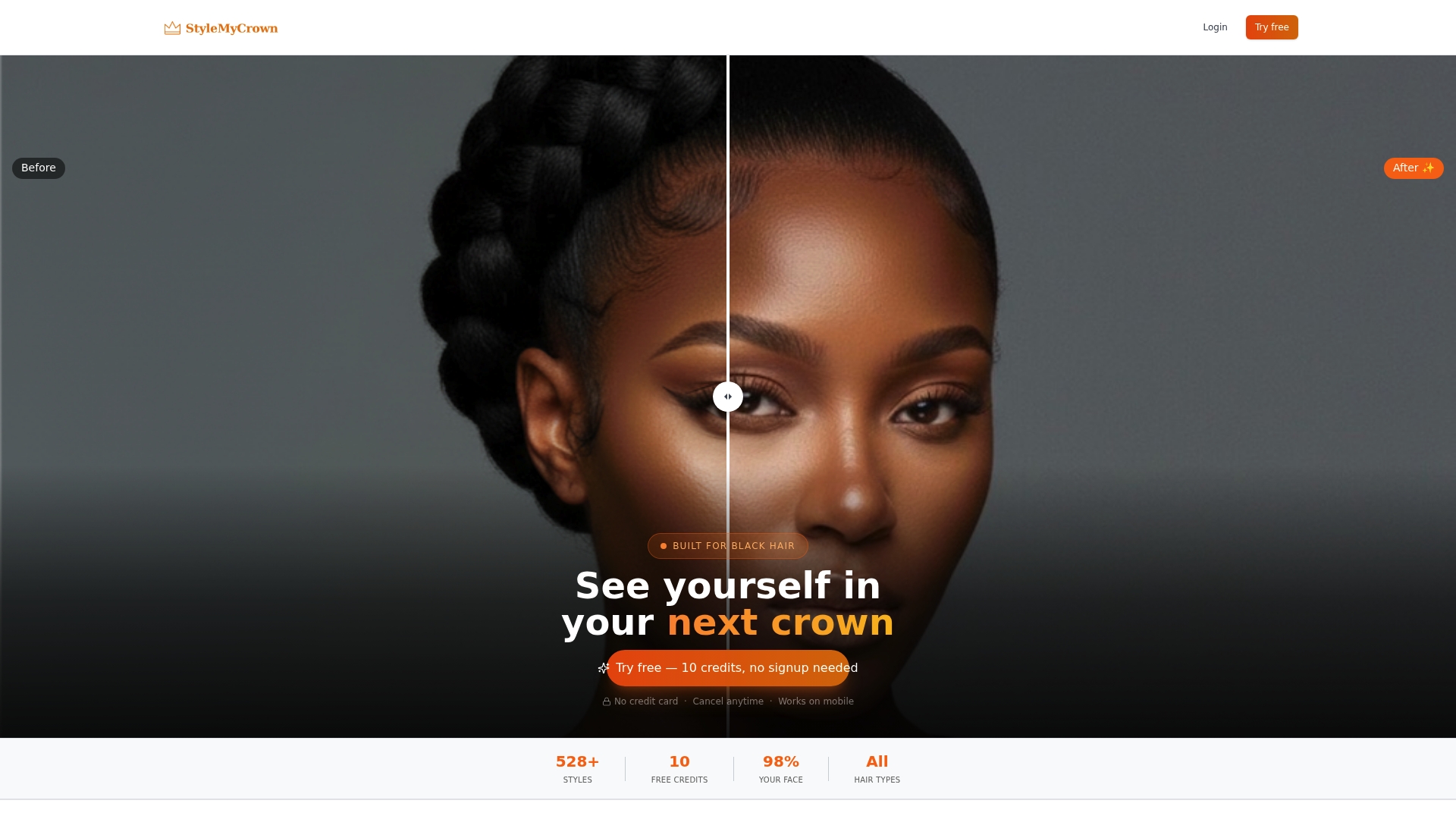
Our face data is processed securely and is never retained or used for AI training. You can also browse the style catalog to see twists, braids, knots and cuts by look, and bring your favorites to your stylist so you both know what you are aiming for.
Our perspective
When you are dealing with damage, the style decision carries more weight than it does for anyone else. A wrong pick is not just a bad day. It can be another set of weeks on fragile hair.
We hear the same worry again and again: I want to protect my hair, but I do not know if I will like the look, and I cannot afford to get it wrong. That is why we focused on Black and textured hair. Most try-on tools were not built with our curl patterns, our density or our range of styles in mind.
A preview will not fix breakage. Gentle handling, moisture, trims and rest do that. But a preview lets you choose a low-tension style with confidence, so the hours you spend in the chair go toward something you already know you love. Our catalog spans the Global Diaspora, so there is room to find a look that feels like you and still respects your hair.
Your crown deserves choices that feel good on the day and kind to your hair in the weeks after.
Christelle
FAQ
What is the best protective style for damaged Black hair?
Two-strand twists on your own hair, flat twists and loose chunky cornrows are strong choices because they need little manipulation and add little weight. Skip heavy extensions while your hair is fragile. Whatever you choose, keep it loose and take it down within 6 to 8 weeks.
Are low-tension hairstyles really better for breakage?
Low-tension styles reduce the pull on your scalp and edges, which helps maintain hair integrity and minimize breakage. Twist-outs, braid-outs, flat twists and Bantu knots are all in this group. Pair them with moisture and gentle detangling for the best results.
Why is my Black hair breaking?
Afro-textured hair is naturally more fragile because of its curl pattern and shaft structure, and damage from heat, chemicals and tight styling adds up over time. Dryness makes it worse. If breakage is sudden, patchy or comes with scalp pain, see a dermatologist.
How often should I trim damaged ends?
Trim split hair up to the point where the strand is whole, so the split cannot travel up the shaft. Many people do this in stages while they grow out damage. A stylist who works with textured hair can tell you how much to take off.
Sources
- A Dermatologist Rates Different Natural Hairstyles
- Stop Pulling Your Hair Out: Low-Tension Styles Are In
- Protective Styling For Afro-Textured Hair, Fulham Scalp and Hair Clinic
- Hairstyles that pull can lead to hair loss, American Academy of Dermatology
- Afro-textured hair care: a narrative review
- Afro-textured Hair, St George’s NHS
- How to repair damaged hair: Methods and how they work, Medical News Today
- Braids, Weaves and Locs Without Losing Your Edges, Black Health
- How to Hide Thinning Edges Without Causing More Damage, Un-Ruly


