Try Ginger Risk Free: 2 Virtual Previews for Black Hair Textures
Try Ginger Risk Free: 2 Virtual Previews for Black Hair Textures
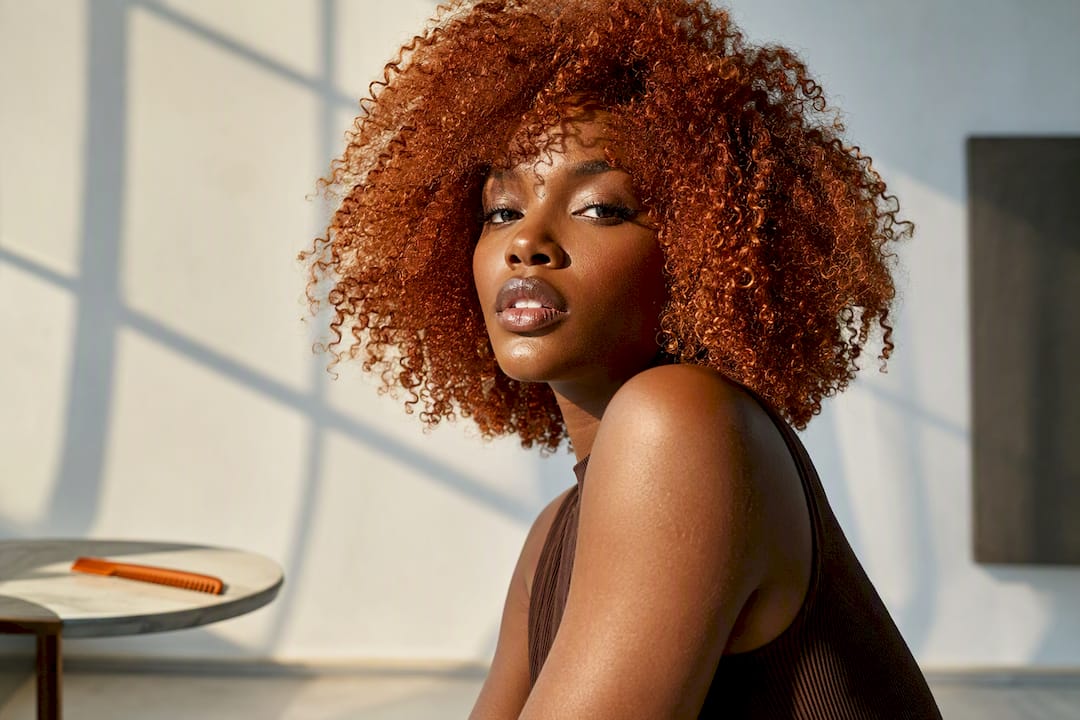
Yes, ginger looks striking on dark and brown skin when the shade and saturation match your undertone. This is not about finding an exception to a rule. It is about knowing which coppers, auburns, or cinnamon tones make your skin look lit from within. You have real options here, from full color to highlights to a ginger wig you can take off at the end of the night, and none of them require guessing.
TL;DR:
- Choosing the right ginger shade depends more on undertone than skin depth, with warm undertones favoring copper and cool undertones suited to deep auburn.
- Dark hair requires multiple lightening sessions with bond-repair treatments to achieve vibrant ginger without excessive damage or uneven lift.
- Red and copper pigments fade quickly, so regular glosses and color-safe products are essential for maintaining vibrancy and preventing brassiness.
- Protective styles like wigs, braids, or extensions offer risk-free ways to try ginger and preview looks before chemical processing.
- Virtual try-on tools help visualize suitable shades on dark skin, but a professional consultation is vital for safe, tailored, and lasting results.
Table of Contents
- Ginger Hair Dark Skin Inspiration: Looks That Actually Flatter
- How To Pick The Right Ginger Shade For Your Undertone
- Getting From Dark Hair To Ginger: What The Process Actually Involves
- Keeping Your Ginger Vibrant: Maintenance And Fading Care
- Styling Ginger On Curls, Braids, And Wigs
- Try Before You Dye: Previewing Ginger On Your Own Photo
- Your Pre-Color Checklist Before You Book Anything
- Common Challenges When Coloring Dark Hair Ginger (And How To Fix Them)
- Products That Keep Ginger Looking Rich On Dark Skin Tones
- Protecting Your Hair During The Bleaching Process
- Where Ginger Hair On Dark Skin Comes From Culturally
- Why A Professional Consultation Still Matters
- Perspective: Ginger Belongs To You Too
- Try Ginger Risk Free Before You Commit To Color
- Sources
- FAQ
Ginger Hair Dark Skin Inspiration: Looks That Actually Flatter
Forget the idea that ginger only means one shade. It is a whole family, and darker skin tends to pull warmth and richness out of ginger in a way lighter skin simply cannot replicate.
Deep auburn and mahogany sit closer to your natural depth, so they read as polished rather than dramatic. They are the low-contrast choice, meaning the color blends with your roots and grow-out is more forgiving. Bright copper and cinnamon do the opposite. They create real contrast against deep or medium brown skin, which is why they show up so often in editorial and red carpet looks. Contemporary beauty coverage has tracked more people with deeper skin choosing these brighter coppers specifically because of how the contrast and dimension reads in photos and in person.
Format matters as much as shade:
- Balayage or root shadow, for color that grows out without a hard line
- Full head color, for maximum statement and even saturation
- Ginger braids or faux locs, for a protective style that still delivers the color
- Wigs and extensions, for zero commitment and instant results
Before you decide anything, build a small mood board. Save five or six photos of people with your skin depth wearing different ginger tones, and you will notice which ones you keep going back to.
How To Pick The Right Ginger Shade For Your Undertone
Undertone matters more than how light or deep your skin is. Two people with the same brown skin tone can need completely different ginger shades depending on whether their undertone runs warm, cool, or neutral.
Pro Tip: Check your veins in natural light. Green veins usually mean warm undertones, blue or purple veins mean cool, and a mix means neutral. If gold jewelry looks better on you than silver, that is another vote for warm.
Once you know your undertone, the shade rules get simple:
- Warm undertones pull well toward copper, golden ginger, and bright cinnamon. These shades echo your skin’s own warmth instead of fighting it.
- Cool undertones usually look better in deep auburn or berry-leaning red, sometimes called blue-based red. Blue-based reds and auburns tend to complement cool undertones the way orange-copper flatters warm ones.
- Neutral undertones have the most flexibility and can move between bright copper and muted auburn depending on the mood you’re after.
Depth matters too. On medium and deep skin, saturated and dimensional ginger tones read as intentional. Pastel or washed-out orange tends to look unfinished rather than soft, so skip that route entirely. Ginger itself runs on a spectrum from bright copper to muted clay, and if you’re not sure where to land, start with highlights or balayage instead of full color. It is a lower-risk way to test the warmth before committing your whole head.
Getting From Dark Hair To Ginger: What The Process Actually Involves
Dark natural hair almost always needs lifting before ginger will show up the way you’re picturing it. Melanin in dark strands blocks warmer tones from reading true, so a colorist has to lighten the hair first, and that step affects both texture and porosity. This is the part most people underestimate.
A solid salon visit for this kind of transformation usually includes:
- A strand test, done before your full appointment, to see how your hair responds to lightener
- Staged lifting over multiple sessions rather than one aggressive process, especially if you’re going from deep brown or black to bright copper
- Bond-repair treatments worked into the color process itself, not added as an afterthought
- A realistic session count discussion, since going several levels lighter rarely happens in one visit
At-home routes exist too, but they come with real limits. Semi-permanent color-depositing conditioners and glosses can shift dark hair toward auburn or add copper warmth without lifting, which is a safer starting point. Box dye promising bright ginger on dark, unlifted hair almost never delivers the shade on the box. Staged, dimensional approaches like balayage and highlights tend to outperform one-shot bright copper attempts on dark brown hair, whether you’re in a salon chair or doing it yourself.
Before booking anything, ask your colorist directly: how many sessions will this take, what’s your bond-repair protocol, and what will my hair actually look and feel like a week after the last appointment?
Keeping Your Ginger Vibrant: Maintenance And Fading Care
Red and copper pigments fade faster than almost any other color family. That’s not a flaw in your hair or your colorist’s work. It’s simply how red molecules behave, since they’re larger and wash out faster than other dye molecules.
Editorial and salon sources consistently point to regular glosses or color refreshes as the fix, typically every four to eight weeks for bright copper. Deeper auburn and mahogany fade more subtly and can often stretch longer between refreshes.
Daily habits matter just as much as salon visits:
- Wash with sulfate-free shampoo, since sulfates strip color fast
- Rinse with cool water instead of hot, which helps seal the cuticle and hold pigment
- Use color-safe, UV-protecting products, especially if you spend real time outdoors
- Deep condition weekly, and lean on bond-repair treatments if your hair was lifted to get to ginger
Budget for upkeep the same way you’d budget for the initial color. A gloss appointment costs less than a full color correction, and skipping it is usually what leads to the brassy, uneven fade nobody wants.
Styling Ginger On Curls, Braids, And Wigs
Ginger reads differently depending on your texture, and that’s part of what makes it fun to work with instead of intimidating.
On coils and curls, color placement changes everything. Face-framing pieces and highlighted ends catch light every time your curl pattern moves, while all-over color on tight coils tends to look richer and more three-dimensional than it does on straight hair. Root shadow techniques soften the grow-out line, which matters more on textured hair since new growth is often more visible against a lightened base.
Protective styles are an easy entry point. Ginger braids, faux locs, and color-matched extensions let you test the look with zero chemical processing, and they’re genuinely popular for exactly that reason, since wigs, braids, and extensions offer a way to try the color without touching your natural strands. Sew-ins and wigs go a step further. You can test three or four different ginger shades across separate installs before ever picking up a dye box, which takes the guesswork completely out of the equation.
Try Before You Dye: Previewing Ginger On Your Own Photo
This is exactly the gap Stylemycrown was built to close. Uploading your own photo and previewing curated hairstyles and color options, built specifically around Black hair textures rather than a generic filter slapped over any face, takes the guesswork out of picking a shade.
You can compare a deep auburn against a bright cinnamon copper on the same photo, see how each one sits near your face, and save the results. Bring those saved previews into a consultation, and your colorist has a concrete reference point instead of a vague description. New accounts get two complimentary credits to start experimenting immediately.
One honest note: virtual preview shows you the aesthetic direction. It does not replace a strand test, which is the only way to know how your actual hair will respond to lightener.
Your Pre-Color Checklist Before You Book Anything
A little prep before your appointment saves you time, money, and a lot of disappointment.
- Gather reference photos that match your skin depth and undertone, not just photos you like in general.
- Be upfront about your hair’s chemical history. Relaxers, previous color, and keratin treatments all affect how your hair handles lightener.
- Ask for a strand test before committing to a full appointment, especially if you’re moving more than two shades lighter.
- Get a lifting strategy in writing, including estimated session count and bond-repair steps.
- Ask for a maintenance estimate covering gloss frequency and product recommendations.
- Consider a staged or temporary option first, like a wig, braids, or color-matched extensions, if you’re still unsure about full commitment.
Common Challenges When Coloring Dark Hair Ginger (And How To Fix Them)
Fading is the complaint you’ll hear most, and it happens because red pigment molecules simply don’t hold as long as browns or blacks. The fix isn’t avoiding ginger. It’s building a gloss schedule into your routine from day one instead of waiting until the color already looks dull.
Brassiness shows up differently on dark hair than it does on lighter hair. Instead of a yellow cast, you’ll often see unwanted orange or muddy tones creeping in between color sessions. A purple or blue-based toning shampoo, used sparingly, can pull some of that unwanted warmth back without stripping the ginger you actually want.
Uneven lift is another real issue, especially on hair with mixed texture or previous color history. Some strands lighten faster than others, leaving patchy results. This is precisely why staged sessions and a proper strand test matter. A colorist who rushes a full head of dark hair to bright copper in one sitting is setting you up for blotchy, inconsistent color.
Dryness and breakage after lifting are common too, since lightener opens the cuticle and strips moisture along with pigment. Bond-repair treatments during the color process, followed by consistent deep conditioning at home, are what separate healthy ginger hair from hair that looks great for two weeks and then falls apart.
Finally, color transferring onto pillowcases and clothing is a small but real annoyance with bright copper. Satin pillowcases and a short drying time after washing cut down on this significantly.
Products That Keep Ginger Looking Rich On Dark Skin Tones
The right product lineup makes the difference between ginger that looks freshly done for two months and ginger that looks tired after two weeks.
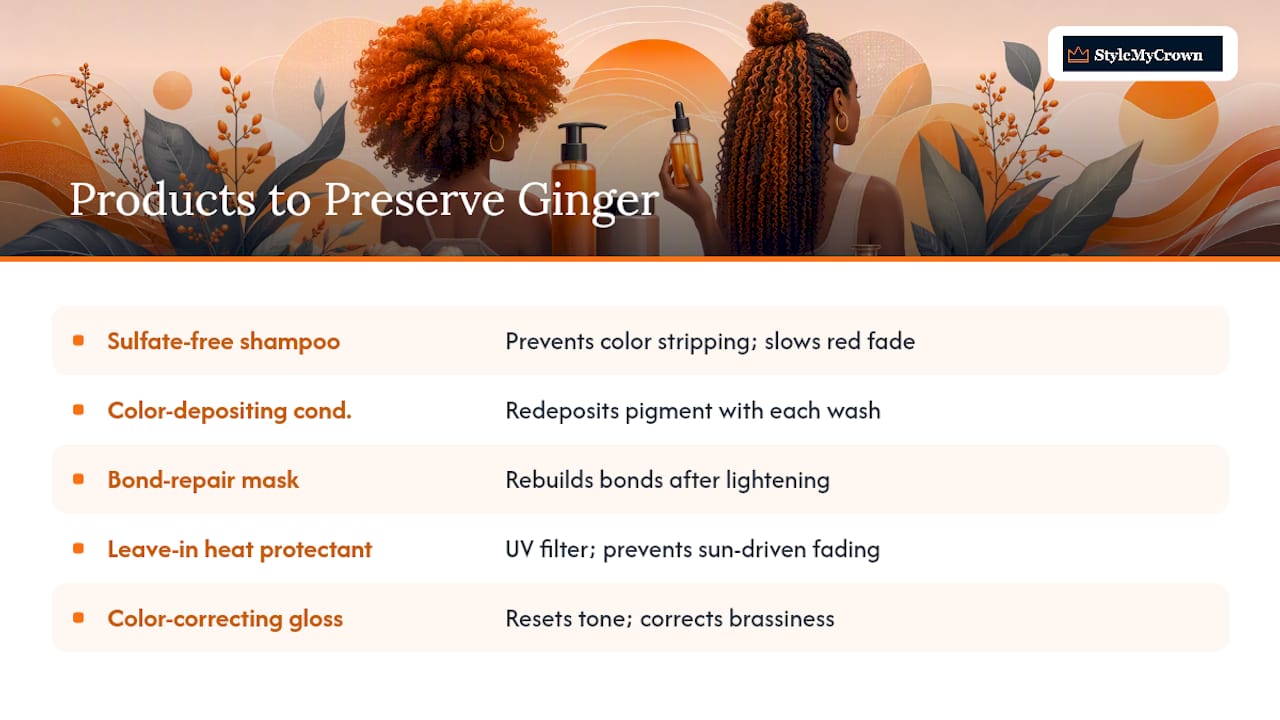
Sulfate-free shampoo is non-negotiable. Sulfates are aggressive cleansers that strip color fast, and red tones are the most vulnerable shade family to that kind of stripping. Pair it with a color-depositing conditioner in your shade family, whether that’s copper, auburn, or cinnamon, since these products redeposit small amounts of pigment every time you wash and slow down visible fading.
A weekly bond-repair mask matters even more if your hair was lifted to reach ginger. Lightening breaks down the internal bonds that give hair its strength, and repair treatments rebuild some of that structure while your color settles.
Leave-in heat protectant with UV filtering deserves a permanent spot in your routine too. Sun exposure oxidizes red pigment faster than almost anything else, which is part of why ginger fades noticeably faster in summer.
For touch-ups between salon visits, a root-touch-up powder or spray in your exact shade buys you time without forcing an early appointment. And if you notice brassiness creeping toward orange or muddy tones, a color-correcting gloss, either professional or a quality at-home version, resets the tone without another full lightening process.
Protecting Your Hair During The Bleaching Process
Lightening dark hair to get to ginger is a chemical process, and treating it casually is how people end up with breakage instead of the shade they wanted.
A strand test before your full appointment isn’t optional if you care about your hair’s integrity. It tells your colorist exactly how your hair will respond and how far it can safely lift in one session. Skipping this step is the single biggest reason people end up with over-processed, gummy strands.
Staged lifting protects your hair more than people realize. Going from deep brown or black to bright copper in stages, rather than one aggressive session, gives your hair time to recover between appointments and dramatically lowers the risk of snapping or excessive dryness.
Bond-building treatments, applied during the lightening process rather than after, rebuild the internal structure lightener breaks down. This is standard practice in salons doing serious color correction work, and it is worth asking for by name.
After your color is done, deep conditioning becomes part of your regular routine, not an occasional treat. Weekly masks, protein treatments if your hair needs the extra structure, and a serious reduction in heat styling all help your newly lightened hair hold up.
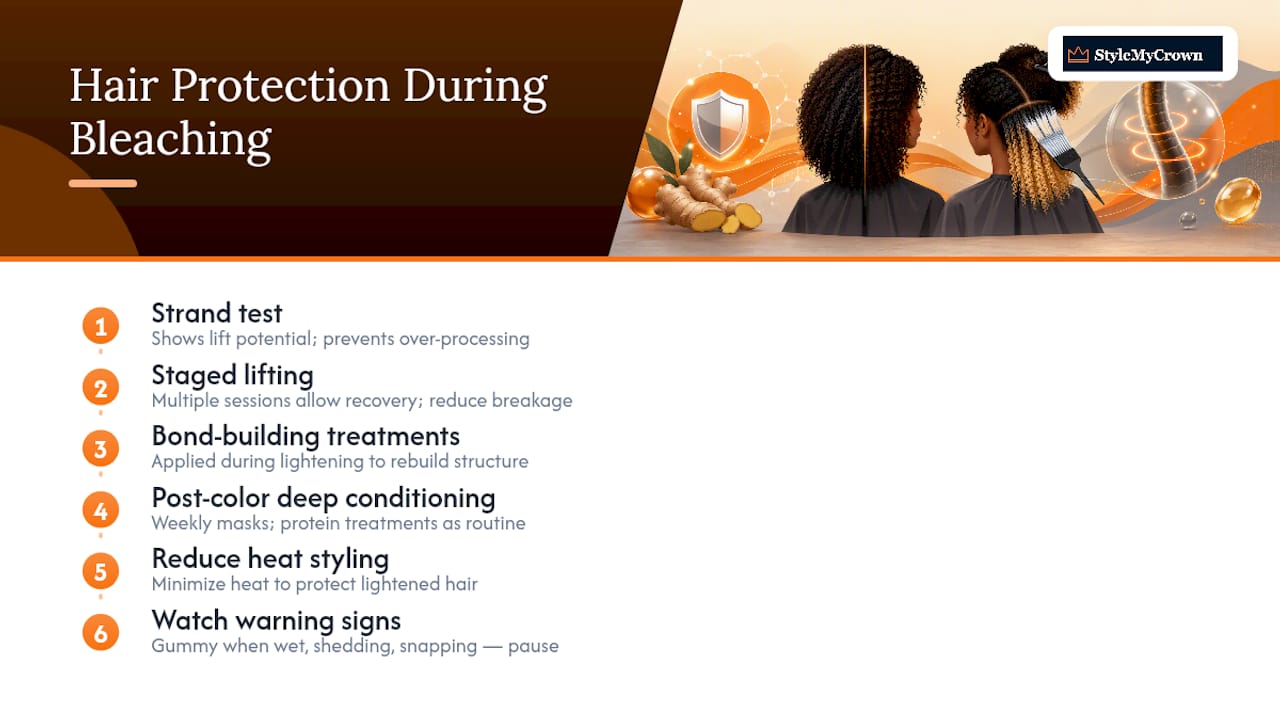
Watch for warning signs: hair that feels gummy when wet, excessive shedding, or strands that snap with minimal tension all mean it’s time to pause additional lightening and focus entirely on repair.
Where Ginger Hair On Dark Skin Comes From Culturally
The idea that ginger only belongs on fair skin is a fairly recent and narrow one, not a historical constant. Red hair itself has deep roots across multiple populations and regions, and its presence alongside dark skin isn’t some rare genetic fluke. Red hair comes from variants in the MC1R gene, which increases pheomelanin production, and this operates independently from the separate genes that regulate skin’s melanin levels. The two systems simply don’t compete with each other.
Beyond genetics, ginger has carried real cultural weight in Black beauty spaces for decades, showing up in music, film, and street style as a marker of individuality rather than an attempt to look like anyone else. What’s shifted more recently is visibility. Beauty coverage has moved away from treating red hair on deep skin as an anomaly and started treating it as a legitimate, popular style family. Stylists increasingly discuss it as a full spectrum of options rather than a single risky choice.
That shift matters because representation shapes confidence. Seeing more people with your own skin depth wearing bright copper, cinnamon, or deep auburn makes the decision to try it yourself feel less like a risk and more like an obvious option that was always available.
Why A Professional Consultation Still Matters
Even with every guide, mood board, and virtual preview available to you, a real consultation with a colorist changes the outcome. Photos and undertone tests get you close. A trained eye looking at your actual hair, its current condition, its porosity, and its history, gets you the rest of the way.
A good colorist will ask about your chemical history before touching a bottle of lightener. They’ll want to know about relaxers, keratin treatments, or previous color, because all of it affects how your hair handles the lifting process. They should also be doing a strand test as standard practice, not as an upsell.
Look for a colorist who talks openly about staged lifting rather than promising a one-session transformation from black to bright copper. That promise, more often than not, is a warning sign rather than a selling point. Ask to see their previous work on clients with similar hair depth and texture to yours, and don’t be shy about asking how they handle bond repair during the process.
If you’re weighing salon versus at-home, a consultation alone, even without committing to the full service that day, can tell you whether your hair is a good candidate for lifting right now or whether a temporary route makes more sense first.
Perspective: Ginger Belongs To You Too
Ginger was never a shade reserved for one skin depth. It is a flexible aesthetic that shifts to fit whoever wears it. Try it low commitment first. Protect your hair’s health along the way, and let the color be yours.
— Christelle
Try Ginger Risk Free Before You Commit To Color
Some virtual try-on services give you a way to see the shade before you sit in a chair or open a box of dye, which means no wasted appointment and no color regret. Upload your photo, preview copper, auburn, or cinnamon tones built specifically for Black hair textures, and walk into a consultation already knowing what direction you want.
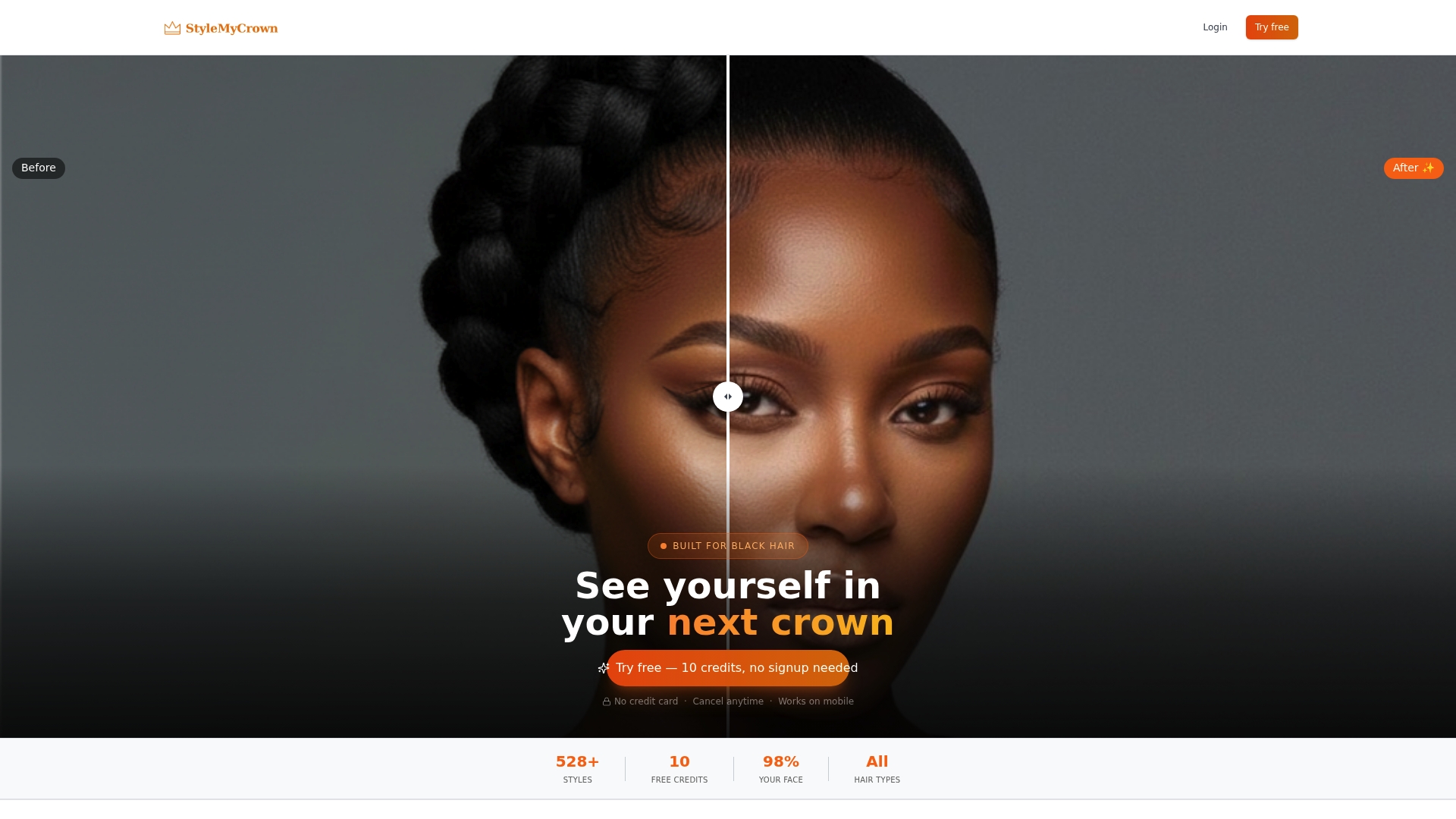
Some virtual try-on services provide complimentary credits to start experimenting, enough to compare a couple of shades and figure out which one actually excites you. Browse the Style Catalog to see the full range of ginger options available for preview, save the results, and bring them to your next consultation as a reference point instead of a vague idea. When you’re ready to move from preview to planning, start at Stylemycrown and take the guesswork out of your next color decision.
Sources
- MC1R gene - MedlinePlus Genetics
- Ginger hair color — Hairstylester
- 15 Ginger Hair Ideas for Black Women — CrownCurlsS
- Red hair on dark skin — Gusto Hair
FAQ
Is it possible to have dark skin and ginger hair?
Yes. Red hair comes from MC1R gene variants that increase pheomelanin, a pigment pathway that operates independently from the genes controlling skin melanin, so the two traits coexist naturally.
Are there dark-skinned people with natural ginger hair?
Yes, though it’s less common than in lighter-skinned populations, since red hair genetics can appear across different ancestral backgrounds regardless of skin depth.
What ethnicity are gingers mostly?
Red hair from MC1R variants appears most frequently in people of Northern and Western European ancestry, but the gene isn’t exclusive to any one group, and natural red hair shows up in other populations as well.
What skin tone looks best with ginger hair?
Every skin tone can wear ginger well when the shade matches undertone. Warm undertones tend to suit bright copper and golden ginger, while cool undertones often look better in deep auburn or berry-leaning red.
Should I try ginger highlights before going full color?
Starting with balayage or highlights is a lower-risk way to test warmth against your skin before committing to an all-over color, and it’s a route many stylists recommend for exactly that reason.


