Add 1 to 4 Inches: Texture First Wig Length for Black Hair
Add 1 to 4 Inches: Texture First Wig Length for Black Hair
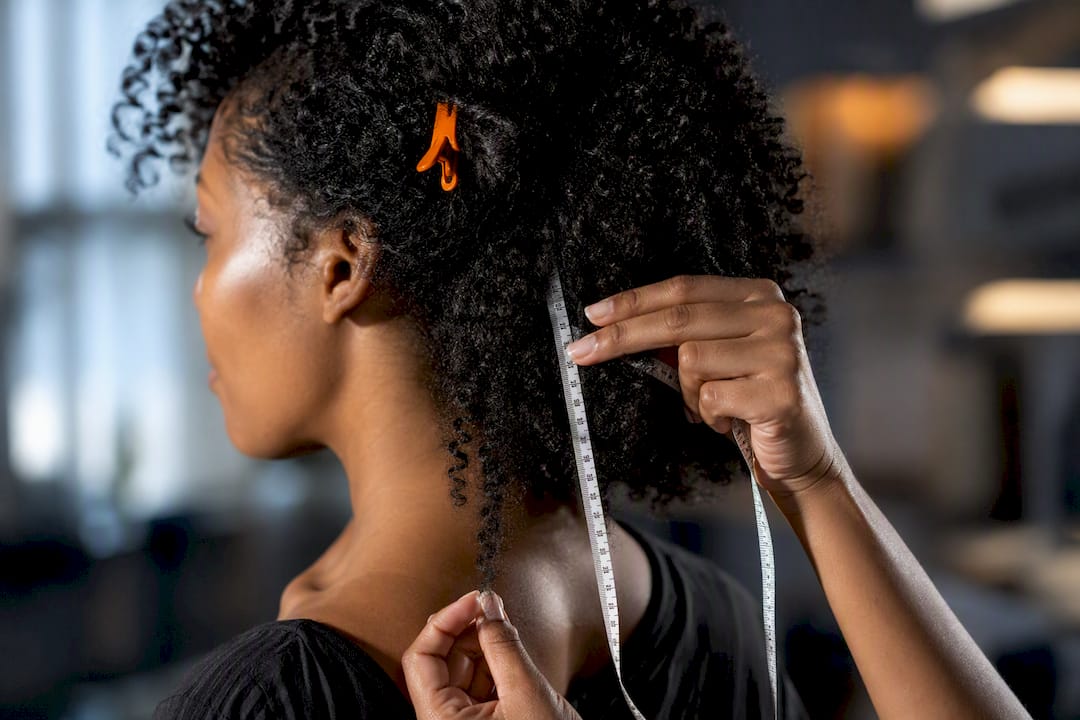
Wig length is measured crown to tip, and for curly or coily textures, that measurement is taken stretched, not in its natural curled state. The quick rule: pick the inch mark that lands where you want the hair to fall (shoulder, mid back, waist), then add roughly 2 inches if you’re buying a curly or coily texture to offset shrinkage. Density and cap type will still shift how that length actually looks once it’s on your head.
TL;DR:
- Add 1 to 4 inches to the measured length for curly and coily textures to account for shrinkage, which varies by curl pattern.
- Wigs in the 18 to 22 inch range strike a balance between dramatic length and ease of maintenance, making them popular for everyday wear.
- Longer lengths require more drying time, higher product usage, and specialized storage to prevent matting and damage over time.
- Measurement accuracy depends on detangling curls first and verifying if the listed length is stretched or natural, as curls can shorten the appearance significantly.
- Virtual try-on tools allow personalized previews of different lengths and textures, reducing the risk of buying mismatched styles based solely on photos or charts.
Table of Contents
- Wig Length Chart: Inches Mapped to Where Hair Actually Falls
- How to Measure Wig Length the Right Way
- How Texture Changes the Way Length Looks
- Choosing Your Length by Face Shape, Height, and Lifestyle
- Using Virtual Try-On to Confirm Your Length Before You Buy
- A Stylist’s Take on Getting This Right the First Time
- Try It On Before You Buy: A Faster Way to Get Length Right
- Sources
- FAQ
Wig Length Chart: Inches Mapped to Where Hair Actually Falls
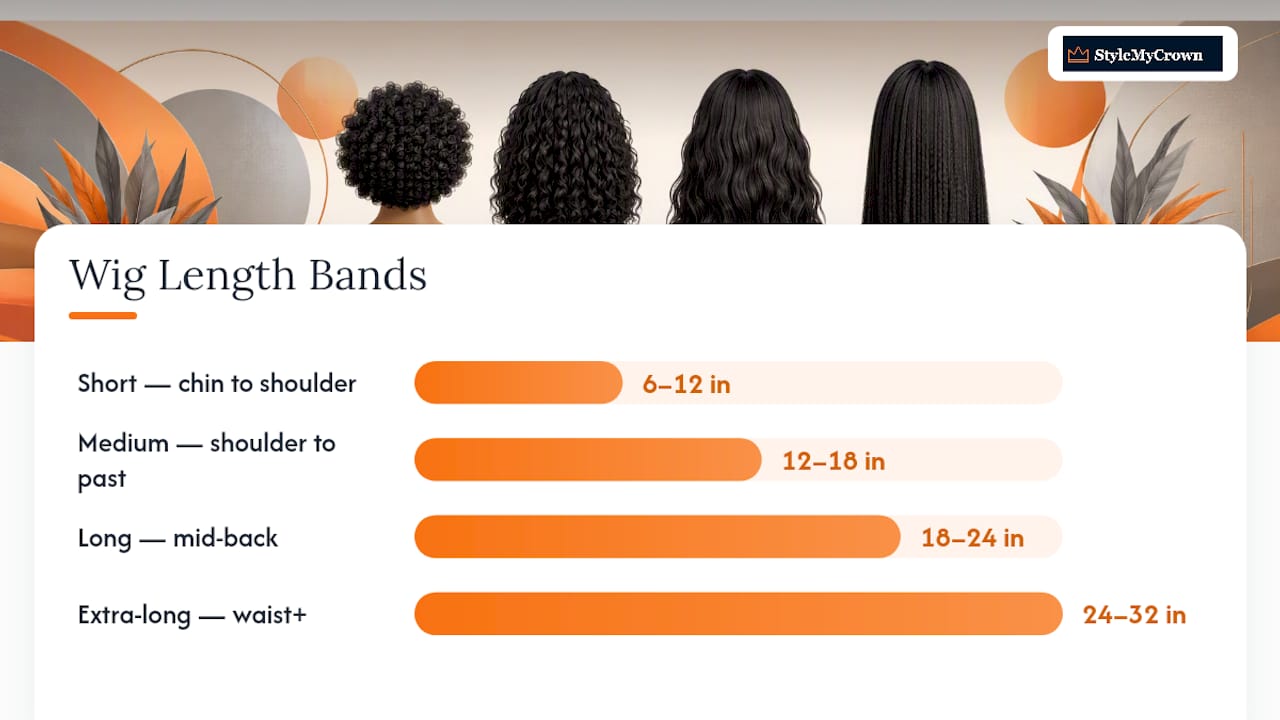
Every wig length chart breaks down into the same four bands, and once you know them, shopping gets a lot less confusing. These bands come from how industry guides consistently define short, medium, long, and extra-long categories, and they hold up whether you’re looking at a bob or a waist-length unit.
- Short (6 to 12 inches): Falls between chin and shoulder. Think pixie cuts, chin-length bobs, and cropped shag styles. Least drying time, easiest to detangle, lowest risk of tangling at the nape.
- Medium (12 to 18 inches): Falls at the shoulder to just past it. This is your classic lob or shoulder-grazing bob territory. Moderate brushing time, manageable for daily wear.
- Long (18 to 24 inches): Falls mid-back. This is where most buyers land, and for good reason.
- Extra-long (24 to 32 inches): Falls at the waist or lower. Dramatic, but heavier and slower to dry.
The 18 to 22 inch range is a popular band, and it’s not just aesthetics driving that. That range balances a longer, more dramatic look with hair that’s still manageable to wash, detangle, and style without eating your entire Sunday. Anything past 24 inches starts asking a lot more of you: longer drying windows, more product to fully saturate the strands, and storage that keeps the ends from crushing or matting.
Here’s what a lot of first-time wig buyers miss: the band you pick determines your whole maintenance schedule, not just your silhouette. A 10-inch bob might air dry in under an hour. A 28-inch unit can take most of an evening, especially in human hair. If you’re someone who washes and goes on a tight morning schedule, that’s worth weighing before you fall in love with a waist-length photo on your phone.
Storage matters here too. Shorter lengths tolerate a basic wig stand fine. Longer lengths do better on a stand with a wider base, loosely braided or twisted overnight so the weight of the hair doesn’t pull and stretch the cap at the crown over time.
If you’re leaning toward something short and low-maintenance for your first unit, glueless styles built for beginners tend to pair well with the shorter bands, since there’s less hair to manage during install and takedown.
How to Measure Wig Length the Right Way
Sellers measure wigs using stretched length because it gives a consistent number regardless of the texture. Guides across the industry measure from the crown to the longest strand with a soft tape, gently pulling curly or wavy sections straight first so a 3C curl pattern and a straight unit can both be described honestly on the same scale.
Here’s how to do it yourself, whether you’re checking a listing or verifying a wig you already own:
- Place the wig on a canvas head or mannequin, or have it sit naturally on your own head if that’s what you’ve got.
- Locate the crown, the highest point at the center top of the head where the cap begins.
- Take a soft measuring tape and hold it at the crown.
- Let the hair hang naturally, then run the tape straight down to the very tip of the longest section.
- For straight textures, this is your final number. No adjustment needed.
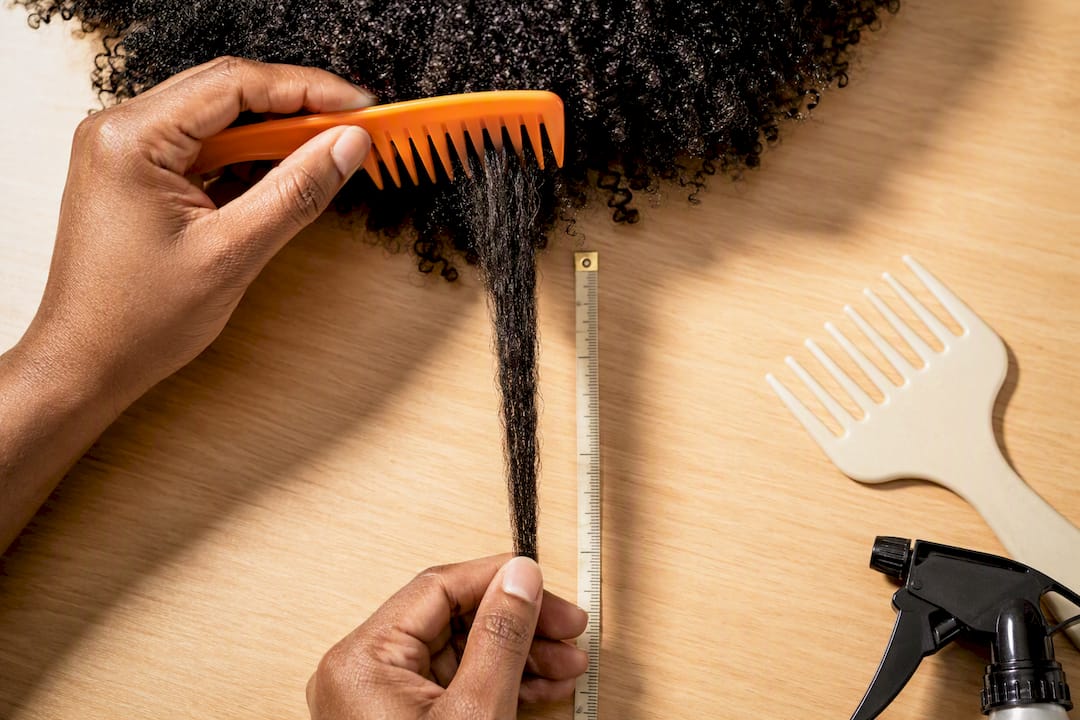
- For curly, wavy, or kinky textures, gently detangle first, then lightly stretch a section between two fingers before measuring to the tip. Don’t yank. You’re removing the curl’s bounce, not testing the wig’s durability.
- Repeat on two or three sections since curl patterns rarely fall perfectly even, and average the results.
Cap type changes what you’re actually seeing, too. A lace front cap sits the hairline close to your natural hairline, so the length reads accurately from where your forehead ends. A U-part or V-part cap leaves more of your natural hair exposed at the crown or part, which means the wig hair itself starts a little lower on your head. The same 18-inch unit can look shorter on a U-part install simply because less of that 18 inches is visible above your own hairline.
Pro Tip: Never measure a dry, tangled curly wig straight out of the box. Detangle with a wide-tooth comb first, because knots and shrinkage stack on top of each other and will make an 18-inch wig read like a 14-inch one on your tape.
The most common measurement mistake isn’t a bad tape reading. It’s comparing a stretched-length number from one seller against a natural-fall photo from another. Always ask (or check the listing) whether the inch count is stretched or natural before you compare two wigs side by side.
How Texture Changes the Way Length Looks
The tape measure doesn’t lie, but your eyes will still tell you a different story depending on curl pattern. A 16-inch straight wig hangs close to its full stretched length because there’s nothing pulling it upward. The same 16-inch measurement on a body wave unit sits noticeably shorter, and a tightly curled 16-inch wig can visually read as 2 to 4 inches shorter once the curl springs back into its natural pattern.
Rough shrinkage guide by texture:
- Straight: Visual length matches the listed measurement almost exactly.
- Body wave: Expect about 1 inch of visual shrinkage from the stretched number.
- Deep wave or loose curl: Expect 2 to 3 inches shorter than listed.
- Tight curl or kinky coil: Expect 3 to 4 inches shorter, sometimes more depending on how tight the pattern is.
Density complicates this further. A low-density wig, meaning fewer strands per square inch of cap, tends to look flatter and can make hair appear like it’s hanging longer simply because there’s less bulk pushing the ends outward. A high-density wig looks fuller, and that fullness can actually make the same length look shorter, because thick, heavy curls don’t hang as loose as thin ones do.
Fiber type plays into all this too. Synthetic wigs come pre-styled with a set curl or wave pattern baked in, which is great for low-maintenance wear but means you can’t heat-style or dye them to adjust the look later. Human hair wigs give you more control since you can straighten a curly unit temporarily to check true stretched length, or add curl to a straight one, but that flexibility comes with more upkeep.
The practical takeaway: when you’re torn between two lengths, size up rather than down, adding 1 to 4 inches depending on how tight your chosen curl pattern is. It’s a lot easier to trim a wig that came in slightly long than to stretch one that came in short.
Choosing Your Length by Face Shape, Height, and Lifestyle
Length isn’t just a number you pick off a chart. It has to work with your face, your body, and your actual week.
Face shape guidance tends to follow a few reliable patterns among stylists:
- Round faces generally do well with longer lengths past the shoulder, since the extra length elongates the face rather than adding width at the jaw.
- Oval faces can wear almost any length in the chart without much risk, from a cropped pixie to waist-length curls.
- Heart-shaped faces often look balanced with shoulder-length styles, which soften a narrower chin without overwhelming it.
- Long faces tend to benefit from medium lengths with layers or curtain bangs, which break up vertical length rather than adding to it.
Height and proportion matter more than people expect. An 18-inch wig on someone who’s 5’2" reads as noticeably longer relative to their frame than the same 18 inches on someone who’s 5’9". If you’re petite, sizing down slightly from what the chart suggests for “mid-back” often looks more proportional. If you’re tall, you may need to size up to get the same visual effect.
Then there’s the real-life checklist, the one that actually determines whether you’ll love a length in six months:
- How much time can you realistically give to detangling and drying each week?
- Do you travel often, and can you pack and store this length without crushing the ends?
- What’s your climate? Humidity affects curly and wavy textures more than straight ones.
- Do you want styling versatility (updos, half-up looks) or a wash-and-go simplicity?
Density and length need to move together, not independently. A general pairing guide: short lengths (6 to 12 inches) look good at light to medium density since there’s less hair to hold up. Medium lengths (12 to 18 inches) usually want medium density for a natural fall. Long and extra-long lengths (18 inches and up) tend to need medium to full density, because thin density on a lot of length can look sparse and stringy rather than flowing.
Pro Tip: If you’re choosing between two densities for the same length, go with the one described as “medium” unless you specifically want an ultra-sleek, thin look or a dramatically full one. Medium density is the most forgiving across face shapes and styling choices.
Using Virtual Try-On to Confirm Your Length Before You Buy
A chart and a tape measure get you most of the way there, but they can’t show you how a specific length sits on your specific face, your specific proportions, your actual head. That’s the gap virtual try-on closes.
The workflow is simple:
- Pick your target length from the chart based on face shape, height, and lifestyle.
- Test one or two lengths on your own photo, comparing the stretched view against how the texture will naturally fall.
- Toggle between density options and curl patterns to see how each changes the visual weight and length.
- Check how bangs or face-framing pieces shift where the length appears to start.
- Save a couple of screenshots side by side so you’re not relying on memory when you’re ready to order.
A catalog of hundreds of styles is helpful because photos of length and density on someone else’s head rarely translate to how they’ll look on yours, especially across the range of textures common in Black hair. Some complimentary credits let you test this before committing to anything. For reliable reference photos to compare against your own results, browsing curated hairstyle references alongside your AR preview gives you a fuller picture. Do the chart and the measuring first. Let the visual preview confirm it.
A Stylist’s Take on Getting This Right the First Time
The single biggest gap I see in wig buying isn’t a bad chart or a wrong measurement. It’s people trusting a stretched-length number without accounting for their own texture, then feeling blindsided when a “22 inch” curly unit sits at their shoulders instead of their waist. Stretched length is a standard, not a promise about how the hair will actually behave on your head.
Before you order, run through this:
- Measure crown to tip with a soft tape.
- Confirm whether the listing’s number is stretched or natural length.
- Preview the length on your own photo, not a model’s.
- Check the density against the length band you’re choosing.
- Verify the cap type and where it will actually sit on your head.
- Compare reference photos on someone close to your own height, not just your texture.
Skip any one of these and you’re gambling on a guess dressed up as a measurement.
— Christelle
Try It On Before You Buy: A Faster Way to Get Length Right
Ordering a wig online usually means staring at a model photo and hoping the same inches translate to your face, your density preference, and your texture. They often don’t, which is exactly why so many units end up returned or shoved in a closet after one wear.
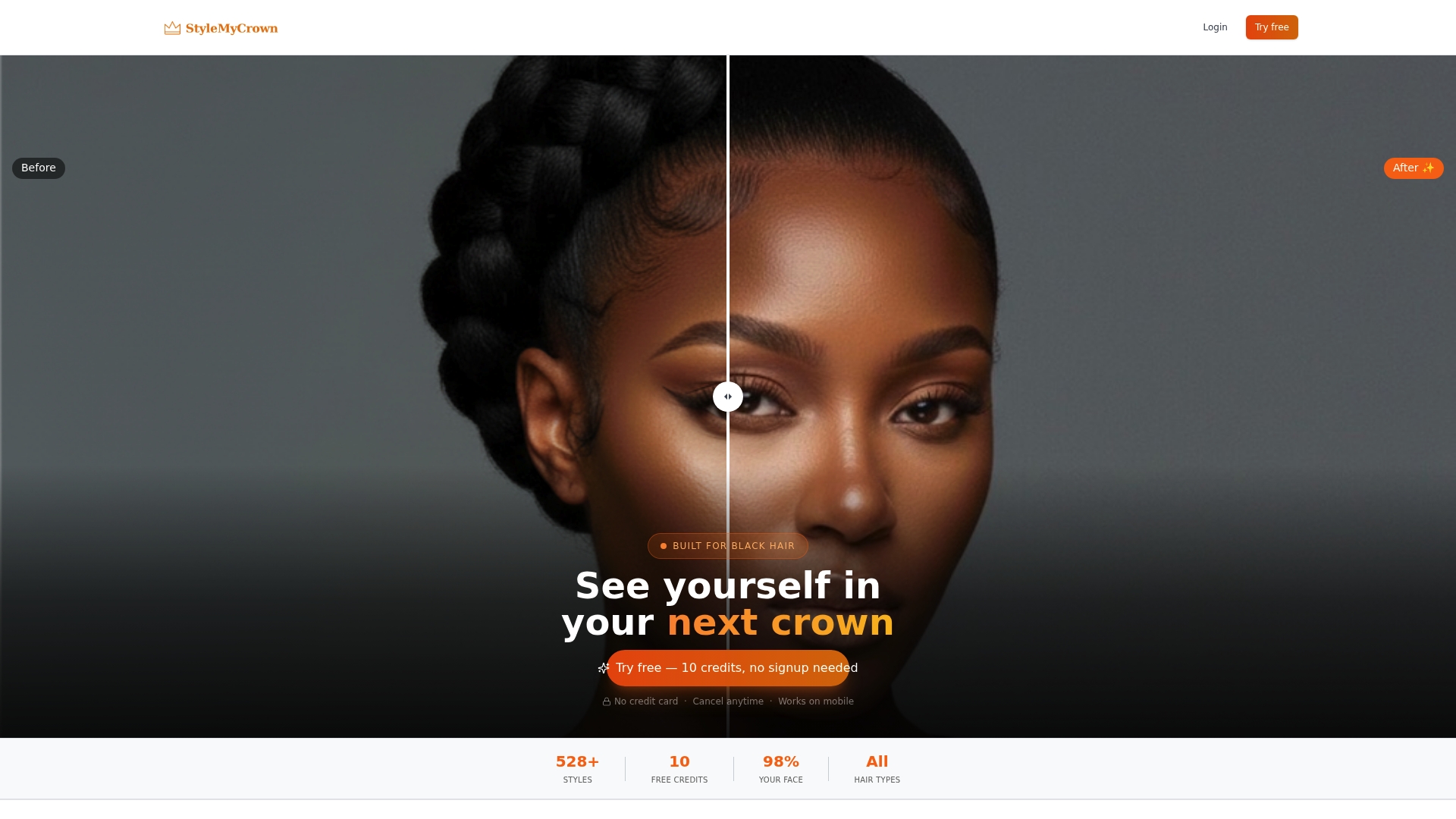
Stylemycrown’s virtual try-on lets you skip that gamble. Upload your own photo, apply a length and texture from the Style Catalog, and see the actual fall on your actual proportions before you spend a cent on a physical unit. You get two complimentary credits to test this out, no commitment required, and the catalog spans more than 528 styles curated specifically for Black hair textures, so you’re comparing against people whose curl pattern and density actually resemble yours. If you want a second opinion once you’ve narrowed your options, the Stylist Catalog connects you with stylists who can talk through the look before you commit. Start with your two free credits and preview your shortlisted lengths against your own face today.
Sources
A few pages back the measurement standards and fiber differences covered in this guide, worth keeping handy if you want to double check a listing yourself:
- Synthetic vs. human hair wig
- How to Measure Wig Length Accurately: The Ultimate WIGI Hair Guide
- Wig Length Chart: How to Find Your Perfect Wig Length
- Wig Hair Length: Size Chart & Popular Wig Length Guide
- Wig Length Guide: How to Measure a Wig Based on Texture | Mayvenn
FAQ
What Does “Wig Length” Actually Mean?
Wig length is the measurement from the crown of the cap to the tip of the longest strand, and for curly or wavy textures, sellers measure it stretched rather than in its natural curled state.
How Much Longer Should I Buy for Curly Hair?
Add roughly 1 to 4 inches beyond what you’d choose in a straight texture, with tighter curl patterns needing more added length to offset shrinkage.
What’s the Difference Between Synthetic and Human Hair Wigs for Length Testing?
Synthetic wigs come pre-styled and hold their set curl pattern, making it hard to check true stretched length at home, while human hair wigs can be temporarily straightened to verify the actual measurement.
Does Density Affect How Long a Wig Looks?
Yes. Low density often reads as longer and flatter, while high density looks fuller but can visually shorten the same length because thicker hair doesn’t hang as loosely.
Can I Check My Wig Length Choice Before Buying?
You can preview length and density on your own photo using a virtual try-on tool like Stylemycrown’s catalog before ordering, which helps confirm the chart and tape measurement match what you’ll actually see on your face.


