Protect Black Hair With a 10 Minute Swim Routine and Virtual Style Try Ons
Protect Black Hair With a 10 Minute Swim Routine and Virtual Style Try Ons
You can swim with Black hair without wrecking it. The routine that works every time: pick a protective style like cornrows, twists, or braids, soak and seal your hair before you get in the water, use a properly sized cap as an extra layer (not a seal). Then rinse right away and deep condition after. Get that sequence down and chlorine or salt water stops being the enemy it used to be.
TL;DR:
Proper pre-swim routine includes soaking hair with water and sealing with conditioner or oil to reduce water absorption during swimming.
Cornrows and low buns are quick-drying styles that resist water retention and are suitable for frequent swimmers with textured hair.
Use a properly fitted, non-tight silicone cap to protect hair without causing tension that risks traction alopecia.
Rinsing immediately after swimming, clarifying weekly, and deep conditioning regularly are essential to minimize chlorine and saltwater damage.
Managing longer styles like locs or faux locs requires extra drying time and careful detangling to prevent breakage and moisture retention.
Table of Contents
Best Swim-Friendly Protective Hairstyles for Black Hair
Not every style handles water the same way. Some shed water fast and dry in an hour. Others hold onto moisture for a day or more. Here’s how the most common swimming protective styles stack up.
-
Cornrows: Low profile, minimal shifting in water, and quick to dry since there’s no loose hair catching water. Great for daily swimmers.
-
Flat twists or two-strand twists: Gentle on the scalp, easy to redo if they loosen, and they dry faster than braids because the strands are looser.
-
Box braids: A solid middle ground. They hold up well but take longer to dry the thicker the braid.
-
Knotless braids: Less tension at the root than traditional box braids, which matters a lot once you add a swim cap pressing against your scalp.
-
Faux locs: Look great for a beach trip, but expect a long drying window, especially at the root where moisture hides.
-
Senegalese or Havana twists: Smooth and rope-like, so they shed water better than fluffier twist styles.
-
Bantu knots: Compact and cap-friendly, though the knots themselves need thorough drying to avoid mildew smell.
-
Low braided bun: One of the fastest styles to dry post-swim since it’s compact and close to the head.
-
Braided ponytail: Convenient and keeps hair off your neck, but the ponytail tip often stays wet longest.
Locs and faux locs need the most patience. According to Black Health’s guide on swimming with braids and locs, locs hold water inside even after the surface feels dry, so budget real drying time before you tuck them under a hat or go to bed. And any style installed too tight, whether it’s cornrows or knotless braids, raises your risk for traction alopecia, which the same reporting links to roughly one third of women of African descent who regularly wear high-tension styles.
Before You Swim: A Quick Pre-Swim Routine
The prep matters more than people think. Wetting your hair with clean water before you get in the pool fills your strands with water that isn’t full of chlorine or salt, so there’s simply less room for the pool water to soak in later.
Here’s the short version:
-
Soak your hair thoroughly with fresh tap water at a sink or shower right before you leave for the pool.
-
Apply a leave-in conditioner, or a small amount of oil, to seal that moisture in. Olympic swimmer Lia Neal recommends this exact wetting and conditioning step as a barrier against chlorine.
-
Choose silicone over latex if you have sensitivity concerns, and size the cap to how your hair sits right now, wet and sealed, not how it looked dry that morning.
-
Pull the cap on gently over your soaked, sealed hair. Treat it as coverage, not a watertight seal.
Pro Tip: If your cap feels painfully tight at the temples or hairline, size up. A cap that pulls at your edges every swim is doing the same damage a too-tight ponytail does, just underwater.
After Swimming: Rinse, Clarify, Condition, Dry
The order here isn’t optional. Rinse first, at poolside if you can, with plain fresh water to flush out surface chlorine before it has time to settle into your strands. Once you’re home, follow with a swimmers’ shampoo or clarifying shampoo to strip out what the rinse missed.
Clarifying shampoos work, but they’re rough on moisture. That’s why a deep conditioning mask right after clarifying isn’t optional either. It’s the step that keeps your hair from feeling like straw by week two of a beach trip.
For readers swimming multiple times a week, here’s a realistic cadence:
-
Rinse after every single swim, no exceptions.
-
Clarify once a week to fully remove buildup.
-
Co-wash or deep condition on the days between clarifying sessions to keep moisture levels up.
Drying matters as much as washing. Get braids and locs dry to the core, not just on the surface, before you sleep or cover them again. Whole routine, soak to dry, adds about ten minutes on each end of your swim, and that ten minutes is what separates hair that thrives from hair that suffers.
Texture and Style Notes: 4C Hair, Locs, Extensions, Short Styles
Different textures and installs need slightly different handling once you’re out of the pool.
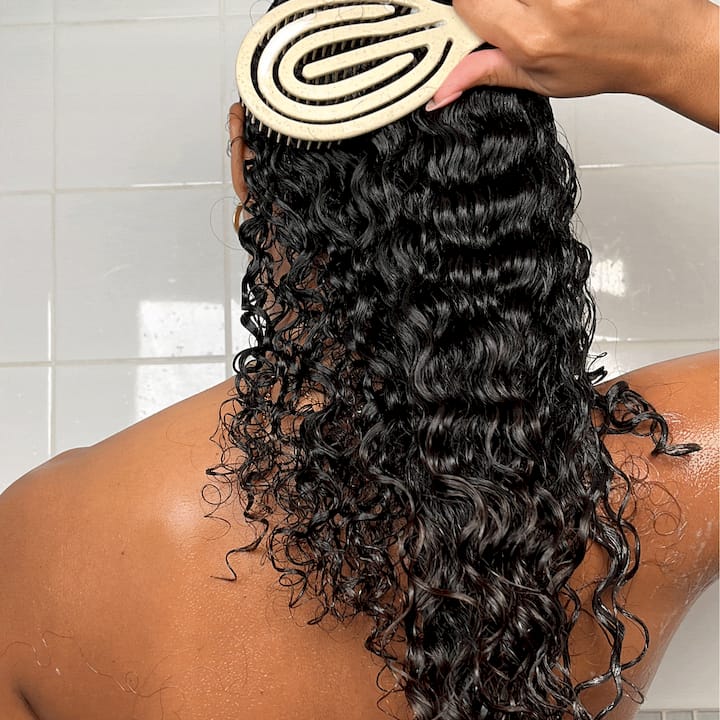
4C hair shrinks and tangles fast when wet, so low-manipulation twists or a simple bun beat any style that requires daily restyling. Detangle in the shower with conditioner still in your hair, working in sections from ends to roots.
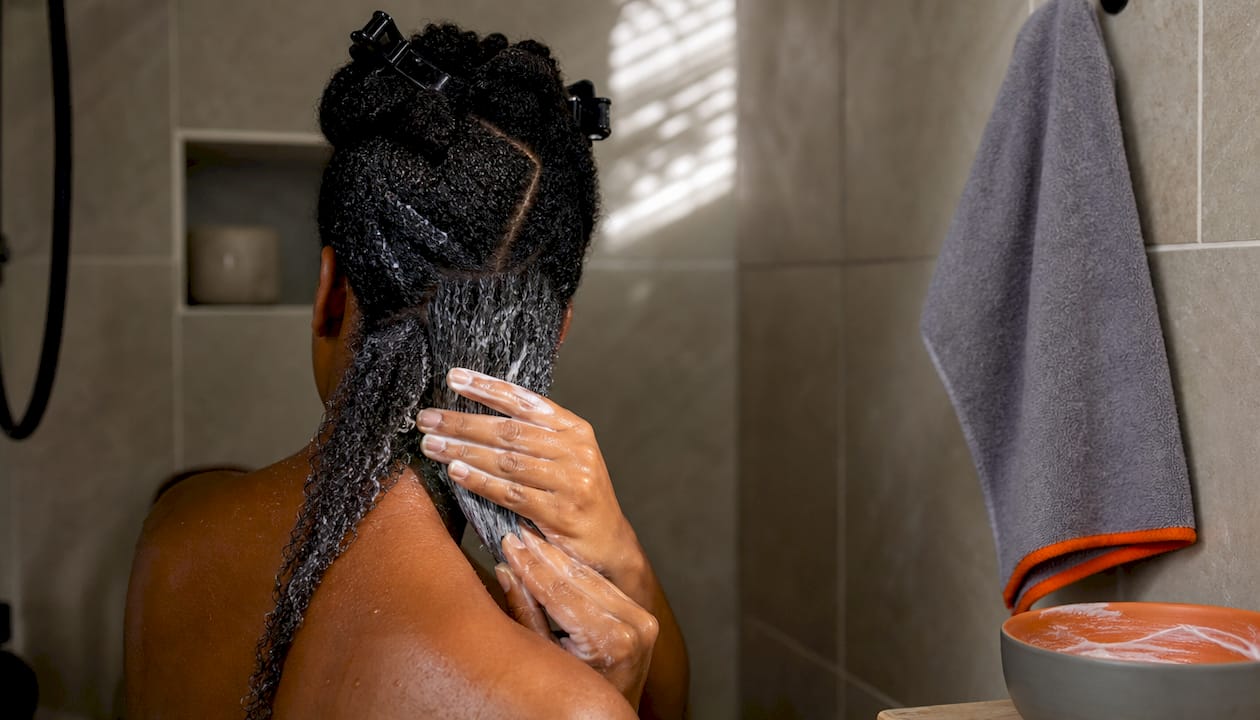
Locs and faux locs need airflow more than anything. A microfiber towel squeezes out surface water without adding frizz, and separating individual locs while they dry (instead of letting them clump) cuts drying time significantly.
Extension braids do better with knotless or feed-in techniques since they distribute tension across a wider section of scalp instead of pulling from single points. Heavier synthetic hair also holds water longer than your natural strands, so plan for a longer post-swim drying window.
Short natural hair has the easiest logistics. A secure, slicked-back bun or a cute headwrap keeps things simple, and a smaller-volume cap usually fits without the bulk you’d need for locs or braids.
Pro Tip: If a style feels painful or creates raised bumps along your part after installation, that’s your sign to loosen it before you ever get near a pool. The damage from a too-tight style comes from tension, not water.
Choosing the Right Swim Cap and Style for Your Routine
Latex caps stretch tight and can trigger reactions in people with sensitivities. Fabric caps look nice but let water through fast. Silicone caps, especially large-volume ones, tend to be the practical choice for afro hair, braids, and locs because they give your hair room instead of compressing it flat.
-
Size your cap for the volume your hair has right now, wet and styled, not your dry, freshly-done volume.
-
Avoid pulling the cap so tight it drags at your hairline. That tension adds up over dozens of swims.
-
If you swim daily, choose lower-maintenance installs like cornrows or a bun so you’re not fighting your hair every single day.
A large-volume silicone cap like the Soul Cap is built specifically for this problem, giving braids and locs enough room that the cap isn’t constantly tugging at your scalp.
Detangling Wet Hair Without Losing Strands
Wet hair stretches more and snaps more easily than dry hair, which makes post-swim detangling one of the riskiest moments in your whole routine if you rush it.
Work with conditioner still in your hair, never on dry strands straight out of the pool. The slip from conditioner lets your fingers or a wide-tooth comb glide through instead of yanking. Start at the very ends and work upward in small sections, only moving to the next section once the current one is fully smooth. Trying to detangle from root to tip is how you end up with a hairbrush full of hair that didn’t need to fall out.
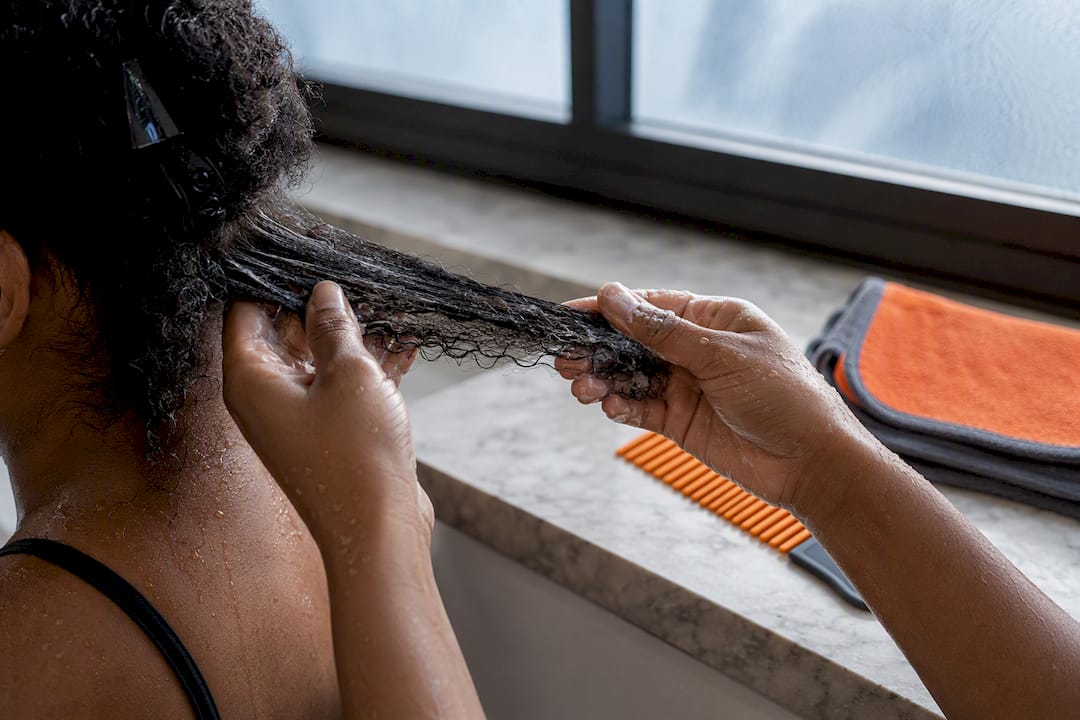
Fingers first, tool second. Your hands can feel where a knot is forming before a comb tears through it blind. Once fingers have loosened the bulk of the tangle, a wide-tooth comb or a detangling brush finishes the job with far less breakage.
If you’re managing braids or twists, detangling looks different: you’re not combing through the style itself, you’re gently separating the hair at the roots and along any loose ends to prevent matting. Locs need almost no detangling at all, which is one reason stylists point to braids and locs as easier swim styles in the first place, since there’s simply less loose hair to fight with.
Skip the towel-drying scrub. Squeezing water out gently, or blotting with a microfiber towel, does the job without roughing up your cuticle the way a regular towel rub does.
Managing Chlorine and Saltwater Damage Over Time
One swim won’t ruin your hair. A summer of daily swims without a real routine will. Chlorine strips natural oils and can leave hair feeling brittle and dull over weeks, while saltwater draws moisture out through osmosis, leaving strands drier than they started.
The damage is cumulative, which is exactly why the soak, seal, rinse, clarify, condition cycle matters more the more often you swim. Skipping the rinse once might not show. Skipping it for a whole vacation will.
Watch for the warning signs: hair that feels rough even after conditioning, color that looks slightly greenish or brassy (a classic chlorine tell, especially on lighter or color-treated strands), and breakage that shows up at the same points along your strands. Any of those mean your barrier step, the leave-in or oil seal before swimming, needs reinforcing, or your rinse-and-clarify routine needs to happen more often, not less.
Deep conditioning treatments matter more here than in your normal routine. Where you might deep condition every two weeks normally, frequent swimmers often need it weekly to keep pace with what chlorine and salt pull out. Protein treatments occasionally, alongside your regular moisture routine, can help rebuild strength if you’re noticing more breakage than usual, though moisture should stay the priority for most swimmers.
A Stylist-Aware Way to Plan Your Next Swim-Friendly Install
Before any big swim trip, book your appointment early and talk tension with your stylist. Ask directly about braid size, parting, and how long they expect drying to take for whatever style you choose.
That short conversation, plus a simple soak, seal, rinse, dry routine, does more for your hair’s health than any product on its own ever will.
— Christelle
Preview Your Next Swim Style Before You Book It
Choosing between cornrows, knotless braids, or Bantu knots for your next swim trip gets a lot easier when you can actually see it on yourself first. A virtual try-on tool can let you upload your photo and preview braid size, parting, and volume across styles for Black hair textures, so you’re not guessing how a bulkier install will fit under a cap or how a smaller twist will actually frame your face.
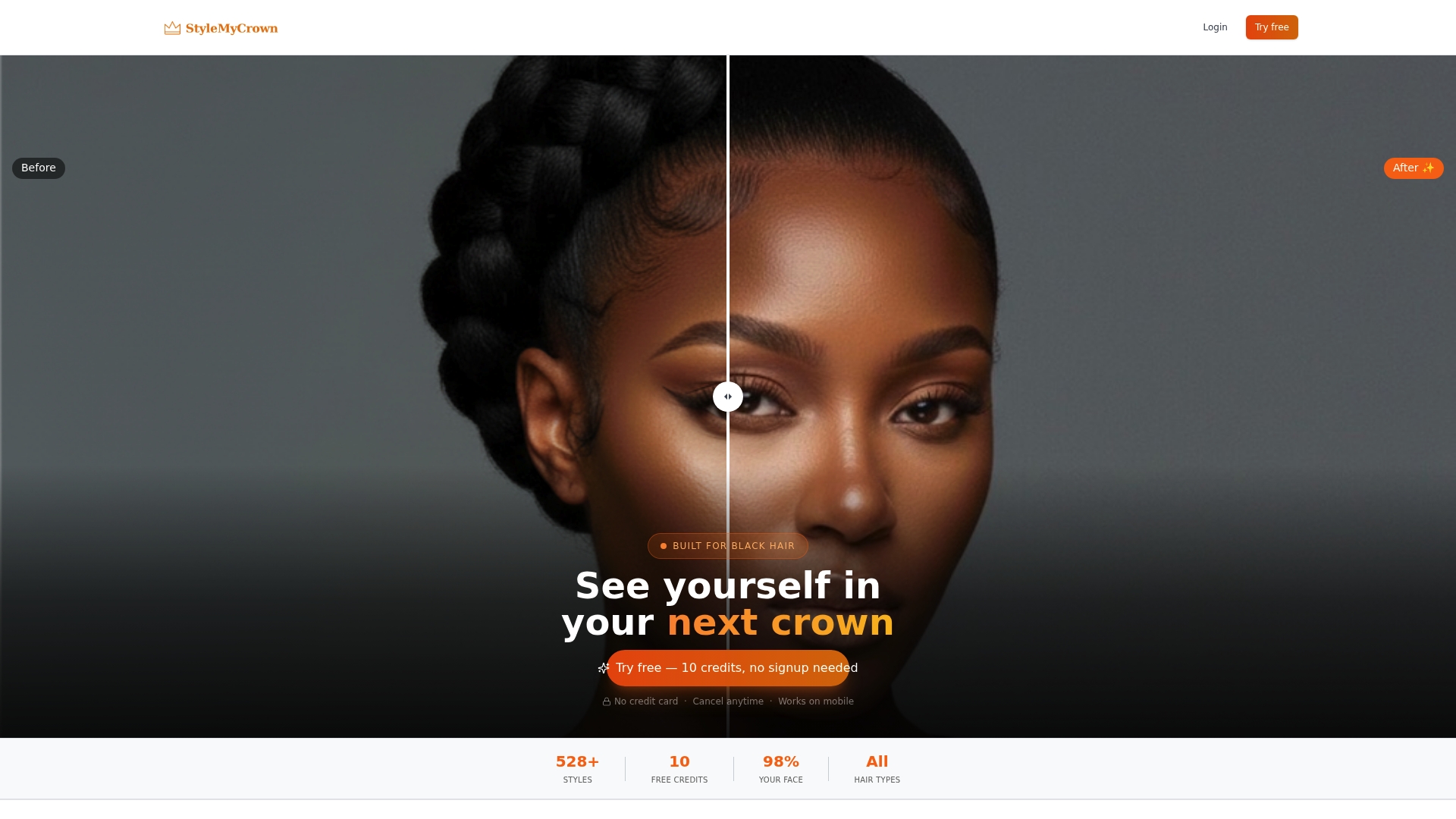
You get 2 complimentary credits to test this out with zero commitment. Browse the Style Catalog to compare swim-friendly options side by side, or check the Stylist Catalog if you want inspiration to bring straight to your next appointment. Try on your top three swim styles tonight and walk into your booking already knowing which one you want.
Sources
For more on swim-safe hair care, see Black Health’s full routine breakdown, Ebony’s pool hair protection guide, and Byrdie’s guide to swimming with Black hair. For style ideas, browse Stylemycrown’s guide to protective hairstyles for natural hair.
-
Swimming With Braids and Locs: The Full Hair Care Routine | Black Health
-
How to protect hair in pool: Best way to keep hair dry while swimming | Ebony
-
Olympic swimmer Lia Neal shares how to care for hair in and out of the water | Essence
FAQ
What are the best hairstyles for swimming with Black hair?
Cornrows, flat twists, knotless braids, and low buns work best because they shed water quickly, resist tangling, and hold up under a swim cap without excess tension.
What’s the best hairstyle for swimming in a pool specifically?
A low braided bun or cornrows tend to work best for pool swimming since they’re compact, dry fast, and fit comfortably under most swim caps.
How do you protect Black hair while swimming?
Soak your hair with clean water and seal it with a leave-in or oil before you swim, wear a properly sized cap as a coverage layer, and rinse immediately afterward followed by clarifying shampoo and a deep conditioning mask.
What are good 4C hairstyles for swimming?
Two-strand twists, flat twists, and simple buns work well for 4C hair since they require low manipulation and detangle more easily with conditioner in the shower afterward.
Do swim caps actually keep Black hair dry?
Not completely. A cap, especially a large-volume silicone one, reduces contact with chlorine and friction, but water still gets in at the edges, so you still need to rinse and condition after every swim.


