Preview 528 Styles: Pick Lace Front or Closure for Black Hair
Preview 528 Styles: Pick Lace Front or Closure for Black Hair
A closure is best if you want a low-maintenance install with a fixed part and a longer stretch between salon visits. A frontal is best if you need a full hairline for ponytails, updos, or deep side parts. Standard sizes typically include 4x4 or 5x5 for closures and about 13x4 or 13x6 for frontals. Virtual try-on tools can help you preview both before you spend a dollar.
TL;DR:
- Closures are more cost-effective and easier to install, requiring fewer bundles and less maintenance, making them suitable for low-fuss daily wear.
- Frontals offer full hairline coverage with greater styling versatility, but they demand higher upfront costs, skillful installation, and more frequent upkeep.
- A 4x4 or 5x5 closure is ideal if you prefer a fixed part and minimal daily styling, while a 13x4 or 13x6 frontal suits styles needing full hairline exposure like ponytails and slicked-back buns.
- Most buyers underestimate the ongoing maintenance costs of frontals, which often involve weekly adhesive checks and more frequent reinstallation.
- Testing virtual previews of both options can help determine which style aligns best with your daily routines and styling preferences before committing to a purchase.
Table of Contents
- Lace Front vs Closure: The Quick Comparison
- What Is a Lace Closure?
- What Is a Lace Frontal?
- Closure vs Frontal: Pros and Cons
- How Do You Choose Between a Closure and a Frontal?
- Installation Steps and How to Maintain Each One
- Budgeting for a Closure vs Frontal Install
- Which Styles Actually Need a Frontal?
- Preview Both Options Before You Buy
- What Most Buyers Get Wrong
- Try It Before You Buy It
- Where to Learn More
- Sources
- FAQ
Lace Front vs Closure: The Quick Comparison
Here’s the trade-off in one table. Coverage and cost climb together, but so does upkeep.
| Feature | Closure | Frontal |
|---|---|---|
| Size / coverage | 4x4 or 5x5, front-only patch | 13x4 or 13x6, ear to ear |
| Parting options | One fixed area, limited movement | Any part, including deep side |
| Ponytail / updo ability | No, tracks show when pulled back | Yes, full hairline exposed |
| Install difficulty / method | Sewn-in, beginner-friendly | Adhesive perimeter, skill-dependent |
| Maintenance cadence | Lower, fewer touch-ups | Higher, frequent adhesive checks |
| Typical cost / bundles | Lower cost, 2 to 3 bundles | Higher cost, 3 to 4 bundles |
| Longevity / durability | Longer between reinstalls | Shorter lifespan from adhesive cycles |
If your week revolves around one part and low fuss, a closure covers you. If you’re changing looks often or need the hair pulled back, the frontal earns its price.
What Is a Lace Closure?
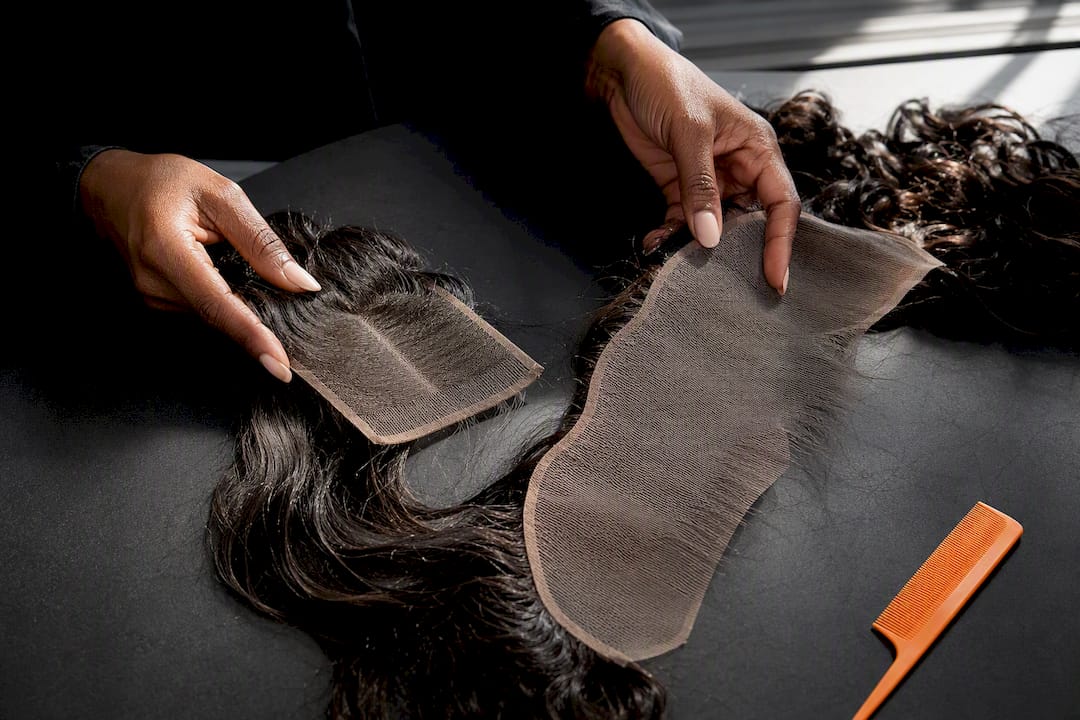
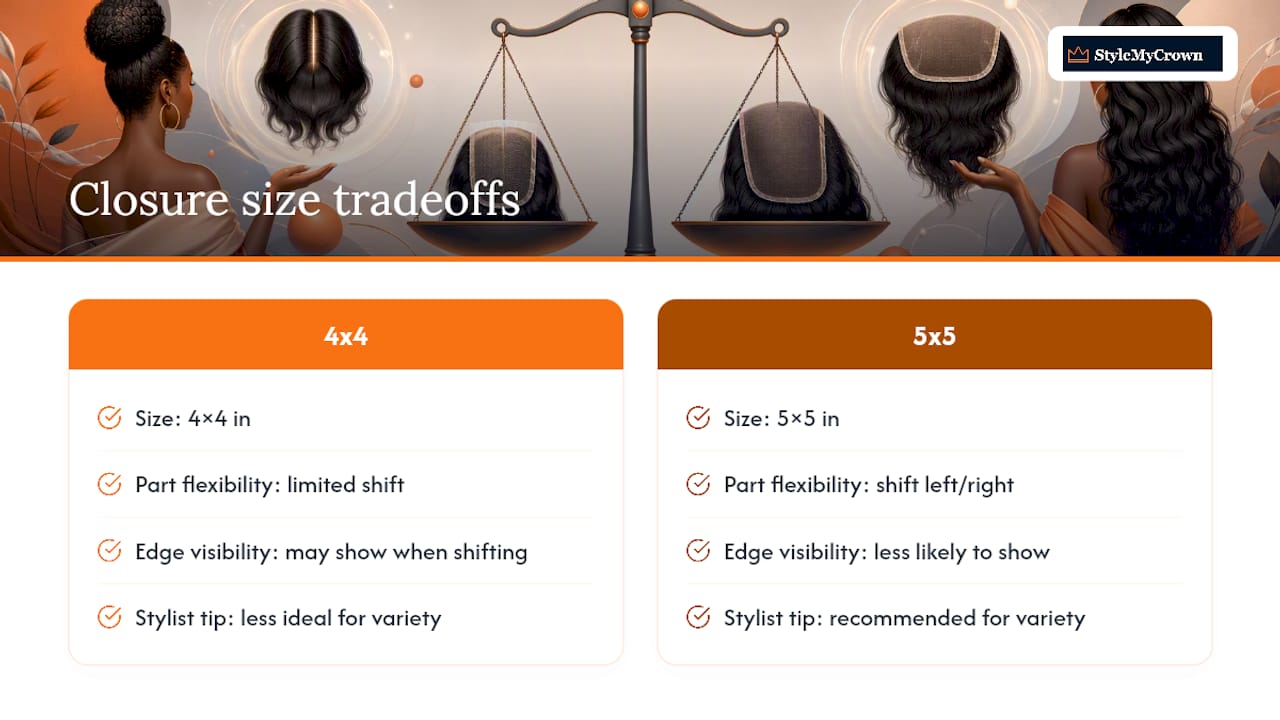
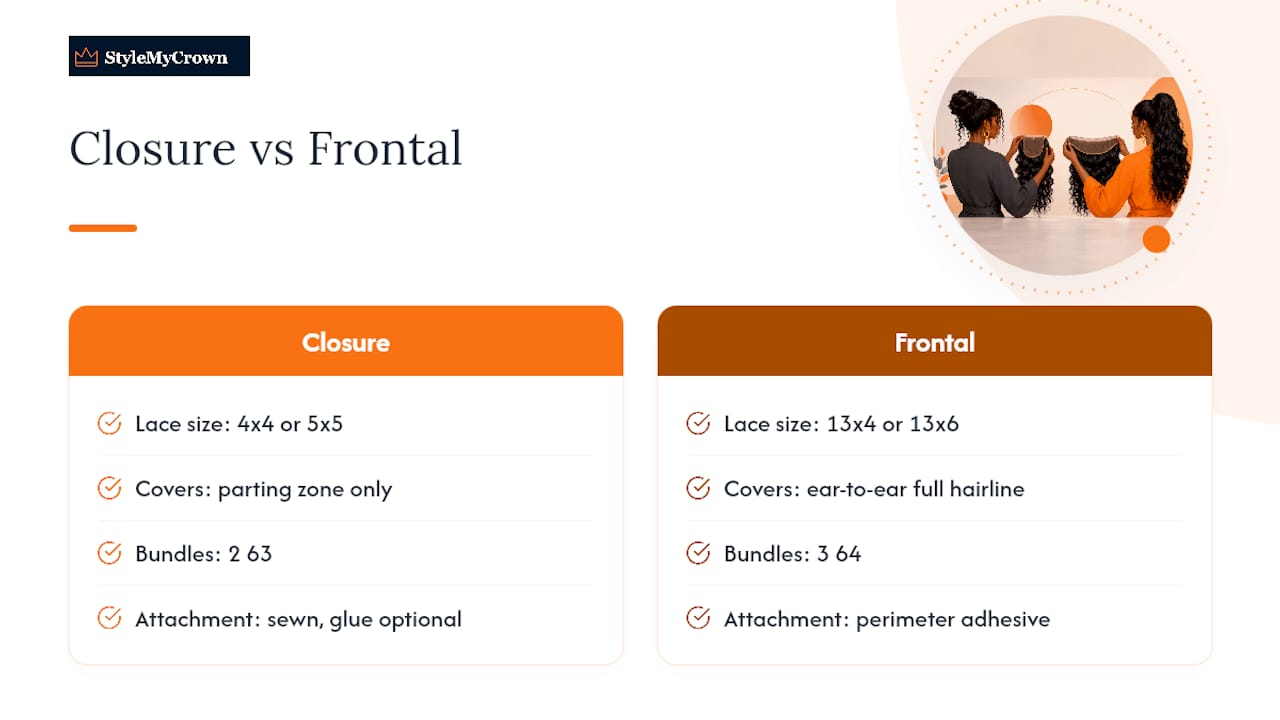
A closure is a small square or rectangle of lace, usually 4x4 or 5x5 inches, sewn at the front of a wig or sew-in to mimic a natural part. The extra inch on a 5x5 isn’t cosmetic. It gives you enough room to shift your part left or right without the lace edge showing, which is why many stylists recommend it over a 4x4 for anyone who likes a little variety.
Closures are typically sewn in, with glue optional for a flatter lay. Most installs require two to three bundles to match density. This is the piece for someone who wants to install it, style it once, and not think about it again for weeks. Fewer adhesive cycles mean less wear on the lace and less time spent on upkeep.
What Is a Lace Frontal?
A frontal stretches ear to ear, typically in 13x4 or 13x6 dimensions, recreating a full hairline instead of just a parting zone. A 13x6 gives you enough depth for a dramatic deep side part or a fully slicked-back style, since the lace covers more of the hairline than a 13x4.
Frontals attach along the perimeter with adhesive, and that install takes real skill. Get the tension wrong and the front lifts within days. Expect to need three to four bundles to keep density even across the wider lace. The larger lace area, the hand-tied labor, and the adhesive maintenance all add to the price tag, which is the main reason frontals cost more than closures across the board.
Closure vs Frontal: Pros and Cons
Weigh these against how you actually wear your hair, not how you wish you wore it.
Closure pros:
- Lower cost per install and fewer bundles needed
- Beginner-friendly, sewn-in application
- Longer stretch between maintenance appointments
- Consistent, predictable part every time
Closure cons:
- Parting is limited to the closure area only
- Cannot hide tracks when hair is pulled fully back
Frontal pros:
- Full hairline realism from ear to ear
- Complete parting freedom, including deep side parts
- Ponytails, buns, and slicked-back styles are all possible
Frontal cons:
- Higher upfront and ongoing cost
- More frequent maintenance and adhesive management
- Requires a skilled installer to look natural
A well-installed 5x5 closure with good blending can look just as natural as a frontal for daily wear. The right pick depends on what you actually plan to do with your hair, not which piece sounds more impressive.
How Do You Choose Between a Closure and a Frontal?
Run through this before you buy anything.
- Track your weekly styling habits for one week. If you wear the same part every day, that’s a closure signal. If you’re pulling hair up more than twice a week, lean frontal.
- Set your maintenance budget, not just your purchase budget. A frontal costs more to maintain monthly, not just once.
- Be honest about edge care willingness. Frontals need regular adhesive checks along the hairline. Skipping that shortens the lifespan fast.
- Ask your stylist three direct questions: what lace type are they using, what install method do they recommend for your hair type, and how many bundles will match your density.
Watch for red flags before you commit: inconsistent density across the lace, a vendor who can’t tell you the lace type, or noticeable shedding right out of the package. Any of those point to a piece that won’t hold up.
Pro Tip: If you’re torn between a 4x4 and 5x5 closure, size up. The extra inch of parting room costs little more and often solves the “I want to switch it up sometimes” problem without jumping all the way to a frontal.
Installation Steps and How to Maintain Each One
A closure install is straightforward: the wig cap or tracks get sewn down, the closure gets blended at the part, and you’re done in a single session. A frontal takes longer. The perimeter needs adhesive applied, laid, and set before the style gets cut in, and rushing that step is the most common reason frontals fail early.
Maintenance cadence differs just as much:
- Closures typically need touch-ups every four to six weeks, mostly at the part.
- Frontals often need adhesive checks every one to two weeks depending on activity level and climate.
- Use a lace-safe adhesive remover, never a harsh alcohol wipe, when taking down either piece.
- Tint the lace to match your scalp tone before install for a more seamless blend.
- Baby hairs and edge styling should use light-hold gel, since heavy product buildup breaks down lace faster.
Adhesive cycles and repeated handling are the biggest reason frontals wear out faster than closures under similar care routines.
Budgeting for a Closure vs Frontal Install
Cost comes down to lace size, hand-tied labor, adhesive products, and the stylist’s time on your head. A closure install with two to three bundles is the cheaper starting point, and it stays cheaper over time because you’re not buying replacement adhesive every couple of weeks.
A frontal needs three to four bundles for even density, plus ongoing adhesive supplies and more frequent salon visits. Over six months, a closure wearer might reinstall two or three times with minimal product spend. A frontal wearer often reapplies adhesive weekly and reinstalls more often, so the six-month total climbs well past the initial price difference.
Which Styles Actually Need a Frontal?
Everyday looks like a middle part with soft face-framing pieces or a loose side part work fine with a closure. That covers most of the week for most people.
Save the frontal for looks that expose the entire hairline: a high sleek ponytail, a slicked-back bun, or a dramatic deep side part for photos or events. A hybrid approach works well too. Keep a closure unit for daily wear and a frontal for special occasions, matching texture and density between the two so neither looks out of place when you switch. If you want more reference points for updo styles that require a fully exposed hairline, browsing real examples helps before you commit to a purchase.
Preview Both Options Before You Buy
You don’t have to guess how a frontal’s exposed hairline or a closure’s fixed part will actually look on your face. Upload a photo to Stylemycrown, try a high ponytail against a frontal-style template, then compare it to a closure’s fixed-part look on the same photo. The catalog covers over 528 curated styles across textures and lengths, so you’re not stuck picking between two generic previews.
Christelle’s guides on glueless wig styles pair well with this step if you’re new to installs and want a lower-maintenance entry point before graduating to frontal work.
What Most Buyers Get Wrong
Most people buy the frontal because it sounds more versatile, then never wear a single ponytail with it. I’ve watched this pattern play out in comment sections and forums for years.
Start with what you actually style, not the one style you might wear twice. If you’re unsure, try it virtually or ask a stylist to mock it up in-salon before you spend on bundles you didn’t need.
— Christelle
Try It Before You Buy It
Stylemycrown gives you a way to settle the closure versus frontal question without buying a single bundle first. Instead of guessing whether you’ll actually wear that high ponytail or if a fixed part suits your face, upload a photo and preview both looks using the style catalog built specifically for Black and textured hair.
New users often receive complimentary credits to test this out with no commitment. If you want to keep exploring after that, the 1 Week Trial runs $17.48 per week, and the 4 Week Plan runs $38.73 per 4 weeks. A 12 Week Plan is also available, with pricing on the site. Head to Stylemycrown and preview your next install before you book it.
Where to Learn More
These sources go deeper into sizing, installation, and cost if you want to compare notes before your next appointment.
- Closure vs Frontal: Which Is Right for Your Install?, on cost and maintenance differences.
- A Complete Guide to Closures and Frontals, on styling freedom and hairline coverage.
- Wavy hair routine guide, for care tips relevant to textured units.
Sources
- Closure vs Frontal: Which Is Right for Your Install?
- Difference between Closure and Frontal: A Complete Guide
FAQ
What Are the Downsides of Lace Front Wigs?
Lace front wigs, meaning frontals, cost more upfront and need frequent adhesive touch-ups to stay secure along the hairline. They also require a more skilled install, since uneven tension or poor lace matching shows immediately along an exposed perimeter.
Is a 5x5 a Closure or a Frontal?
A 5x5 is a closure size, not a frontal. It’s a square lace patch covering the front parting area, giving slightly more room to shift your part than a standard 4x4, but it doesn’t reach ear to ear like a frontal does.
Is a Closure More Expensive Than a Frontal?
No, closures are typically the cheaper option. Frontals cost more because they use more lace, require hand-tied labor across a wider area, and need ongoing adhesive supplies that closures don’t.
Does a Closure or Frontal Last Longer?
A closure generally lasts longer under similar handling because it involves fewer adhesive cycles and less perimeter stress. Frontals wear down faster since repeated adhesive application and removal breaks down the lace edge over time.


