Highlights on Natural Hair: Color That Still Looks Like Your Curls

Yes, you can get highlights on natural hair, and they can look beautiful. The result depends on three things: the technique, how far you lift your natural color, and how well you know the style you want before you sit in the chair.
I have watched people walk into a salon with a screenshot and walk out with something that did not belong to their hair at all. The color was fine. The placement, the shape and the plan were off. This guide is how you avoid that.
TL;DR
- Highlights work on curls and coils. A hand-painted technique like balayage gives the softest, most natural grow-out.
- Staying within about two to four shades of your natural color keeps the look soft and protects your curl pattern.
- Lightening is a chemical process. Strong lifting can loosen curls, so the work belongs with an experienced colorist, in stages.
- Decide the style first, then the color. Seeing a shape on your own photo before the appointment makes the conversation faster and clearer.
- Kitchen-cabinet lighteners like lemon and honey are unpredictable and rarely dramatic.
Table of Contents
- Can You Get Highlights on Natural Hair?
- The Highlight Techniques, and Which Look Most Natural
- Choosing Your Shade
- What Lightening Does to Curls and Coils
- Plan the Style Before You Plan the Color
- See the Style First with StyleMyCrown
- Caring for Highlighted Natural Hair
- What About Lemon, Honey, Chamomile, and Henna?
- Why We Start With the Style
- FAQ
- Sources
Can You Get Highlights on Natural Hair?
You can. One writer who had highlights done on her 4C curls described a partial balayage appointment that took about two hours, not counting styling. The colorist lifted with a peroxide activator for around 20 minutes (30 was the recommended maximum), toned for about 25 minutes, then finished with a bond-repairing shampoo and a keratin conditioner.

That is the pattern to look for: short, controlled processing, a toner, and repair built into the service.
Why does natural hair need that extra care? Curly hair’s cuticle is naturally more open, so it takes in product easily but loses moisture quickly. A colorist who works with that, using milder, more moisturizing products and placing color to follow your curl movement, avoids the splotchy look many of us have seen.
The Highlight Techniques, and Which Look Most Natural
The names get thrown around at the salon as if everyone knows them. Here is what they mean for curls and coils.
| Technique | What it is | Best for |
|---|---|---|
| Balayage | Color painted by hand, freehand, for a sun-kissed effect with a seamless, low-maintenance grow-out | Twist outs, wash and gos, and loose coils where you want soft dimension |
| Babylights | An ultrafine, diffused weave that mimics sun lightening, described as the most natural-looking option | A subtle shimmer, especially around the face |
| Foil highlights | Precise, defined color wrapped in foil | A more visible, deliberate contrast |
| Foilayage | Hand-painted placement inside foils, diffused lift with added lightness | When you want balayage softness with more lift |
| Face-framing | Brightness placed around the face, with less upkeep than overall highlights | First-timers and anyone wary of full color |
Maintenance matters too. According to Allure’s guide, balayage needs salon visits about every three to six months, versus six to eight weeks for traditional highlights. If you do not want a standing appointment every other month, that is a real reason to lean toward hand-painted color.
Placement Matters More Than the Name
Curls shrink. A section that looks long and stretched when wet can sit much higher once it dries into your natural shape. That is why many colorists place color on dry hair in its natural state, not stretched straight, so the color shows up where it will actually be seen when you wear your hair out.
You can help by wearing your hair the way you wear it most days to the consultation. Show the colorist your real shape, not your blowout.
Choosing Your Shade
The safest first move on dark hair is a warm, low-contrast shade. InStyle’s guide says the best tones on black hair are caramels and lighter browns, adjusted warmer or cooler to suit your skin tone. It also warns against going more than four levels lighter than your base.
A colorist quoted in a guide to natural-looking highlights suggests keeping the roots within about two shades of your base and the ends no more than four shades lighter. Put the brightness where the sun would hit: the face frame, the natural part and the ends.
A few ways to think about it:
- Gradual and soft: caramel, honey and chocolate tones add depth without a hard line.
- Warm and rich: copper, auburn and burgundy give reddish dimension on dark brown and black hair.
- Bold: ash blonde and platinum are possible, but they are a multi-session project, not an afternoon.
Skin undertone is the part people guess at. If you want a structured way to work out which shades flatter you, learning the basics of color analysis and your best shades gives you a vocabulary to bring to your colorist.
Brassy orange or red undertones are common when black hair lightens. InStyle reports that a colorist can neutralize them with an ash-based toner, so ask about toning before you book.
What Lightening Does to Curls and Coils
This is the part I want you to hear clearly, because it is the one that protects your hair.
Lightening is a chemical reaction. Byrdie explains that bleach’s alkalinity is harsh, and if natural hair is not colored correctly the curl pattern can be destroyed, leaving hair brittle and prone to breakage. Colorist Arrojo, in the 4C highlights account above, says over-processing effectively relaxes hair into a straighter texture, so her first thought is to stay within a few levels of natural color.
Textured hair can be more porous too. Raised cuticles let chemicals go in deeper, which is why dramatic changes on textured hair often take more time than on straight hair, according to a guide to coloring textured hair.
So what does a safe plan look like?
- Start healthy. Highlights go best on hair that is moisturized and not already stressed. If you have a relaxer, heavy heat damage or recent color, tell your colorist.
- Go in stages. InStyle’s guide quotes a colorist saying you cannot go from black to blonde in one shot without a long and possibly damaging process.
- Protect the bonds. Ask whether bond-building treatment is part of the service.
- Tone and seal. Hello Magazine’s colorist guide points to the right toner as the way to bring hair back to a healthy pH, around 5.5, which also seals the cuticle.
If you are in the middle of a big chop or a natural hair transition, give your hair time first. Short, newly natural hair is still finding its pattern, and you want to know that pattern before you change its color.
Plan the Style Before You Plan the Color
Here is what I learned the hard way: highlights are a design decision, not just a color decision. Where the light goes depends on the shape of the style. Twists, a tapered cut, a puff, a wash and go and a silk press all catch color differently.
That is why I like to settle the style first. When you know the shape, you and your colorist can talk about where the color should live: around the crown, through the ends, or just at the face.
Parents planning a look for a child, men considering a cut with a little color on top, and anyone nervous about a big change can all use this order. Pick the shape, then bring it to a professional with real questions.
Questions to Bring to the Consult
- How many levels will you lift my hair, and will it take more than one session?
- Will you paint on dry hair in its natural shape?
- What do you use to protect my bonds during lightening?
- What will my hair look like in eight weeks, and what upkeep should I plan for?
- What toner will you use, and how will it fade?
A colorist who answers these without hesitation is one who has done this on textured hair before.
See the Style First with StyleMyCrown
This is where we come in. StyleMyCrown is a virtual try-on built for Black and textured hair. You use augmented reality to see more than 528 styles on your own photo, curated for different textures and types, so you walk into the salon already knowing the shape you want.
You start with 2 complimentary credits, so you can explore without committing. The 1 Week Trial is $0 per week, and the 4 Week Plan is $38.73 per 4 weeks. You can see all of the plans on the StyleMyCrown pricing page.
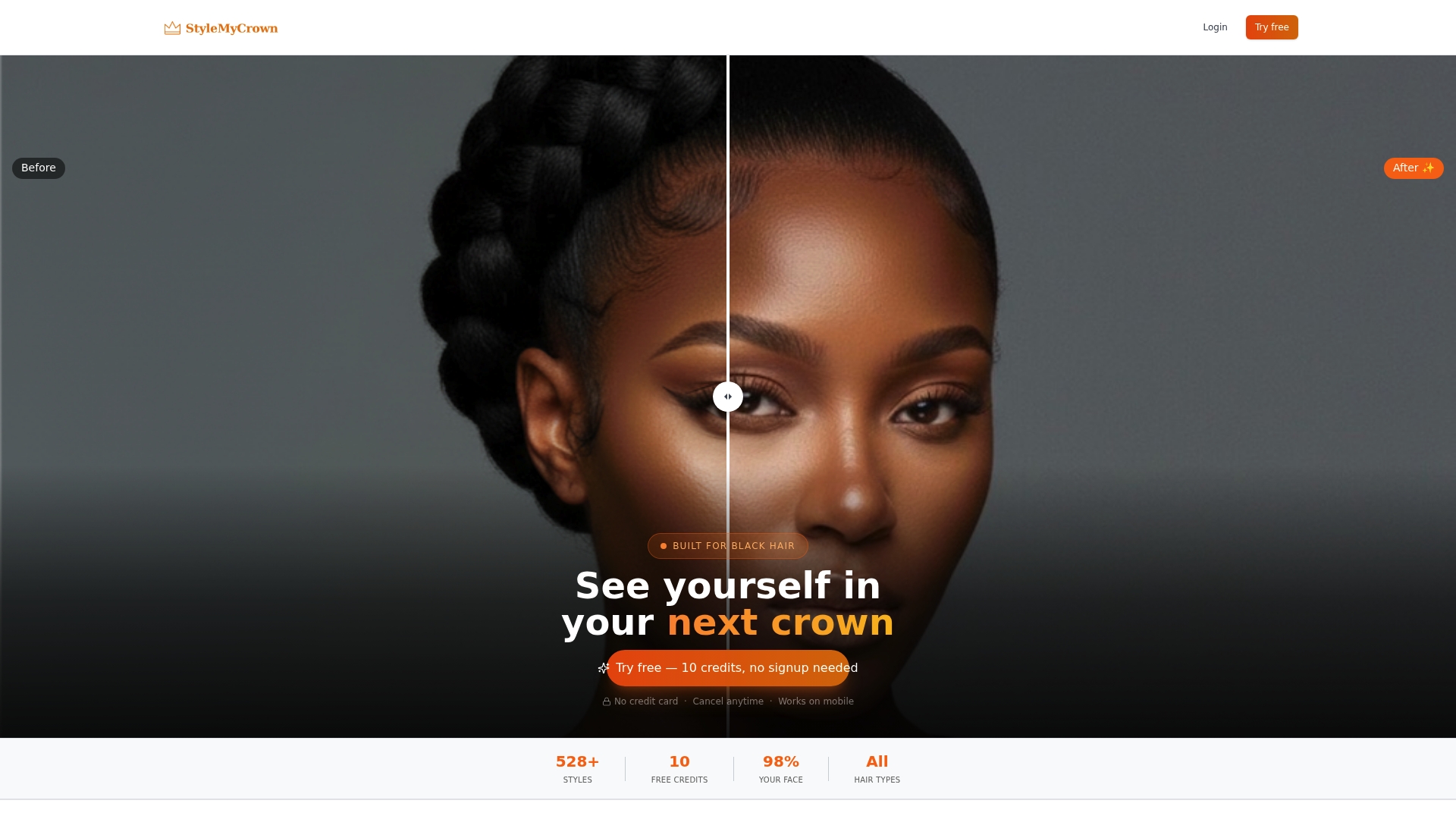
Our promise on privacy is simple. Face data is processed securely and is never retained or used for AI training.
If you are a stylist or salon owner, the Style Catalog gives clients a visual starting point for the conversation. You can also try the AI virtual try-on yourself.
Caring for Highlighted Natural Hair
Color-treated curls ask for more moisture and more patience. A colorist interviewed by Beautycon recommended layering water-soluble and glycerin-based moisture products, clarifying every four to six weeks and trimming every six to eight weeks. Her reasoning was that color will not hold well without regular trims.
A simple routine to start with:
- Wash with a color-safe, moisturizing shampoo and follow with deep conditioning every week.
- Use a bond-repairing or keratin-based treatment, as in the appointment described earlier.
- Protect from heat and UV, since sun and hot tools both strip color.
- Use purple shampoo sparingly on lighter shades to tame brassiness.
- Keep trims on a schedule so your ends hold the color you paid for.
If your hair feels gummy when wet, stretches without bouncing back, or your curls stay loose after washing, stop and see your colorist before the next round.
What About Lemon, Honey, Chamomile, and Henna?
People ask this because they want something gentler. Here is the honest picture.
Research reviewed by The Conversation notes that lemon juice plus sunlight can yellow hair and strip oils and moisture. Healthline says honey with cinnamon may need ten or more applications for dramatic results, and chamomile with lemon can dry hair, so deep conditioning is advised. Lemon also works best on naturally light shades, so on dark curls the effect is usually small and uneven.
Henna is a dye, not a lightener. It stains hair using a compound called lawsone, according to an EU scientific opinion on henna, so it adds tone rather than lifting your natural color.

If you try any of these, Healthline advises a strand test first: apply to a hidden section, wait the full time, then check for any skin reaction and see how light the hair actually gets.
Why We Start With the Style
I remember sitting in a stylist’s chair with a photo saved on my phone, wondering if I would recognize myself when she was done. That feeling, the quiet “what if this goes wrong,” is the reason StyleMyCrown exists.
Highlights on natural hair are personal. They sit on top of your curl pattern, your texture, your history with your hair. When the plan is vague, the risk goes up. When you can see the shape first, the conversation changes.
That is what we built. A library of more than 528 styles made for Black and textured hair, a way to see them on your own photo, and 2 complimentary credits so trying costs you nothing. Your face data is processed securely and never retained or used for AI training, because dignity should be part of the design.
Bring your choice to a colorist who understands your hair. Ask for the gradual path. Protect what you have. Then wear the color like it was always yours.
Christelle
FAQ
Can you get highlights on natural hair?
Yes. Balayage, babylights and face-framing highlights all work on curls and coils. Your colorist will usually lift healthy hair about two to three levels per session and build lighter shades over several visits.
What are the most natural-looking highlights?
Babylights and hand-painted balayage in shades close to your natural color look the most natural. Keeping color within a few shades of your base and placing it where the sun would hit, like the face frame and ends, keeps the look soft.
What are the downsides of highlighting your hair?
Lightening is a chemical process, and strong lifting can loosen your curl pattern and leave hair drier. Going in stages, using bond protection and following a moisture routine are how to keep your curls strong.
What natural hair color is best for highlights?
Dark brown and black hair look striking with caramel, honey, chocolate, copper or auburn highlights. Choose warmer or cooler versions of the shade to flatter your skin tone.
Sources
- I Got Curly Hair Highlights On My 4C Curls, The Zoe Report
- What to know about highlighting curly hair, Hello Magazine
- 9 Types of Highlights to Inspire Your Next Hair Color, Byrdie
- How to Speak Highlights, Allure
- How to Get the Best Highlights for Black Hair, InStyle
- How to Dye Natural Hair Without Destroying Your Curl Pattern, Byrdie
- The Ultimate Guide To Coloring Textured Hair
- How to Get This Amazing Hair Color, Beautycon
- Hair dye is toxic, could natural alternatives be made to work?, The Conversation
- Looking for a Natural Hair Lightener?, Healthline
- Opinion on Lawsonia inermis (Henna), European Union


