Bob Wigs: Match Black Hair Texture and Try Looks in AR

Bob Wigs: Match Black Hair Texture and Try Looks in AR
Straight, blunt, angled, lob, wavy, curly, layered, and bangs cover the full range of bob wig styles you’ll find in any real catalog. The single decision that matters more than the cut itself is material and cap fit: human hair versus synthetic determines how much you can style it, and cap construction determines how it sits on your head and reads against your texture. Once those two are locked in, the visual gallery and the buying checklist below do the rest of the work.
TL;DR:
- Matching the material and cap fit of a wig is more important than the cut since it determines styling ability and how the wig sits against your head.
- The most common bob categories are blunt, A-line, wavy, layered, and lob, with each style altering appearance based on curl pattern and density.
- Density should align with curl type and natural hair profile to avoid a wig looking either thin or overly artificial, especially in curly styles.
- Cap construction, size, and adjustability are critical factors to narrow options and reduce return risk, particularly for textured or sensitive scalps.
- Previewing styles with augmented reality tools against your own face helps ensure the final look matches expectations, especially for curly or textured bobs.
Table of Contents
- What Are the Main Bob Wig Styles?
- How Do Curl Pattern and Density Change Each Bob Style?
- How Do You Choose the Right Bob Wig?
- How Do You Care for and Style a Bob Wig Daily?
- Can You Preview a Bob Style Before You Buy It?
- Where Did the Bob Wig Actually Come From?
- How Have Bob Styles Changed Across Decades and Cultures?
- Can You Customize a Bob Wig After You Buy It?
- Why Texture-Accurate Previews Change What People Actually Buy
- Try Before You Buy: Preview Bob Looks With Stylemycrown
- Sources
What Are the Main Bob Wig Styles?
Every retailer organizes bob wigs into the same handful of buckets, and once you can name them, shopping gets a lot faster. Wig retailers consistently group bobs into blunt, A-line, wavy, layered, and lob categories, which means the labels below aren’t marketing fluff. They’re the actual filters you’ll see on shopping sites.
Save a few of these that catch your eye before you commit to buying. Comparing three or four side by side against your own face shape tells you more than reading ten product descriptions.
- Classic straight bob: Chin to jaw length, blunt ends, no layering. It reads sleek on straight and loosely wavy hair, and it’s the style that shows every cutting flaw, so precision matters more here than anywhere else.
- Blunt bob: A close cousin to the classic, cut in one straight line with zero taper. It looks strongest on medium to full density; thin density makes the blunt edge look sparse rather than sharp.
- Angled or A-line bob: Shorter in the back, longer toward the chin. This shape softens a round face and adds the illusion of a defined jawline, which is why stylists recommend it so often for fuller face shapes.
- Long bob (lob): Hits between chin and shoulder. It’s the most versatile length in this list, works across nearly every texture, and gives you enough length to pull into a low ponytail on a rough day.
- Wavy bob: Loose S waves add movement without full curl commitment. On finer human hair wefts, waves tend to relax within a day or two of wear, so light-hold product matters.
- Curly bob (deep wave, water wave, jerry curl): Each curl pattern changes the final volume dramatically. Deep wave reads glam and voluminous, water wave reads soft and everyday, and jerry curl sits somewhere between the two with a tighter, springier coil.
- Layered bob: Internal layers remove bulk and add face-framing movement, particularly useful for round or square faces that want softer edges near the cheekbones.
- Bob with bangs: Full, curtain, or side-swept bangs shorten the appearance of a long forehead and change the entire personality of a bob without changing its length.
- Frontal or lace-front bob: Not a shape so much as a construction, but it deserves its own gallery slot because frontal bobs dominate visual inspiration boards for a reason: they allow a realistic hairline and versatile parting that a basic wefted cap simply can’t match.
Texture changes every one of these on contact. A blunt bob on 4C hair with a silk press finish looks razor sharp; the same cut left in its natural curl pattern reads shorter and rounder because of shrinkage. That’s not a flaw in the wig. It’s just how curl behaves, and it’s worth knowing before you order.
How Do Curl Pattern and Density Change Each Bob Style?
Curl pattern is the biggest variable in how a bob wig actually looks once it’s on your head, and density is the second. Get either one wrong and even a well-made wig looks off.
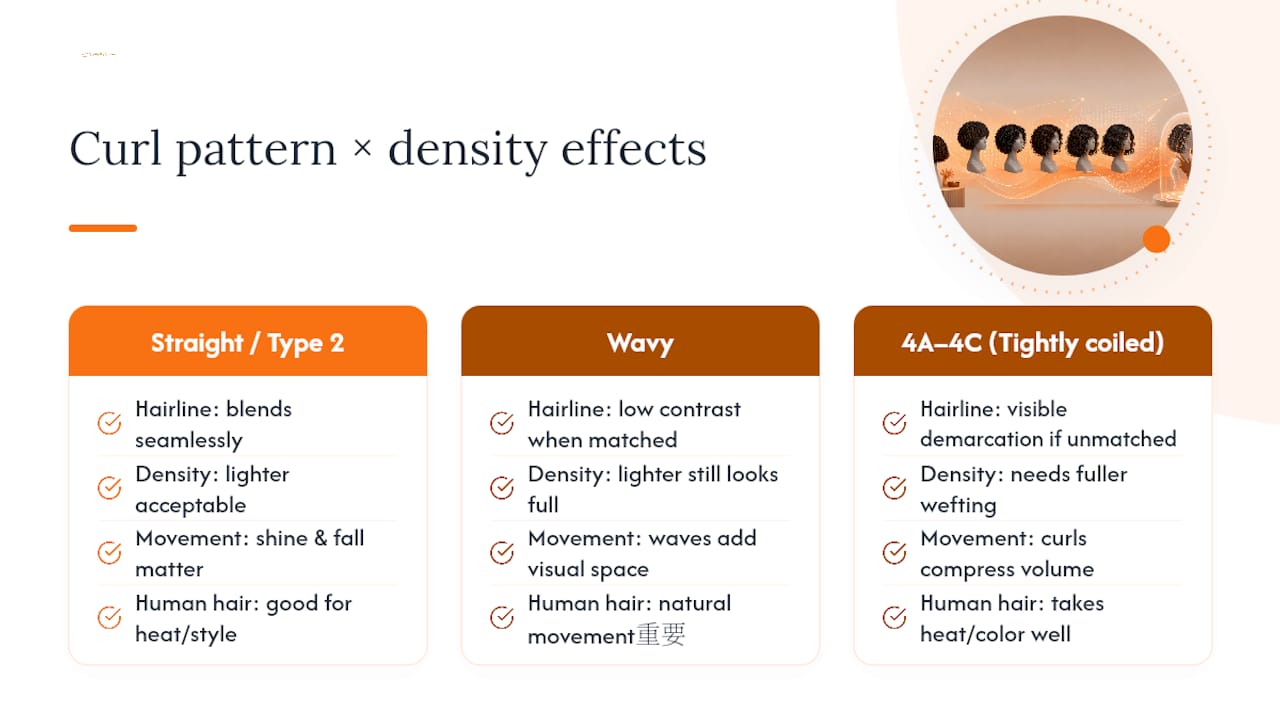
A straight bob on a straight or type 2 wavy natural texture blends almost seamlessly at the hairline, since there’s minimal contrast between wig fiber and natural roots. On 4A through 4C textures, that same straight bob creates a visible line of demarcation unless you blend with edges or opt for a style specifically cut with texture-matching baby hair. This is one of the most common mismatches buyers run into, and it’s entirely avoidable with the right prep.
Density works differently depending on curl type. A loosely wavy bob can carry lighter density and still look full, because waves naturally occupy more visual space than they weigh. A tightly coiled curly bob needs denser wefting to avoid looking thin at the ends, since curls compress and lose apparent volume compared with their straight length. Industry guidance generally points buyers toward matching density to their natural hair profile: lighter for finer natural hair, fuller for anyone chasing volume, because a mismatch is what makes a wig look artificially “wiggy” instead of like your own growth.
Material drives what you can actually do with the style afterward. Human hair bobs take heat styling and color changes well and tend to move more naturally, which matters most on straight and wavy bobs where shine and fall are the whole look. Heat-safe synthetic fibers hold curl and wave patterns without daily styling effort, a real advantage for wavy and curly bobs you want to wear straight out of the package. The trade-off: synthetics degrade faster under repeated heat and typically need replacing sooner.
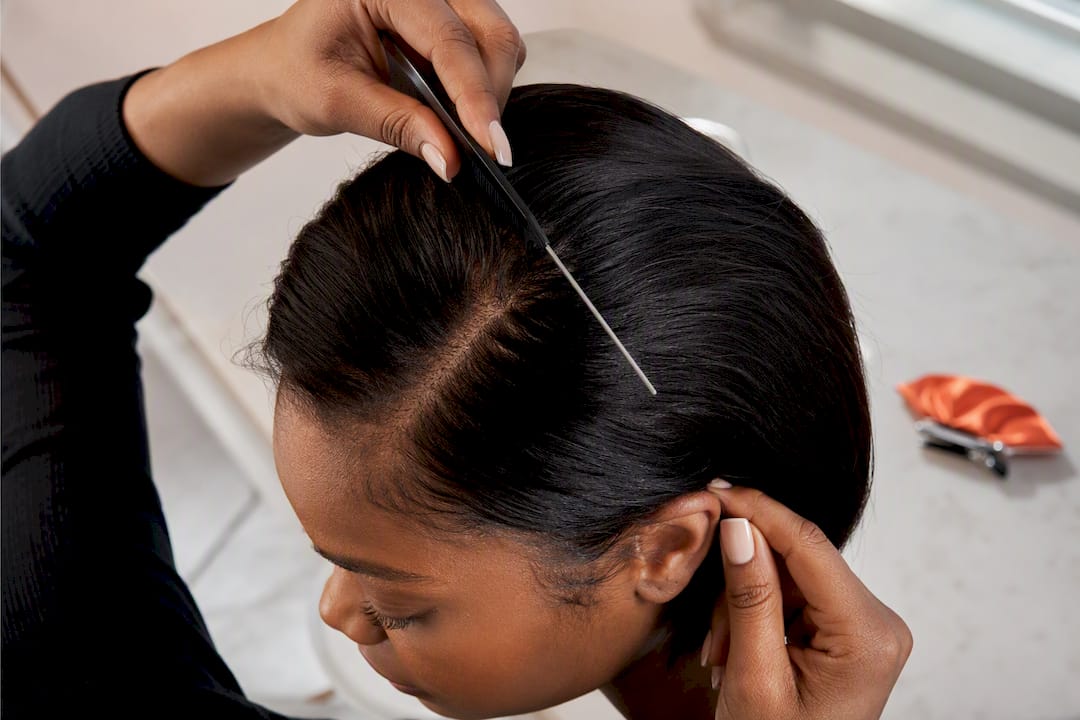
A single bob wig can pull double duty with small tweaks. Move the part from center to deep side and a blunt bob suddenly reads more editorial. Push bangs to the side instead of wearing them full and a bob-with-bangs style becomes office-appropriate. These aren’t separate purchases. They’re five minutes with a rat-tail comb.
How Do You Choose the Right Bob Wig?
Buying a bob wig without a checklist is how people end up with three wigs in a drawer they never wear. Work through these in order, because each one narrows your options before you spend money on the next.
- Start with cap construction. Lace front caps give a natural hairline and versatile parting. Monofilament tops mimic a realistic scalp part at the crown. Full lace allows parting anywhere on the head. Glueless caps with adjustable straps and combs are the right call if you’re not ready to commit to adhesive.
- Match length to face shape. Round faces generally do best with angled or A-line bobs that add length near the chin. Square faces often soften with layered or wavy bobs. Oval and heart-shaped faces can wear almost any bob length, including the classic blunt cut.
- Set density by curl type and scalp coverage goals. Straighter styles can run lighter; curly bobs need more density to avoid a thin, patchy look once the curl compresses.
- Confirm cap size and adjustability. Measure your head circumference before you order and check that the listing includes adjustable straps, not just a single fixed size.
- Request unstyled photos and measurements. For curly bobs specifically, ask sellers for unstyled photos, a measured crown-to-nape length, and density in grams or percentage when available, since curl shrinkage can make a technically longer wig look shorter than expected.
- Check the return policy before you buy, not after. Look at third-party review platforms like Trustpilot to confirm a vendor actually honors returns rather than just advertising the policy.
Pro Tip: Score any bob wig on three things in this order: cap construction and adjustability, density against your desired curl pattern, and how realistic the parting looks in unedited photos. That order matters more than brand name or price, and it cuts return risk more than almost anything else you can check before buying.
If you have a sensitive scalp or you’re shopping during hair loss, look specifically for caps built with tape tabs, poly strips, or softer construction. Several specialist retailers now build these features into bob-specific lines rather than treating them as a separate medical category.
How Do You Care for and Style a Bob Wig Daily?
A bob wig’s shape is fragile in a way longer wigs aren’t. There’s less hair to hide a rough night’s sleep or a rushed detangling session, so the daily habits matter more here than on any other length.
Detangle gently every morning starting at the ends, working up toward the root with a wide-tooth comb or your fingers if it’s curly. Refresh your part with a rat-tail comb rather than dragging a brush straight through the crown, which flattens volume fast on a short style. A light-hold mousse or edge control works for straight and wavy bobs; curly bobs generally respond better to finger-styling with a curl cream than to brushing, which disrupts the curl clump and creates frizz.
- Wash human hair bobs every 8 to 10 wears using sulfate-free shampoo and a lightweight conditioner, focusing conditioner on the ends and avoiding the wig cap itself.
- Wash heat-safe synthetic bobs less often, since overwashing accelerates fiber breakdown; a specialized wig shampoo helps preserve the factory-set curl or wave pattern.
- Air-dry on a wig stand rather than a towel, which can crush a blunt cut’s edge or stretch out a wave pattern.
- Store on a stand or in a satin bag, never in the box it shipped in, since cardboard doesn’t protect the shape overnight.
- Sleep in a satin or silk bonnet if you’re wearing the wig to bed, or better, take it off and let both your natural hair and the wig rest separately.
Pro Tip: If synthetic fibers start looking too shiny under light, a light dusting of dry shampoo cuts the glare without weighing the style down. For stiff lace, a small amount of rubbing alcohol on a cotton pad softens it back up in seconds.
Can You Preview a Bob Style Before You Buy It?
Yes, and skipping this step is how most bob wig regret happens. Augmented reality try-on tools let you overlay a bob shape directly onto a photo of your own face, so you see the angled cut against your actual jawline instead of guessing from a model photo with different proportions.
What it shows you well: length placement, bang style, part direction, and general silhouette against your features. What it can’t show you: how the cap physically feels, whether the adjustable straps fit your head circumference, or how the lace lays against your specific hairline once it’s actually installed. Treat visual try-on as the shortlist tool, not the final word, and verify cap specs with the seller before you check out.
Stylemycrown’s catalog includes 528 curated styles built specifically for diverse hair textures, with 10 complimentary credits to test looks risk-free. Try a chin-length blunt bob against the same photo you’d use for a lob, or bangs against no bangs, and compare side by side before spending a cent.
Where Did the Bob Wig Actually Come From?
The bob haircut didn’t start as a wig style at all. It started as an act of rebellion. In the 1920s, dancer and stylist Antoine de Paris popularized the short, blunt cut across Paris salons, and it became the defining look of the flapper era precisely because it broke from the long hair expected of women at the time.
The style disappeared and resurfaced in waves for the next century. Louise Brooks made the sharp, geometric bob a silent-film icon in the late 1920s. Vidal Sassoon reengineered it into a precision architectural cut in the 1960s, one that relied entirely on the sharpness of the line rather than any added texture. That version is still the blueprint for the classic straight bob you see in wig catalogs today.
Wig versions of the bob followed the same arc but solved a different problem: access. Once wig-making moved toward lace-front and monofilament construction in the later 20th century, the bob became one of the easiest cuts to translate into a wig, because its simple shape doesn’t rely on complex layering to look intentional. That simplicity is exactly why it remains one of the most reproduced wig styles across every hair texture on the market.
How Have Bob Styles Changed Across Decades and Cultures?
Each decade picked a different detail to exaggerate. The 1920s version was uniformly blunt and worn close to the head. The 1960s Sassoon cut sharpened the geometry further and introduced the idea of a bob cut specifically to the bone structure of the wearer, not just to a universal template. The 1990s and 2000s brought the layered, face-framing bob into mainstream fashion, often paired with heavy side-swept bangs.
Black hair culture has its own parallel history with the bob that rarely gets credited in mainstream fashion retrospectives. Bob wigs and bob-cut presses have long been a go-to protective style choice precisely because the shorter length reduces manipulation and heat exposure compared with longer styles, while still delivering a sharp, finished look for special occasions or everyday wear. Curly and coily bob wigs specifically, built with deep wave or jerry curl textures, reflect a demand that mainstream wig catalogs largely ignored until relatively recently.
Globally, the bob shows up differently depending on regional beauty standards. Korean beauty trends favor a softer, rounder layered bob with curtain bangs. Nigerian and broader West African markets have driven strong demand for frontal bob wigs with defined baby hairs and sharp middle or side parts, a look that’s become one of the most requested styles on visual inspiration platforms. None of these are separate categories from the ones covered earlier. They’re the same core shapes, styled to different cultural preferences.
Can You Customize a Bob Wig After You Buy It?
A bob wig doesn’t have to stay exactly as it arrived. Cutting, coloring, and restyling are all realistic options, with limits that depend heavily on material.
Human hair bobs can be cut shorter, layered, or trimmed into bangs by a stylist experienced with wigs, since the hair behaves like natural hair under scissors. Color changes are possible too, though going lighter requires bleach, which weakens the hair and shortens the wig’s lifespan. Going darker is far safer and something even a confident at-home user can manage with wig-safe dye.
Synthetic bobs are far less forgiving. Cutting is fine, since fiber ends don’t fray the way human hair can, but color is essentially locked in; synthetic fiber doesn’t accept standard hair dye, and heat-safe synthetics only tolerate low-heat styling tools within the manufacturer’s stated range. Adding bangs to a synthetic bob usually means buying a wig that already has them or having a stylist cut into the existing wefts, which can’t be undone.
If you want to test a change before committing scissors or dye to a wig you already own, a texture-first bangs guide is worth reading before you cut, since bangs interact with face shape and hairline placement in ways that are hard to reverse once they’re cut. The same logic applies to layers: preview the change, then commit.
Why Texture-Accurate Previews Change What People Actually Buy
Most bob wig disappointment traces back to one thing: the buyer pictured a straight-hair model wearing the cut and never adjusted for what that same shape would do on their own curl pattern. That gap between expectation and result isn’t a taste problem. It’s a visualization problem, and it’s fixable.
I’ve seen the difference firsthand in how people describe their shopping experience once they can preview a style against their own face instead of a stranger’s. Confidence goes up. Return anxiety goes down. That’s not a small thing when you’re spending real money on a wig you’re hoping will make you feel like yourself, not like you’re borrowing someone else’s look.
Run through the buying checklist above, then preview before you buy. Both steps matter, and skipping either one is how regret happens.
— Christelle
Try Before You Buy: Preview Bob Looks With Stylemycrown
Skip the guesswork of imagining how a lob would look against your bone structure or whether bangs would overwhelm your face. Stylemycrown gives you 10 complimentary credits to test bob looks against your own photo, chin-length against lob, bangs against none, straight against curly, before you spend a dollar on a physical wig.
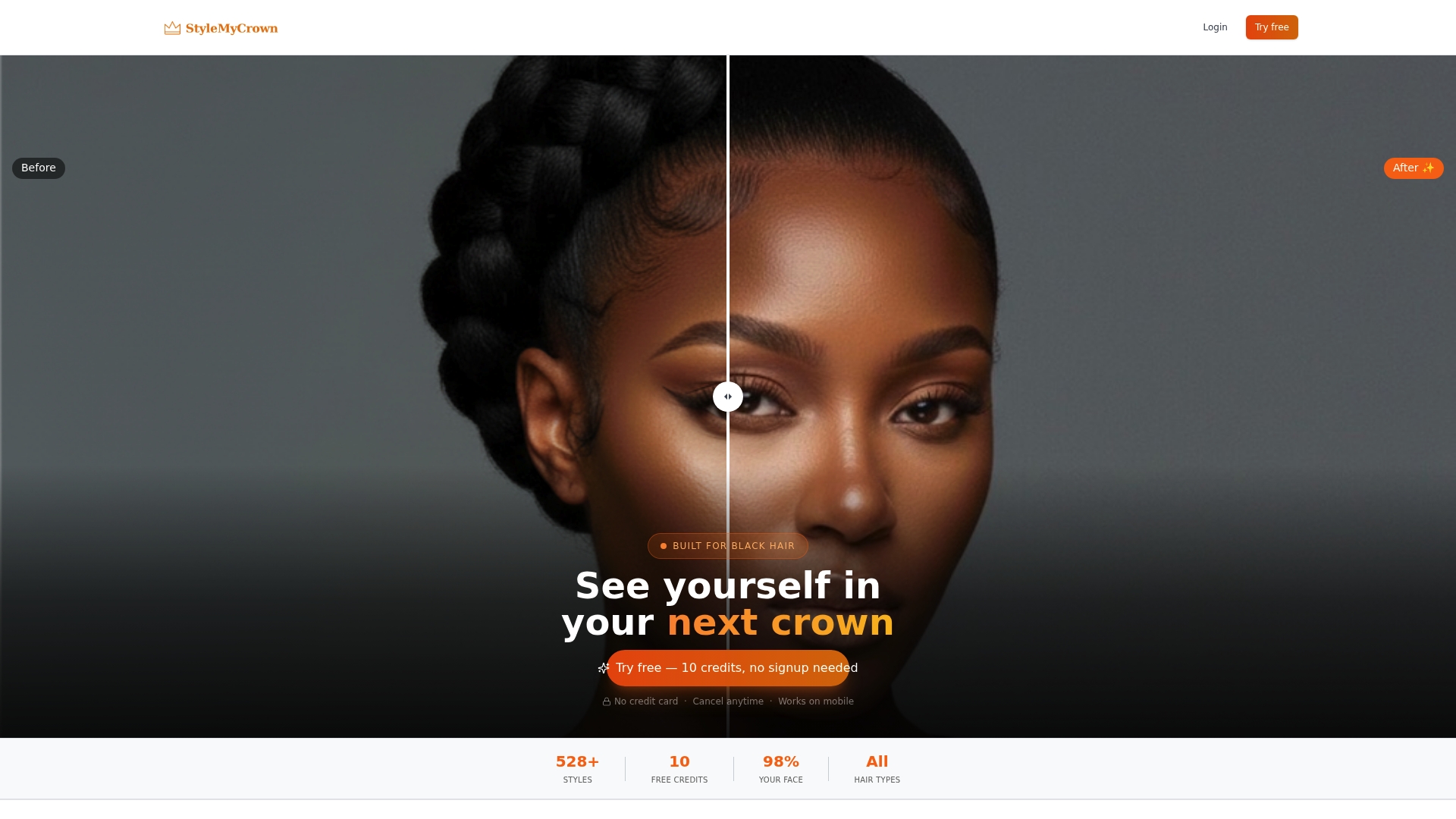
The catalog includes 528 curated styles built around diverse hair textures, including the curly and coily bob variations that mainstream try-on apps tend to skip entirely. The tool shows you shape, length, and placement against your actual features; it won’t tell you how a specific vendor’s cap fits your head, so treat this as your shortlist step and confirm cap construction, sizing, and return terms directly with whoever sells the wig. Open the Style Catalog and start comparing bob looks against your own face today.
Sources
For deeper detail on materials, curl types, and cap construction, see Onya Magazine on human hair bobs, Wigs, and Daniel Alain’s curly wig guide. For texture-specific styling, browse the Stylemycrown blog.
- Human Hair Bob Wig Styles You Need To Try Now - Onya Magazine
- 5 of Our Favourite Bob Wig Styles - Simply Wigs
- Short curly wig hairstyles – Daniel Alain


