Wear These Loc Styles Now: Two Free Photo Previews for Men

Wear These Loc Styles Now: Two Free Photo Previews for Men
The best loc styles for men fall into a handful of families: starter twists or comb coils, tapered or faded locs, barrel twists, braided locs, freeform or wick locs, and the man bun or top knot. The fastest way to pick one is to match three things at once: your current loc stage, your hair texture, and how much upkeep you actually want to commit to. Before you sit in a chair, preview the leading looks on your own photo so you know what actually suits your face.
TL;DR:
- Medium-length styles like barrel twists and braided locs provide versatile options for locs past the one-year mark, especially for polished appearances.
- Retwisting every three to six weeks with clarifying shampoo and proper drying is essential to maintain style integrity and prevent odor.
- Looser textures such as 3A to 3C can take six to twelve months to form visible locs, making premature styling a risk for unraveling or thinning.
- For mature locs over two years, heavier styles like freeform, top knots, and chunky locs are suitable due to improved strength and thickness.
- Virtual try-on tools help preview styles against your face and texture, enabling better decisions before booking a loctician or making long-term commitments.
Table of Contents
- Top loc styles for men and who each one suits
- Choosing by loc stage and length: what you can wear now and next
- Maintenance and care: retwists, washing, products, and style longevity
- Match a loc style to your hair texture, face shape, and lifestyle
- Preview and plan: how virtual try-on and a loctician appointment work together
- Stylist perspective: 2026 trends and durable choices
- Try these looks on your photo before you commit
- Sources
- FAQ
Top loc styles for men and who each one suits
Every loc style asks something different of you. Some want patience, some want a barber who can freehand a fade, some barely want anything at all. Here is the honest breakdown, grouped by what your locs can realistically do right now.
Starter and short-loc styles
These are the styles you can wear in the first year, while your locs are still forming and too short to manipulate much.
- Comb coils or two-strand starter twists: the foundation look for almost every loc journey, low drama, and gentle on the scalp while your roots are still soft.
- Sisterlocks-style micro sections: thin, uniform partings that suit fine to medium 3A to 3C texture and give a neat, professional finish early on.
- Short taper with natural locs on top: a barber fades the sides while the top stays loose and forming, a clean option if you want structure without waiting.
Medium-length styles
Once locs have matured past the fragile stage, usually somewhere past the one-year mark, you get real styling range.
- Barrel twists: thicker, rounder locs styled in defined sections, popular because they photograph well and hold shape for days.
- Braided locs: two or more locs woven into a single braid down the back or side, a strong choice for weddings, interviews, or anything that calls for polish.
- Half-up, half-down: pulls the front and crown locs into a bun or tie while the rest hangs loose, useful when you want length showing without full weight on your neck.
Long and mature-loc styles
Locs two years and older can carry more weight, more color, and more sculptural shapes.
- Freeform or wick locs: left to lock naturally with minimal manipulation, favored for a rugged, individual look and lower retwist demands.
- Man bun or top knot: gathers mature locs into a single knot at the crown, works on almost any face shape and keeps hair off the neck during workouts or heat.
- Chunky locs: fewer, thicker sections that read bold and masculine, best suited to coarser 4A to 4C texture that holds a wider parting without thinning out.
Special and combination looks
- Locs with a fade or undercut: sides shaved close while locs stay full on top, currently one of the most requested combinations at barbershops because it reads sharp in both casual and corporate settings.
- Ombre or colored-tip locs: dye concentrated at the ends rather than the root, letting you experiment with color while newer growth stays untouched.
- Loc extensions: added length or fullness using synthetic or human hair, a route to consider once your natural locs need volume you cannot grow fast enough.
Loc extensions deserve a closer look before you book one. Loc extensions can be made with human or synthetic hair, but many locticians favor 100% Afro kinky human hair for long-term installs because synthetic strands can dry out and damage your natural locs underneath over time. If you are weighing extensions against faux locs, our faux locs guide walks through the install options and where each one holds up.
Pro Tip: Bring a clear reference photo to your barber or loctician, and say the texture and face shape you are working with out loud, since a style that looks sharp on someone else’s crown can behave completely differently on yours.
Choosing by loc stage and length: what you can wear now and next
Your stage decides more about your options than your taste does. Here is a practical breakdown of what each phase allows.
- Starter stage (0 to 6 months): your locs are still soft and prone to unraveling, so stick to comb coils, two-strand twists, or a barber taper that leaves the top undisturbed. Avoid heavy pulling, tight buns, or extensions during this window.
- Short stage (6 to 12 months): locs begin holding their shape, opening the door to loose barrel twists, simple half-up styles, and a fade paired with natural locs on top.
- Medium stage (1 to 2 years): locs are strong enough for braided combinations, chunky sectioning, and color work at the tips without risking the root.
- Mature stage (2 years and beyond): your locs can carry buns, freeform shaping, extensions, and heavier styling since the root has fully locked and thickened.
Texture changes that timeline. 4B and 4C hair often locks faster, sometimes within three to six months, while looser 3A to 3C textures can take six to twelve months to form visible, workable locs. If your hair is looser and still budging when you twist it, you are likely still in the starter phase even past the six-month mark, and pushing into medium-stage styles too early is one of the most common ways locs unravel or thin at the root.
Maintenance and care: retwists, washing, products, and style longevity
A style only looks as good as the maintenance behind it. Get the routine wrong and even the sharpest barrel twists will loosen, smell, or thin out at the root within weeks.

Retwisting every three to six weeks is the general window most stylists recommend, though some wearers stretch to two months or more depending on how fast their hair grows. The routine itself follows a set order: clarify with shampoo to strip buildup, follow with a moisturizing conditioner so the hair does not dry out, apply twisting gel or cream directly at the root, retwist each section by hand or with a tool, then dry completely before styling again. Skipping that last step is how odor sets in.
Watch for these signs your maintenance schedule needs adjusting:
- Retwisting more often than every three weeks puts constant tension on the same root, which can thin edges and hairline over time.
- Locs that stay damp for hours after washing are a setup for mildew smell, so plan wash days around time to air dry or use a hooded dryer.
- Buildup at the root that will not rinse out usually means it is time for a clarifying wash before your next retwist, not more twisting gel.
One retwist habit worth borrowing: stylists behind a scalp-first soft locs routine recommend keeping locs neat for four to six weeks by prioritizing scalp health over tight retwisting, since a healthy scalp holds a style longer than a heavily re-twisted root does.
Reach for a light, water-based twisting cream and a residue-free clarifying shampoo, and skip anything heavy with mineral oil or wax, which builds up fast on locs and slows drying time. If you are wearing invisible locs or another low-manipulation install, our invisible locs care guide covers the specific retwist adjustments those styles need.
Match a loc style to your hair texture, face shape, and lifestyle
Round faces read sharper with height on top, so barrel twists or a bun pulled slightly forward add the length your face needs. Long faces benefit from the opposite: a tapered fade with locs kept closer to the head balances things out instead of stretching them further.
- Fine or looser texture (3A to 3C) holds thinner sections well and moves more, so braided locs and half-up styles show off that movement.
- Coarser texture (4A to 4C) supports chunkier sections that stay full without thinning, making it a natural fit for freeform or chunky loc styles.
- Athletic lifestyle: choose low-manipulation options like a bun, wick locs, or a short taper that survives sweat and helmets without daily upkeep.
- Corporate setting: braided locs, a clean fade with locs on top, or a neat bun read polished without much daily styling.
Tell your barber or loctician this in one sentence: your loc stage, your texture, and whether you need the style to survive a gym session or a boardroom, in that order.
Preview and plan: how virtual try-on and a loctician appointment work together
Deciding on a loc style used to mean flipping through photos of other people’s hair and hoping it translated to yours. A virtual try-on tool built specifically for Black hair changes that math: you upload your own photo, preview a style against your actual texture and face shape, and skip the guesswork before you ever sit in a chair.
That kind of preview matters most when the stakes are high. Book an actual loctician for starter installs, heavy color work, extension installs, or if you are managing thinning edges, since those are the moments where a trained hand assessing your scalp in person beats any preview. The catalog includes a large number of styles curated for different Black hair textures, and new users can start with complimentary credits to test a few looks before deciding.

Stylist perspective: 2026 trends and durable choices
2026 is leaning toward clean tapers, geometric parting, and individual texture over anything uniform, with jewel-toned dye at the tips replacing heavy bleach. Three looks earn their popularity honestly: a fade with locs on top, barrel twists, and a simple bun, because all three flatter a range of face shapes and hold up under real life. Skip repeated bleaching or heat styling on locs already carrying tension at the root. Trends pass, but a damaged hairline does not.
— Christelle
Try these looks on your photo before you commit
Every style in this guide looks different once it is on your actual head, which is exactly the gap StyleMyCrown was built to close.
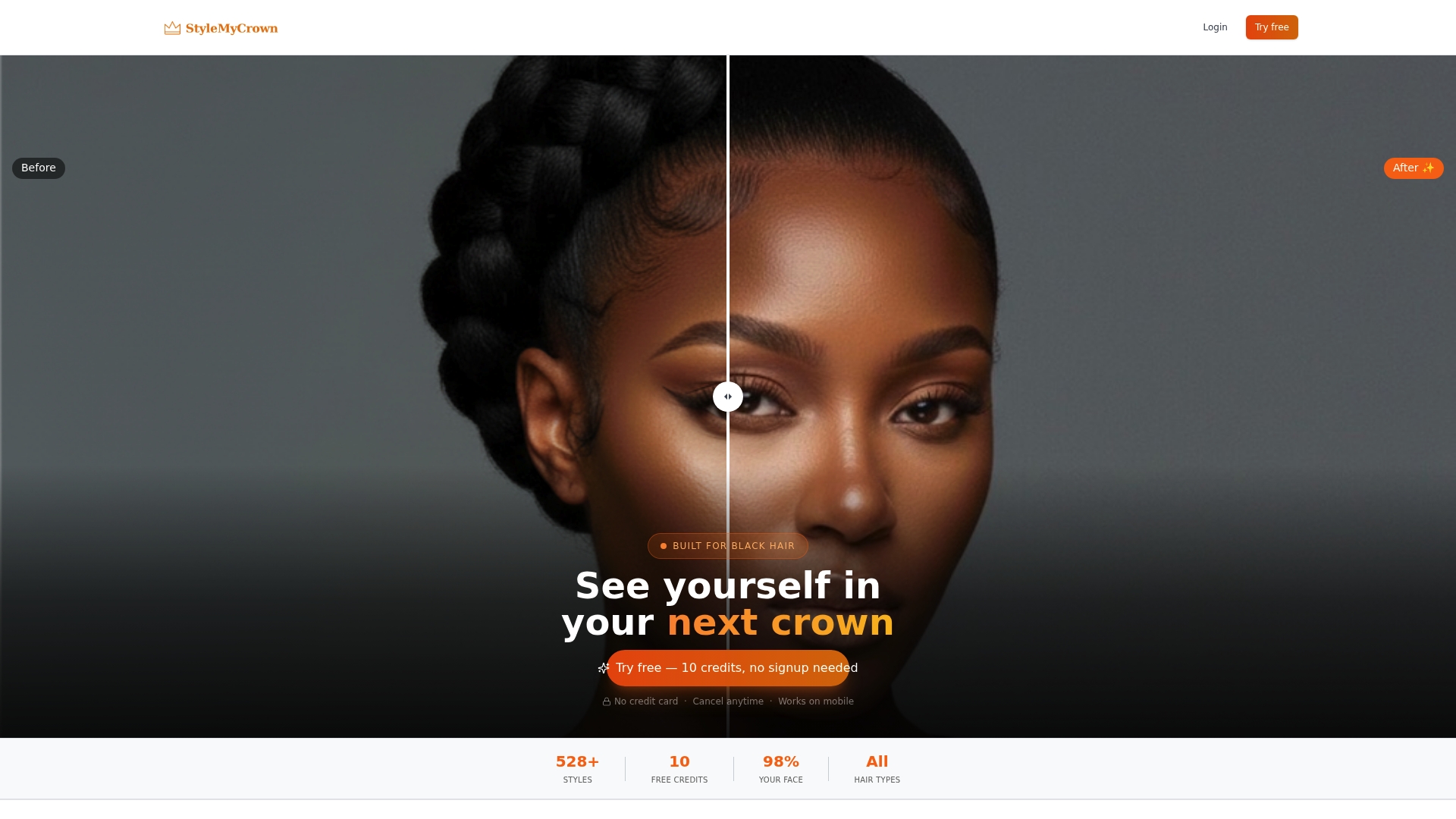 Upload a photo, browse the Style Catalog, and preview barrel twists, a fade with locs on top, or a bun against your own texture using two complimentary credits before you spend a dollar or sit in a chair.
- Preview first, book second: narrow your shortlist virtually, then use the Stylist Catalog to find a loctician who specializes in the look you land on.
- No long-term commitment required: the 1 Week Trial runs $17.48 per week, or step up to the 4 Week Plan at $38.73 per 4 weeks if you want more time comparing looks.
- Your face data stays private: nothing you upload gets used for training or retained beyond your session.
Start with the Style Catalog and see which of these loc families actually belongs on your head.
Sources
- How to Retwist Your Locs, According to Natural Hair Experts — Byrdie
- Where to Get Loc Extensions at a Salon Near You | Allure
- Loc styles for men — CulturedGrooming
- 13 stylish locs hairstyles for men — MenXStyle
FAQ
What is the best style for locs?
There is no single best style since it depends on your loc stage, texture, and how much upkeep you want. Barrel twists, a fade with locs on top, and a simple bun consistently rank among the most flattering, low-fuss choices across face shapes.
Which loc style lasts the longest between retwists?
Freeform or wick locs typically go the longest between retwists since they rely on minimal manipulation rather than scheduled sessions. Most other styles need a retwist every three to six weeks depending on how fast your hair grows.
What are the 7 types of locs?
Definitions vary by stylist, but a common breakdown includes starter locs, sisterlocks or micro locs, traditional or classic locs, freeform locs, barrel twists, faux or extension locs, and interlocked locs. Each differs mainly in section size, method of formation, and how much manipulation it needs.
What are the most popular dreadlock styles for men in 2026?
Clean tapers paired with locs on top, geometric parting, and jewel-toned dyed tips are leading the trend this year over uniform or heavily bleached looks. Barrel twists and buns remain steady favorites because they suit a wide range of textures and face shapes.
How often should I wash locs to avoid odor?
Wash with a clarifying shampoo before each retwist and make sure locs dry completely afterward, since trapped moisture is the main cause of odor. Stylists recommend following clarifying shampoo with a moisturizing conditioner so the hair does not dry out between washes.


