Protect Regrowth With Virtual Previews: Postpartum Hairstyles for Black Hair

Protect Regrowth With Virtual Previews: Postpartum Hairstyles for Black Hair
During postpartum shedding, favor low-tension styles and cuts that create visual fullness instead of fighting the thinning head-on. Most shedding peaks at 3 to 6 months after delivery and stabilizes by about 6 to 8 months, so the goal right now isn’t a permanent fix. It’s a bridge that keeps your hairline safe while your body catches up.
TL;DR:
- Most postpartum shedding peaks between three and six months after birth, with hair loss stabilizing by about eight months, requiring patience rather than permanent fixes.
- Low-tension hairstyles, such as loose ponytails and soft buns, greatly reduce additional damage while supporting hair regrowth during this period.
- Timing a haircut carefully by waiting for shedding to slow can help maintain the appearance of fullness and improve the final look, with heavier perimeter lines creating illusion of density.
- Using lightweight volumizing products and gentle styling techniques, like dry shampoo and minimal manipulation, enhances volume without stressing fragile regrowth.
- If shedding persists beyond a year, involves patchy loss, or is accompanied by scalp discomfort, consulting a dermatologist is recommended for proper evaluation and treatment.
Table of Contents
- The Best Postpartum Hair Loss Hairstyles for Thinning Edges
- What to Tell Your Stylist About Cutting Postpartum Hair
- How to Style Without Making Breakage Worse
- Volumizing Products and Tools That Won’t Weigh Down Regrowth
- When Postpartum Shedding Needs a Doctor, Not Just a Stylist
- Try Before You Cut: Virtual Styling for Postpartum Hair
- What I Wish Someone Had Told Me About Postpartum Styling
- Try Your Next Look Before You Commit to It
- Primary Sources and Further Reading
- Sources
- FAQ
The Best Postpartum Hair Loss Hairstyles for Thinning Edges
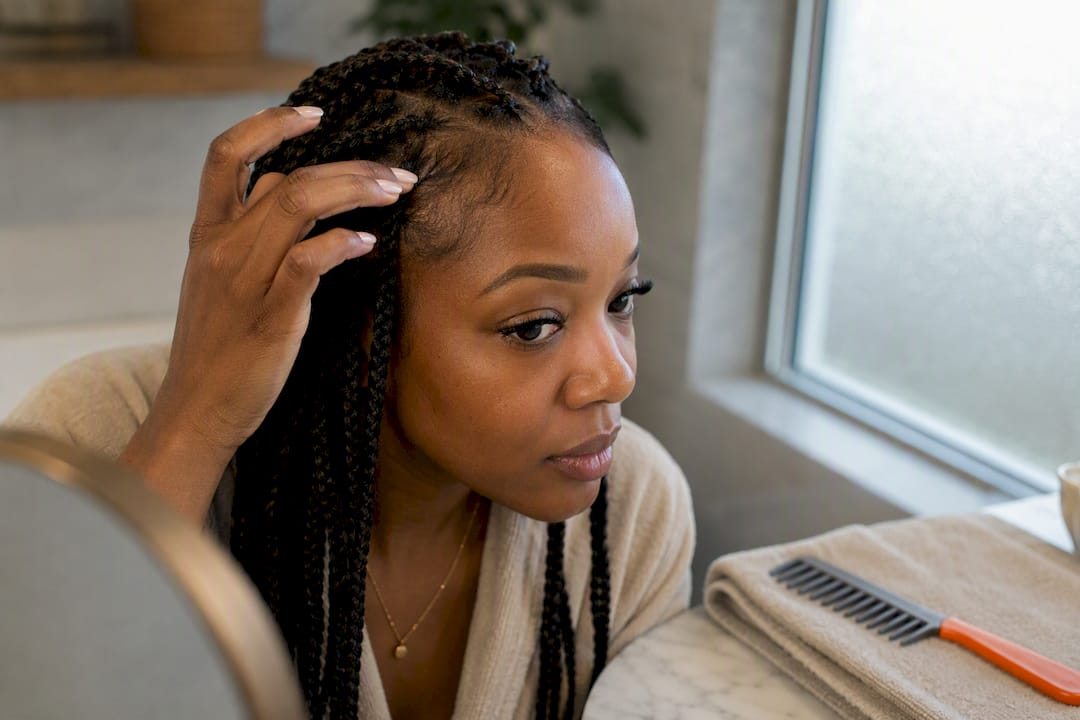
Your hair is in survival mode right now, not styling mode. Every style below is chosen because it puts zero pull on the follicles that are already working overtime to recover.
- Loose low ponytail. Gather hair at the nape, not the crown, and secure it with a silk scrunchie instead of a rubber band. High ponytails yank at the hairline exactly where postpartum breakage shows up first.
- Side or single loose braid. Keep it positioned away from your hairline, not centered where tension collects at the part. A loose three-strand braid over one shoulder reads polished without any grip on fragile roots.
- Low soft bun with a claw clip. Twist hair loosely and clip it low at the nape, leaving a few face-framing pieces out. The clip does the holding, not your scalp.
- Half-up style with a crown lift. Clip just the top section back and let the rest fall. Switching your part from one side to the other instantly hides thin spots and adds the illusion of volume where you need it most.
- Textured bob or chin-length blunt cut. Shorter, blunt lines carry visual weight that longer, thinning strands can’t fake. If you’re considering curtain bangs, know that the wispy, face-framing pieces often thin out fastest during shedding, so ask your stylist for a fuller, blended fringe instead.
Pro Tip: Spray dry shampoo directly at the roots before bed, not just in the morning. It absorbs overnight oil buildup, which gives you natural-looking lift and grip without a single extra step at 6 a.m. with a newborn.
For protective styling that still respects a healing hairline, a loose knotless braid style works well because the technique starts without the tight base tension of traditional braids.
What to Tell Your Stylist About Cutting Postpartum Hair
Cutting your hair during postpartum shedding isn’t automatically a good idea, and timing matters more than most people realize. If you’re still in the heaviest shedding window (roughly 3 to 6 months out), a dramatic cut can make thinning look more obvious once regrowth starts filling in unevenly. Waiting until shedding starts to stabilize often gives a cleaner result.
When you’re ready, bring a script, not just a photo. Say these phrases directly to your stylist:
- “Create a heavier perimeter line” instead of choppy, feathered ends.
- “Internal invisible texturing only” so weight stays at the surface where it reads as density.
- “No external layering” since visible layers remove the bulk that hides regrowth.
- A blunt bob or short textured bob works because heavier perimeter lines create the illusion of fullness instead of cutting away the density you’re trying to keep.
Plan on a trim every 8 to 12 weeks. That cadence keeps the shape intact as new growth blends into the existing length, instead of letting regrowth stick out at odd angles.
How to Style Without Making Breakage Worse
The American Academy of Dermatology specifically warns against high ponytails and tight hairstyles during this phase, because pulled hairlines are already vulnerable to traction alopecia on top of normal shedding. A few habit changes protect what regrowth you have.
- Swap your pillowcase for silk or satin. Cotton grips hair fibers overnight and causes friction breakage you won’t notice until it’s already happened.
- Use a wide-tooth comb, not a fine-tooth brush, and always start detangling from the ends upward.
- Before bed, loosely braid your hair or gather curls into a soft “pineapple” at the crown. Minimal manipulation overnight means less shed hair on your pillow by morning.
- Keep heat tools on the lowest setting that still works, and never skip heat protectant, even for a quick five-minute pass with a flat iron.
- If you wear protective styles, ask for loose knotless braids or soft cornrows with minimal tension at the base rather than the tightest version available.
Pro Tip: If your scalp feels tender or tight after any style, that’s your body telling you the tension is too high, not something to push through for the sake of looking “finished.”
Volumizing Products and Tools That Won’t Weigh Down Regrowth
Heavy oils and thick creams feel like nourishment, but at the roots during regrowth, they flatten the very volume you’re trying to build. Lightweight is the rule here.
- Volumizing mousse applied at the roots, not the ends, gives lift without residue.
- A root lifter spray works well right before a blow-dry for extra grip at the base.
- Dry shampoo isn’t just for oily hair. It adds texture and root grip even on freshly washed strands.
- A light-hold hairspray tames flyaways and baby hairs without stiffness.
- For tools, a root-lift blow-dry technique (lifting sections at a 90-degree angle while drying) and a 25mm curling barrel for soft waves both add visible fullness fast.
A five-minute morning routine covers most of this: dry shampoo at the roots, a quick tousle with fingers, a clip at the crown for lift, and one light mist of hairspray before you walk out the door.
When Postpartum Shedding Needs a Doctor, Not Just a Stylist
Most postpartum shedding resolves on its own, but a few signs mean it’s time to book a dermatologist or trichologist instead of another salon appointment.
- Patchy hair loss, rather than overall thinning, is not typical telogen effluvium and deserves evaluation.
- Scalp pain, redness, or inflammation alongside shedding points to something beyond hormonal shifting.
- Shedding that continues past 8 to 12 months without slowing down is worth a professional look.
- Sudden, extensive loss that feels faster or heavier than gradual postpartum shedding should not wait.
A dermatologist will typically take a history, examine your scalp directly, and may order labs to check thyroid function or iron levels, since both commonly affect postpartum hair health. Bring photos that show your timeline and a list of medications, so the visit starts with real data instead of guesswork. A haircut can support the look of fuller hair, but it doesn’t replace medical evaluation when something beyond normal shedding is going on.
Try Before You Cut: Virtual Styling for Postpartum Hair
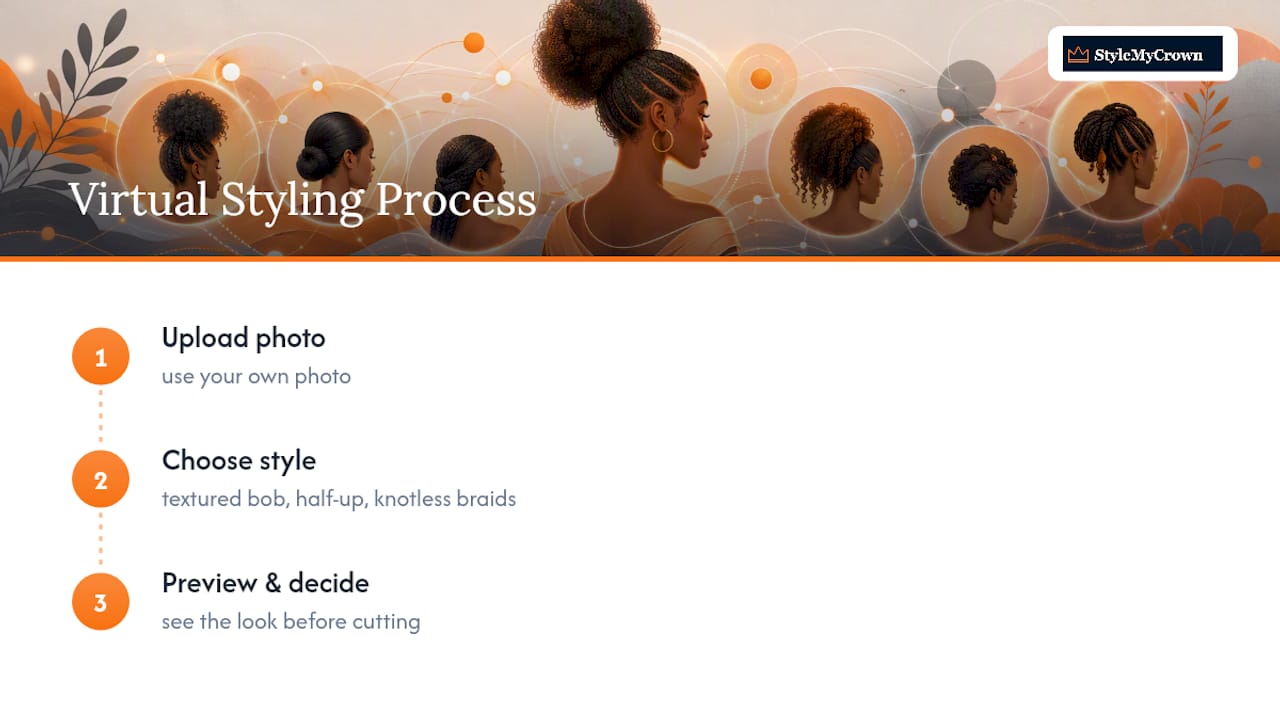
The catalog includes a wide range of styles curated specifically for Black hair textures, so you can preview a textured bob, a half-up look, or gentle knotless braids on your own photo before committing to anything permanent. With a few complimentary credits, there’s no cost to see how a shorter cut or protective style actually looks on your face before you sit in a stylist’s chair.
What I Wish Someone Had Told Me About Postpartum Styling
A low bun and a claw clip got me through more mornings than I can count, and it never once felt like I was hiding anything. Regrowth is temporary. Styling is just support while your hair catches up to where it’s headed anyway.
— Christelle
Try Your Next Look Before You Commit to It
Postpartum shedding already asks a lot of you. Guessing whether a bob will actually flatter your thinning edges, or whether curtain bangs will help or hurt, shouldn’t be one more thing to figure out through trial and error. Stylemycrown gives you a way to see a textured bob, a low-tension protective style, or a half-up look on your own photo first, using a catalog of over 528 styles curated for Black hair textures, without touching a pair of scissors.
Start with your two complimentary credits and try a style that matches what your stylist recommended for your regrowth phase. If you want to keep experimenting past the free credits, the 1 Week Trial runs $17.48 per week, or you can move to the 4 Week Plan at $38.73 if you’re planning ahead for the months of regrowth still coming. Browse the full style catalog for inspiration before your next appointment, and see exactly what a cut will look like on you before you say yes to it.
Primary Sources and Further Reading
- Johns Hopkins Medicine breaks down the typical timeline for postpartum hair loss, including when shedding peaks and when it stabilizes.
- The American Academy of Dermatology offers dermatologist-backed guidance on which hairstyles protect new mothers’ hairlines.
- WebMD covers what to expect during postpartum shedding and practical low-tension styling strategies.
- Parents walks through what postpartum regrowth actually looks like month by month, along with styling ideas to camouflage it.
- For readers exploring non-cut cosmetic options for diffuse thinning, Enhanced Scalp’s guide to density SMP explains scalp micropigmentation as an alternative approach.
Sources
- Postpartum hair loss | Johns Hopkins Medicine
- Postpartum hair loss: What to expect and how to manage | WebMD
- Hair loss in new moms: Dermatologist tips | American Academy of Dermatology
- What Postpartum Hair Regrowth Is Really Like | Parents
FAQ
What helps postpartum hair loss?
Low-tension hairstyles like loose ponytails, loose braids, and low buns held with silk scrunchies or claw clips reduce breakage while your body naturally rebalances. Gentle detangling, lightweight volumizing products, and avoiding tight styles all support the hair you have while new growth comes in.
How long does hair fall out postpartum?
Shedding typically peaks between 3 and 6 months after delivery and usually stabilizes by 6 to 8 months. If noticeable shedding continues well past that window, it’s worth checking in with a dermatologist.
Should I cut my hair if I’m experiencing postpartum hair loss?
A strategic cut with a heavier perimeter and internal texturing can create the visual effect of fuller hair, but timing matters. Many stylists suggest waiting until shedding starts to slow rather than cutting during the heaviest loss phase, so regrowth blends in more evenly. You can preview how a bob or textured cut might look on your own photo using Stylemycrown’s virtual try-on before booking anything permanent.
What is the difference between alopecia and postpartum hair loss?
Postpartum hair loss, known medically as telogen effluvium, is a temporary hormonal shedding that resolves on its own within months. Alopecia refers to other forms of hair loss, including patchy or patterned loss, that often don’t resolve without treatment and typically need a dermatologist’s evaluation to diagnose properly.


