Microlocs vs Sisterlocks for Black Hair: Checklist + 2 Free Previews

Microlocs vs Sisterlocks for Black Hair: Checklist + 2 Free Previews
Microlocs give you flexibility and a lower entry cost because they can be installed with several techniques by a stylist or even yourself, while Sisterlocks is a trademarked, consultant-only system built for a uniform, polished grid. If you want DIY freedom and don’t mind some texture variation, microlocs usually win. If you want precision and consistency and can pay for certified installation, Sisterlocks tends to deliver that. Either way, get your hair and scalp assessed in person before you commit.
TL;DR:
- Microlocs can be installed using various techniques by oneself or a stylist, offering greater flexibility and lower initial costs than Sisterlocks.
- Sisterlocks require a certified consultant and involve a precise grid pattern, leading to longer installation times and higher costs, with a more uniform, polished appearance.
- Both styles need regular retightening, but Sisterlocks maintenance tends to be more expensive due to the proprietary method and certification fee.
- Proper assessment of hair density, scalp health, and strand strength is crucial before deciding, especially for thin or fragile hair types.
- Using virtual try-on tools helps visualize how each style will look on your face, aiding informed decisions and reducing the risk of dissatisfaction.
Table of Contents
- Microlocs vs Sisterlocks: What Are Microlocs, Exactly?
- Microlocs vs Sisterlocks: What Makes Sisterlocks Different?
- How Do Microlocs and Sisterlocks Actually Compare?
- Which Hair Type Fits Microlocs or Sisterlocks Best?
- What Do Microlocs and Sisterlocks Actually Cost?
- Real Talk: The Upsides and the Failure Points
- How Do You Decide Between the Two?
- Preview Both Styles Before You Book a Chair
- The Honest Take On Choosing Between Them
- Try Before You Commit: See Your Locs First
- Sources
- FAQ
Microlocs vs Sisterlocks: What Are Microlocs, Exactly?
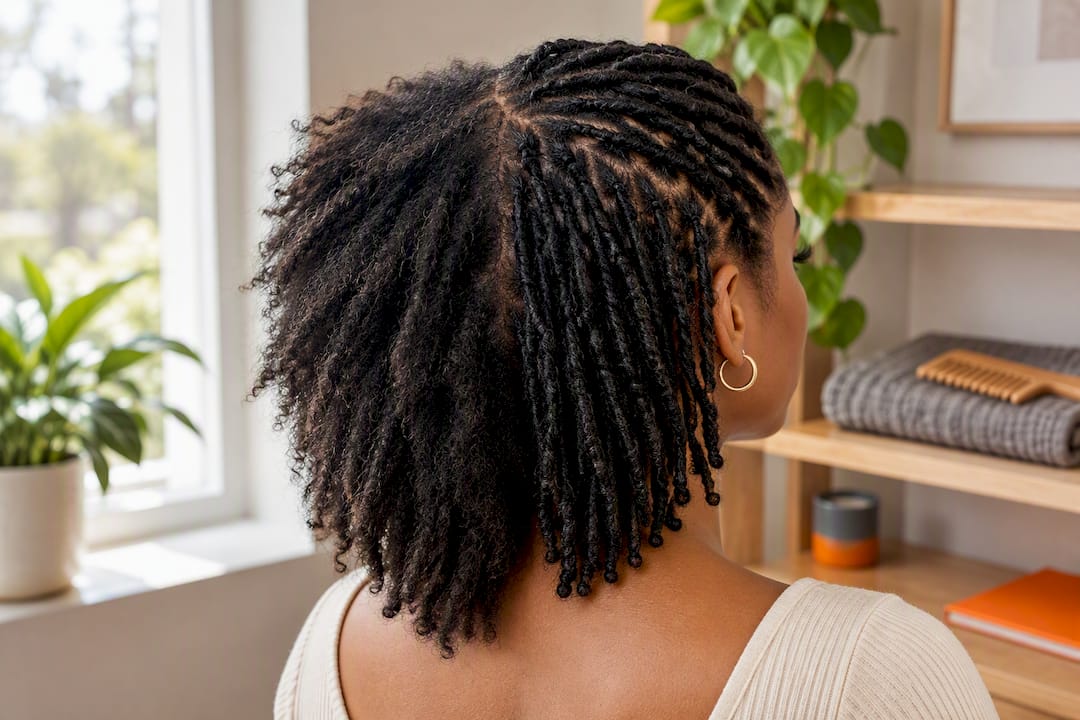
Microlocs are small, permanent locs formed using several techniques: two strand twists, braids, palm rolling, interlocking, or the crochet method. That variety is the whole point. A stylist trained in traditional loc work can install them, and plenty of people start their own with patience and a good parting comb.
DIY installs tend to cost less upfront, but the finish depends entirely on the hands doing the work. A rushed twist job or inconsistent parting size shows up later in loc shape and even root strength. Professional installs usually run tighter and more uniform, which affects how the locs mature.
Installation time swings widely based on hair density, length, and how small you want each loc. Thicker, longer hair with tiny sections can take considerably longer in the chair than looser, larger partings.
Early on, microlocs often look a little rough. Fuzzy, uneven, still finding their shape. That’s normal. As they mature over months, they tighten, smooth out, and open up styling options you won’t see in the starter loc phase, from sleek updos to loose curls.
Microlocs vs Sisterlocks: What Makes Sisterlocks Different?
Sisterlocks isn’t a generic styling term. It’s a trademarked system with its own proprietary interlocking tool and technique, and only consultants certified through the Sisterlocks Home Office are authorized to install it. You cannot DIY authentic Sisterlocks, and that’s by design.
The install starts with a precise grid partitioning across the scalp, creating uniform micro-locs that distribute weight evenly across the head. That evenness is one reason Sisterlocks tends to feel lighter on higher-density hair than a less structured approach to twisting, even though the initial time and cost investment runs higher.
A full install commonly stretches across multiple hours, sometimes split into more than one session depending on hair volume. After that, you’re looking at retightening visits on a regular cycle to maintain the grid as new growth comes in.
Because the pattern is so exact, styling tends to look sleeker sooner. The tradeoff is you’re locked into the certified consultant model for every retightening, not just the first appointment.
How Do Microlocs and Sisterlocks Actually Compare?
Set side by side, the practical differences come down to who installs them, what you’ll pay, and how much upkeep you’re signing up for.
- Installation method: Microlocs use twist, braid, palm roll, interlock, or crochet techniques and can be DIY or stylist-installed; Sisterlocks uses a single trademarked interlocking method performed only by a certified consultant.
- Installation time: Microlocs vary widely by technique and density; Sisterlocks installs are typically longer sessions because of the precision grid work involved.
- Initial cost range: Microlocs generally fall in a lower cost bracket than Sisterlocks, which carries a premium for certification and the trademarked method.
- Maintenance frequency: Both need periodic retightening, but Sisterlocks maintenance appointments tend to cost more per visit due to the consultant-only model.
- Appearance and styling flexibility: Microlocs can vary in size and texture depending on technique; Sisterlocks locs are uniformly small and consistent, giving a more polished, symmetrical look.
- Best hair types: Microlocs suit a broad range of textures and budgets; Sisterlocks works well for people who want even weight distribution across denser hair, provided a consultant confirms the fit.
- Risks and common issues: Both styles risk weak roots, buildup, and merging locs if reties are too tight or hair isn’t fully dried after washing.
None of these categories crown an outright winner. They just tell you what you’re trading for what.
Which Hair Type Fits Microlocs or Sisterlocks Best?
Your density, strand thickness, and scalp condition matter more than personal preference alone. Thicker strands generally hold either style well. Finer or thinner strands need a closer look, because smaller locs concentrate tension on fewer strands per section, and that tension can stress already-fragile roots.
If your hair is thin or thinning, don’t assume either style is automatically off the table, and don’t assume either is automatically safe. A qualified practitioner should check your density, strand strength, scalp health, and proposed parting size in person before anything gets installed. That single step prevents more regret than any amount of online research.
Sisterlocks often appeals to people who want a uniform, even look and have the budget and density to support tighter, smaller partings. Microlocs often appeal to people who want flexibility in size, technique, and price, including those testing the waters with a DIY start.
If you have active scalp irritation, recent chemical treatments, or strands that are already snapping under normal styling, postpone any install until that’s resolved. Locking over compromised hair rarely ends well.
What Do Microlocs and Sisterlocks Actually Cost?
Published price ranges from stylist-focused sources consistently place microlocs in a lower cost bracket than Sisterlocks, both for the initial install and for ongoing maintenance visits. Sisterlocks costs more because you’re paying for a trademarked technique and certified labor, not just chair time.
What pushes either price higher? Longer hair, higher density, and smaller desired loc size all add time, and time is what you’re billed for. A retightening visit costs less than a full install, but the frequency adds up over a year, especially with Sisterlocks’ tighter maintenance cycle.
Budget time as carefully as money. Washing takes longer with small, tightly packed locs, and drying takes longer still. Skipping full drying isn’t a shortcut. It’s how you end up with mildew or odor problems trapped inside the loc, or roots weakened by prolonged dampness.
If a loc merges with its neighbor, breaks near the root, or gets over-tightened during a retie, fixing it costs more than routine maintenance would have. Poor technique early on is the most common reason people end up paying for a partial reinstall later.
Real Talk: The Upsides and the Failure Points
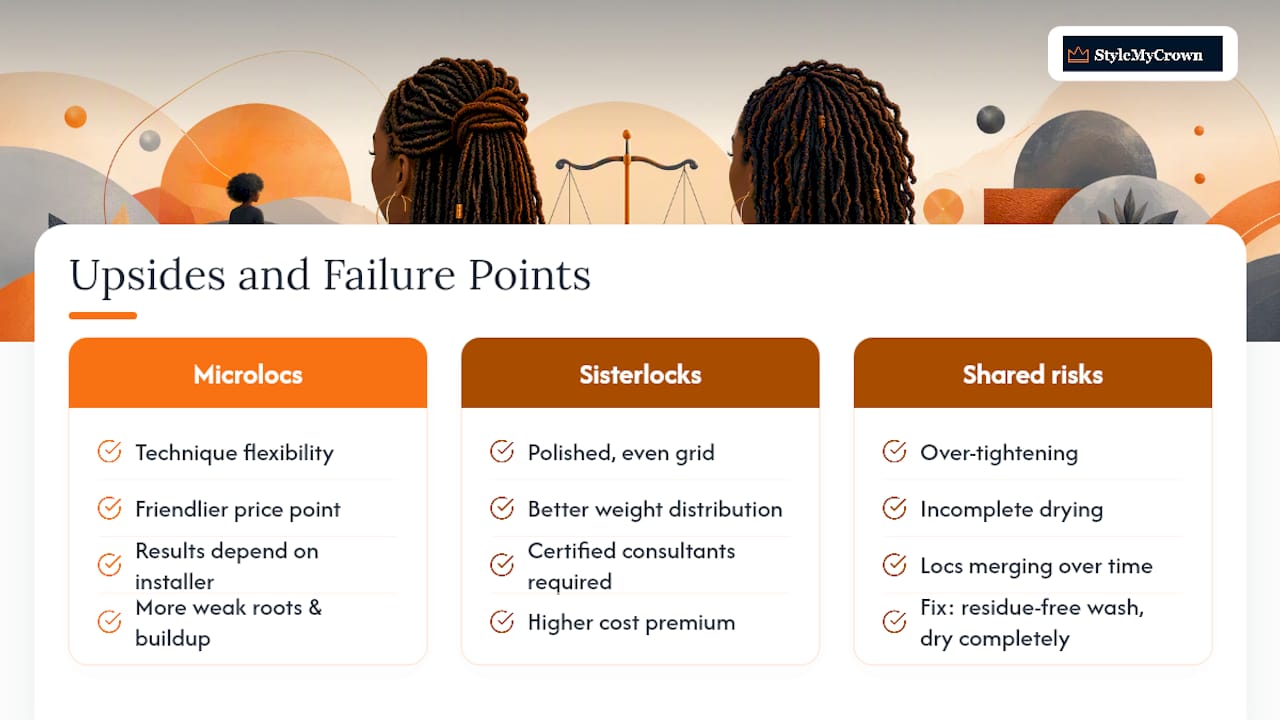
Microlocs give you technique flexibility and a friendlier price point, but that same flexibility means results depend heavily on who installs them and how consistent their hand is. Weak roots and product buildup show up more often when reties are too aggressive or washing isn’t thorough.
Sisterlocks gives you a polished, even grid and better weight distribution, but you’re locked into certified consultants for life, and that convenience carries a real cost premium.
Both styles share the same risk list: over-tightening, incomplete drying, and locs merging into each other over time. The fix is almost always the same. Wash with residue-free products, keep hydration light rather than heavy, dry completely before styling, and get a professional check if you notice slippage, thinning, or unusual tenderness at the root.
How Do You Decide Between the Two?
Run through this before you book anything:
- Check your hair’s current health. Look for breakage, thinning, or scalp irritation. Resolve those first.
- Define your style goals. Do you want a uniform, symmetrical grid or more textured variation?
- Set your real budget and timeline. Include maintenance costs, not just the install day.
- Preview the look before committing. Use photos or a virtual try-on to see loc size and density on your actual face and hair.
- Book a professional assessment. A stylist or certified consultant should map your density, check your edges, and test strand strength in person.
A good consultation includes density mapping across different areas of your scalp, a close look at your edges for early thinning, and a strand-strength check before anyone touches a comb to your hair. Ask directly: what’s your certification or training background, what’s the realistic timeline for my hair specifically, and what happens if my hair doesn’t respond well to the first few weeks?
Walk away from anyone who can’t answer those clearly, or who rushes past a scalp check to get to the install.
Pro Tip: Snap a few clear photos of your hair from the front, sides, and crown before your consultation, then run them through a virtual try-on tool. Seeing loc size and density on your own face makes it far easier to explain what you want, and far easier to catch a mismatch before you’re in the chair.
Preview Both Styles Before You Book a Chair
Uncertainty is the biggest reason people stall out on deciding between microlocs and Sisterlocks. You can look at a hundred photos of other people’s hair and still have no real sense of what either style will look like on your face, your density, your part pattern.
That’s the gap Stylemycrown’s virtual try-on closes. Upload a photo and preview both microloc textures and Sisterlocks-style uniform patterns before you spend a dollar on an install. Check how a tighter grid changes your perceived density, or how a looser microloc pattern frames your face for an updo. A realistic preview won’t replace a stylist’s hands, but it can save you from choosing a size or pattern you’ll regret in three months.
The Honest Take On Choosing Between Them
Hair health should decide this, not trend cycles. Both microlocs and Sisterlocks can look stunning and both can go wrong if your roots, density, or scalp condition weren’t properly assessed first. If your hair is thinning or your scalp is sensitive, get a professional opinion before you lock anything in, literally. The right choice is the one your hair can actually sustain, not the one that photographs best.
— Christelle
Try Before You Commit: See Your Locs First
Committing to a loc style you’ve only seen on someone else’s head is one of the most common regrets in this whole process. Virtual try-on platforms let you preview numerous curated Black hair styles, including microloc and Sisterlocks looks, on your own photo before you ever sit in a stylist’s chair.

Every preview comes from a catalog built specifically for Black and textured hair, so you’re not guessing how a generic style translates to your texture. Your face data is processed securely and never used for AI training, so you can experiment freely. New users get 2 complimentary credits to try it risk-free, and if you want to keep exploring, the 1 Week Trial runs $17.48 per week or the 4 Week Plan runs $38.73 per 4 weeks. Browse the full style catalog, preview your top picks, then bring those images to a stylist or certified consultant for the final in-person call.
Sources
- Sisterlocks — Booksy listing / overview
- Microlocs vs. Sisterlocks — StyleSeat Pro Beauty Blog
- Sisterlocks trademark acknowledgement (Home Office PDF)
FAQ
What Are the Disadvantages of Microlocs?
The main risks are weak roots, over-tight reties, product buildup, and breakage, all more likely because of the small loc size. Practitioners recommend residue-free washing, light hydration, and complete drying to reduce these issues.
Is Microlocs Good for Thin Hair?
It depends on your specific density and strand strength, not a blanket rule. A qualified practitioner should assess your density, scalp health, and proposed parting size in person before deciding, since neither microlocs nor Sisterlocks is automatically the safer choice for thin hair.
How Long Do Sisterlocks Last?
Sisterlocks are permanent once mature, similar to traditional locs, and can last for years with regular retightening. Longevity depends on consistent maintenance and avoiding over-tight reties that stress the roots.
How Much Do Sisterlocks Cost?
Published stylist sources place Sisterlocks in a higher cost bracket than microlocs, covering both the initial install and ongoing retightening visits, largely because only certified consultants can perform the trademarked technique. Exact pricing varies by consultant and region, so confirm directly during your consultation.


