Free Virtual Preview: Flattering Hair Color for Dark Skin, No Heavy Bleach

Free Virtual Preview: Flattering Hair Color for Dark Skin, No Heavy Bleach
Rich chocolate browns, warm reds and coppers, jewel tones like burgundy and plum, and caramel or golden money pieces are the shade families that consistently flatter dark skin. Selective placement, not full-color saturation, tends to give the most natural glow. Before booking anything dramatic, patch test the dye and lean toward staged lightening instead of one aggressive bleach session.
TL;DR:
- Using staged lightening with lower-volume developers and bond-repair treatments helps preserve dark hair’s integrity during coloring sessions.
- Patch testing for allergy risks, especially for PPD, remains essential even with shades typically considered safe for darker skin.
- Selecting colors that match your undertone, such as warm tones for warm undertones and jewel tones for cooler undertones, enhances natural glow and contrast.
- Placement techniques like balayage and money pieces offer lower-maintenance options while brightening or adding dimension.
- Virtual try-on platforms allow previewing shades on your texture before booking a salon appointment, reducing miscommunication and enhancing confidence.
Table of Contents
- Shade families worth saving before your next appointment
- Finding your undertone before you pick a shade
- How stylists lighten dark hair without wrecking it
- Patch testing and the allergy risks nobody mentions
- Keeping your color and your hair strong afterward
- Previewing color before you commit to the chair
- What representation taught me about choosing color
- Try your next shade on before you book it
- Sources
- FAQ
Shade families worth saving before your next appointment
I still remember scrolling through a hundred hair photos before an appointment, trying to explain to my stylist what I meant by “warm but not orange.” A saved folder of real shade families would have saved me an hour in that chair.
Natural-depth browns like espresso, chocolate, and mocha are the easiest entry point. They deepen your natural color instead of fighting it, adding richness without screaming for attention. These tend to photograph beautifully in daylight because they play off the warmth already in your skin.
Warm reds and coppers, think mahogany, deep cherry, or auburn, bring genuine glow. Stylist guidance on fall color for deep skin tones points to these as reliable favorites because they pick up light instead of flattening it, especially outdoors or under warm indoor lighting.
Jewel tones like burgundy and plum work the opposite way. Instead of harmonizing, they contrast, which reads as bold and a little unexpected. These tend to suit cooler undertones best, though a skilled colorist can adjust depth to make them work broadly.
Blonde accents don’t require a full bleach job. Golden blonde money pieces and caramel highlights placed strategically around the face brighten your look without stripping your whole head.
Placement changes everything about how a color reads on your face:
- All-over color shifts your entire look and commits you to more upkeep.
- Balayage builds soft, sun-kissed dimension with a lower-maintenance grow-out.
- Money pieces frame just the front strands, brightening your face without touching the rest of your hair.
Finding your undertone before you pick a shade
Your undertone decides whether a color makes you glow or makes you look washed out, and it’s not always obvious on darker skin because the usual tricks (like checking for a pink or yellow cast) can be subtle.
- Check the veins on your wrist in natural light: blue-ish veins usually mean cool undertones, greenish veins usually mean warm.
- Try the jewelry test: gold jewelry flattering your skin points to warm undertones, silver pointing to cool.
- Hold a plain white and a plain cream shirt near your face: whichever makes your skin look brighter tells you which family you lean toward.
Warm undertones tend to glow with copper, auburn, and golden caramel. Cool undertones often look striking in burgundy, plum, or blue-black. Neutral undertones have the most flexibility and can pull off both.
If you want your color to blend in naturally, stay close to your undertone family. If you want contrast that turns heads, go a shade or two outside it, jewel tones on warm skin or copper on cool skin can look intentional rather than mismatched.
How stylists lighten dark hair without wrecking it
Naturally dark hair, especially hair levels 1 through 3, holds a lot of melanin, and stripping that in one sitting means heavy chemical processing that can leave hair brittle or breaking. Most experienced colorists avoid a single aggressive lift on hair that dark.
Instead, they lean on placement techniques that lighten less hair overall:
- Balayage hand-paints color for soft, natural graduation with less regrowth stress.
- Face-framing money pieces brighten just the pieces around your face.
- Babylights add fine, subtle dimension without processing the whole head.
Developer strength matters too. A lower-volume developer used across staged sessions, with bond-repair treatments between appointments, tends to preserve more strength than one high-lift process. Swimmers should know chlorine can pull warmth out of color fast, so a swim cap and a good rinse routine matter more once you’ve lightened.
Pro Tip: Ask your stylist to space out lightening sessions by several weeks and request a bond-building treatment between them. Your hair will thank you.
Patch testing and the allergy risks nobody mentions
Hair dye allergies are real, and they can show up more subtly on darker skin, which makes patch testing non-negotiable rather than optional.
PPD (para-phenylenediamine) is the ingredient most often behind hair-dye allergic reactions. Reviews on PPD allergy describe rising patch-test positivity and note PPD shows up in dark oxidative dyes and black henna, meaning the rich, deep shades many of us reach for carry this risk more often.

In rare cases, reactions go beyond a rash. Case reports on severe hair-dye anaphylaxis document immediate, dangerous reactions to dye ingredients like toluene-2,5-diamine, sometimes requiring specialized in vitro testing when standard skin tests come back negative.
Guidance from the NHS recommends a patch test 48 hours before every single application, even with a product you’ve used before, since sensitivity can develop over time.
- Apply a small amount of dye behind your ear or inside your elbow 48 hours ahead.
- Watch for redness, swelling, itching, or blistering, even mild ones matter.
- If you notice swelling in your face, throat tightness, or trouble breathing, treat it as an emergency and seek care immediately.
Keeping your color and your hair strong afterward
Color-treated hair needs a different routine than untouched hair, especially once you’ve lightened any part of it.
- Use a sulfate-free, color-safe shampoo to slow fading and protect moisture.
- Deep condition weekly to replace what the coloring process pulls out.
- Use a heat protectant every time, and give your hair rest days from hot tools.
- Wet your hair and wear a cap before swimming, and rinse right after to limit chlorine damage.
- Watch your protein-moisture balance; overly protein-heavy routines can make color-treated hair feel stiff and brittle.
Practical color-preservation guidance also points to realistic touch-up spacing as a way to avoid repeated bleaching. Stretching root touch-ups and pairing color with protective styling between salon visits keeps both your color and your strands intact longer.
Previewing color before you commit to the chair
One of the hardest parts of choosing hair color is not knowing how it will actually sit on your texture until it’s already done. A virtual try-on platform was built around that exact problem, letting you preview shades across curls, coils, and waves instead of guessing from someone else’s hair type.

The catalog covers many styles curated for different Black hair textures, and new users can get trial credits to test a few looks before deciding on anything. Save a handful of screenshots at different placements, then bring them to your stylist with notes on the exact tone and level you liked. It turns a vague description into a reference photo, which cuts down on miscommunication in the chair.
What representation taught me about choosing color
Growing up, most color inspiration I saw wasn’t built for my skin or my texture, so I second-guessed shades that would have looked incredible on me. Seeing color previewed on textures like mine changed that.
Experiment boldly, but treat dramatic lightening as a job for a professional, and always protect your skin and strands first.
— Christelle
Try your next shade on before you book it
You don’t have to choose between inspiration and caution. Stylemycrown lets you preview chocolate browns, coppers, jewel tones, or money pieces on your own photo, in your own texture, before you spend a dime in a salon chair.
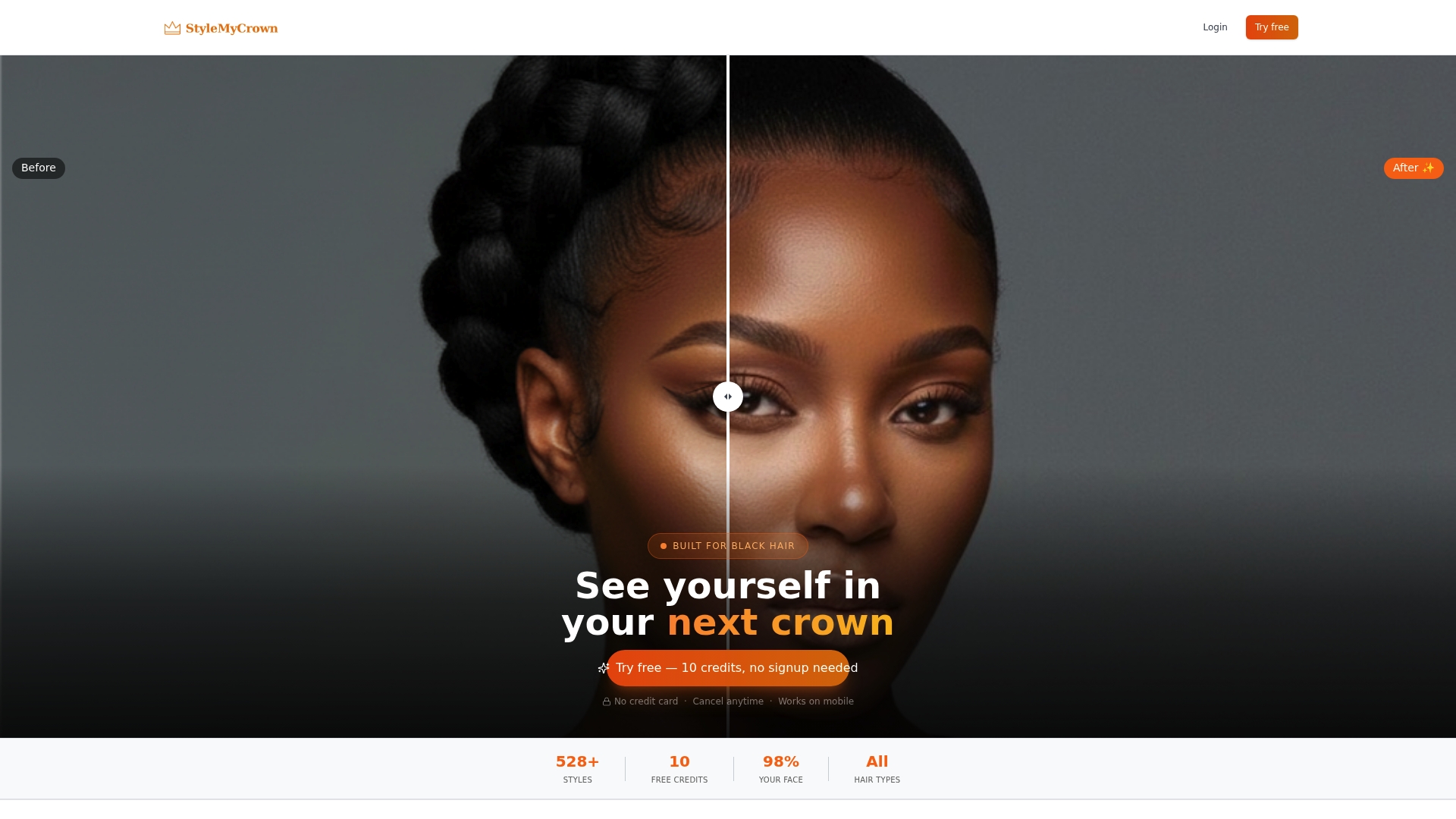
- Start with complimentary trial credits and test a few shades risk-free.
- Browse the full style catalog for placement ideas across textures.
- Check the 1 Week Trial and 4 Week Plan if you want more time to compare looks.
Remember that AR previews show you the vision, not the chemistry. Always patch test and consult a stylist before any dramatic color change, and if you want clinician-backed guidance on staged patch testing, this breakdown of a 7 to 10 day patch test walks through why staged testing lowers your risk.
Ready to see your next color before you commit? Explore Stylemycrown’s virtual try-on and start with your free credits today.
Sources
For deeper reading on hair-dye safety and shade inspiration, see the NHS guidance on hair dye reactions and Cleveland Clinic’s hair dye safety overview.
This article is general information, not a substitute for advice from a qualified doctor. Consult a qualified healthcare professional about your own circumstances before acting on anything here.
- NHS — Hair dye reactions
- Para-phenylenediamine allergy: current perspectives on diagnosis and management
- Essence — Why fall hair colors on deep skin will never go out of style
FAQ
What colors look better on dark skin?
Rich chocolate browns, warm coppers and auburns, jewel tones like burgundy and plum, and caramel or golden money pieces tend to look most flattering on dark skin. The right choice usually depends more on your undertone than on your skin depth alone.
What hair color do most African Americans have?
Natural hair color across the African American community varies widely, ranging from deep black to dark brown, since hair color is shaped by individual genetics rather than any single shared trait. There is no single dominant shade, which is exactly why undertone matching matters more than assumptions.
What colors to avoid with brown skin?
There’s no color that’s universally off-limits, but shades that clash with your undertone, like an ashy blonde on a warm undertone, can look dull rather than flattering. Working with your undertone, whether you match or intentionally contrast it, tends to give better results than avoiding entire color families.
Which shade is best for dark skin?
There’s no single best shade since it depends on your undertone and how much contrast you want. Warm undertones often glow in copper and caramel tones, while cooler undertones tend to shine in burgundy, plum, or deep jewel tones.


