Protect Your Edges: Knotless vs Box Braids, Preview Styles on Your Photo
Protect Your Edges: Knotless vs Box Braids, Preview Styles on Your Photo
Knotless braids win on comfort and scalp health because the feed-in technique skips the root knot that makes traditional box braids feel tight on day one. Box braids win on longevity and often cost less. Braid size, your braider’s skill, and how you maintain the style between washes change both outcomes, and Virtual try-on technology lets you preview either look before you sit in the chair.
TL;DR:
- Knotless braids reduce scalp tension and slacken the risk of traction alopecia, especially for sensitive edges, but tend to unravel sooner than box braids.
- Box braids, especially in medium or larger sizes, last longer and are more cost-effective, making them better for extended wear without frequent upkeep.
- Smaller braid sizes extend wear time and appearance, but they require more time, skill, and higher costs, regardless of style choice.
- Tension management and proper timing are more critical than the braid style itself, with styles kept beyond 10 weeks increasing scalp damage risk.
- Virtual try-on technology allows you to preview styles on your face before booking, helping you choose based on face shape and size preferences.
Table of Contents
- Knotless vs Box Braids: A Side-by-Side Comparison
- What Are Box Braids? Technique, Sizes, and Wear Time
- What Are Knotless Braids? The Feed-In Method Explained
- Pros, Cons, and Hair Health Trade-Offs
- Which Style Fits Your Lifestyle and Look Goals?
- Installation Time, Cost, and Takedown
- Christelle’s Take on Choosing With Your Photos First
- Final Recommendation: How to Decide and What to Ask
- The Real Decision Isn’t Knotless vs Box Braids, It’s Tension vs Time
- Sources
- FAQ
Knotless vs Box Braids: A Side-by-Side Comparison
The two styles share a name but behave differently on your scalp, your schedule, and your wallet. Here’s how they stack up across the factors that actually matter when you’re deciding.
- Installation technique: Box braids start with a knot at the root that anchors the extension hair. Knotless braids feed the extension in gradually, so there’s no knot pulling at your scalp.
- Tension and scalp comfort: Knotless braids put less initial tension on the scalp since the weight builds slowly instead of hitting all at once at the root.
- Longevity: Box braids often last longer than knotless styles, particularly in larger sizes, due to their secure knot at the root.
- Install time and cost: Box braids are quicker and cheaper. Knotless braids take longer and usually cost more because the technique demands more precision.
- Styling versatility: Both styles handle ponytails and updos, but knotless roots lie flatter, so sleek styles look cleaner right out of the chair.
- Takedown: Knotless braids tend to unravel with less pulling since there’s no knot to cut or work loose.
Best for sensitive edges: knotless. Best for travel or long trips: box braids, since they hold up longer without upkeep. Best for low upkeep overall: box braids in a medium size.
Pro Tip: Smaller braids of either style last longer and look more polished, but they take more chair time and cost more. If your budget or your patience is limited, go one size up.
What Are Box Braids? Technique, Sizes, and Wear Time
Box braids get their name from the square shaped parts sectioned into your natural hair. Each section starts with a knot where the extension hair attaches, which anchors the braid immediately but also puts the full weight of the extension at your root from the very first minute.
Here’s what that means in practice:
- The knot-at-root method creates instant tension, which is why some people feel a tight, heavy scalp for the first day or two after an install.
- Braid size drives everything else. Jumbo box braids install fast (sometimes under three hours) but strain the scalp more per braid. Small box braids take longer but distribute weight across more sections.
- Wear time typically runs 8 to 12 weeks depending on size and how well you maintain them, though most stylists recommend taking any braided style down by 8 to 10 weeks to avoid matting and buildup at the root.
- Risks include headaches, sore edges, and in repeated cases, traction alopecia from chronic pulling on the follicle. If your scalp is already sensitive or your edges are thinning, ask your braider for a looser install or consider knotless instead.
What Are Knotless Braids? The Feed-In Method Explained
Knotless braids skip the root knot entirely. Your braider starts with your own hair and feeds in small amounts of extension gradually, so the weight is distributed along the length of the braid instead of concentrating at the scalp.
That difference shows up fast:
- The feed-in technique is why knotless roots sit flatter against the scalp, giving you a more natural, seamless look right at the hairline.
- You can style immediately. High ponytails, slicked-back buns, middle parts, all of it works on day one because there’s no bump or knot breaking up the root.
- Wear time runs shorter, typically 4 to 8 weeks, with jumbo knotless sometimes needing a refresh in as little as two to four weeks since larger sections shift more without a knot to hold them in place.
- Boho and leave-out styles need extra care. The curly pieces mat faster than the braided base, so keep a lightweight mousse on hand and detangle those sections separately from the rest of your install.
Pros, Cons, and Hair Health Trade-Offs
Tension is the real story here, not aesthetics. A knot at the root pulls immediately, while a feed-in gradually eases weight onto the hair shaft. Repeated high-tension styling, regardless of which braid you choose, can eventually contribute to traction alopecia, and scalp and edge health matter more in the long run than squeezing an extra week out of any single install.
Each style carries its own situational downside:
- Box braids can feel uncomfortably tight for the first 24 to 48 hours, especially in smaller sizes or on fine edges.
- Knotless braids, because the root sits looser, sometimes show frizz or slippage earlier, particularly in humid weather.
- Either style worn past 10 weeks raises the risk of matting, buildup, and unnecessary strain on weakened strands.
- Braiders with inconsistent tension control can turn either style into a scalp problem, regardless of the technique’s reputation.
Practical safeguards go a long way: ask for a looser install around your hairline, alternate between braided and non-braided protective styles between installs, and don’t let any braided style ride past the 8 to 10 week mark just because it still looks fine on the surface.
Pro Tip: Before you book, ask your braider directly how they manage tension around the edges and how many years they’ve spent doing knotless specifically. Skill matters more here than almost any other factor in this comparison.
Which Style Fits Your Lifestyle and Look Goals?
Your daily routine should drive this decision as much as your hair type does.
- If your edges are sensitive or you’ve dealt with thinning before, knotless is the safer starting point.
- If you’re traveling and won’t have access to a braider for weeks, box braids in a medium size give you more runway.
- If you want the lowest upkeep possible, box braids need less daily attention since there’s no leave-out curl pattern to refresh.
- If you’re active or sweat heavily, smaller braids of either style hold up better in humidity and during workouts than jumbo sizes.
Braid length changes the math too. Longer braids add weight, which means more root strain on box braids and faster sag on knotless styles. Shoulder-length or shorter installs tend to hold their shape longer regardless of which technique you choose.
Installation Time, Cost, and Takedown
Box braids typically install in three to six hours depending on size. Knotless braids often run longer, sometimes six to eight hours for smaller sizes, because the feed-in technique demands more precision from the braider.
That extra time shows up in the price. Knotless braids usually cost more than box braids for a comparable size and length, and many braiders charge a premium specifically because knotless requires more skill and training to execute without knots or lumps at the root.
- Budget more for knotless, especially in smaller sizes or with added length.
- Takedown on knotless braids tends to feel gentler since there’s no knot to cut or tug loose.
- Whichever style you remove, work in small sections, saturate with conditioner first, and never rip through matted areas.
Christelle’s Take on Choosing With Your Photos First
You don’t have to guess how either style will look on you. Stylemycrown’s virtual try-on lets you preview knotless braid styles on your own photo before committing your time, money, or edges to an install.
That matters more than people admit. Braid size and root shape look different on every face, and a style that photographs beautifully on someone else’s timeline might sit heavier or lighter on your particular hairline than you expect.
- See how different braid sizes frame your face before you sit in the chair for six hours.
- Compare knotless and box braid looks side by side using your actual photo.
- Use your complimentary trial credits to test a few options with zero commitment.
- Browse the protective hairstyle guide for more context on how each style fits into a longer rotation.
Final Recommendation: How to Decide and What to Ask
If comfort and edge health top your priority list, choose knotless. If you need longer wear time on a tighter budget, box braids are the more practical call. Either way, alternate protective styles over time instead of chasing back to back installs on the same stressed sections of hair.
- Ask your braider how they control tension at the root and around your hairline.
- Ask what braid size they recommend for your hair density and the length you want.
- Ask what wear time they suggest and confirm it falls within the 8 to 10 week window.
For the first two weeks: keep your scalp moisturized, sleep with a satin cap or pillowcase, avoid heavy products at the root, watch for unusual soreness, and plan your removal date before you even leave the chair.
Pro Tip: Set a calendar reminder for week seven, whichever style you choose. That gives you a buffer to book takedown before you hit the outer edge of safe wear time.
The Real Decision Isn’t Knotless vs Box Braids, It’s Tension vs Time
Most comparisons frame this as a style preference, but the research keeps pointing to the same variable: tension. Knotless wins on comfort because it removes the one design flaw that makes box braids painful in the first place, the root knot. That’s not a small thing if you’ve ever sat through a install that left your scalp sore for two days straight.
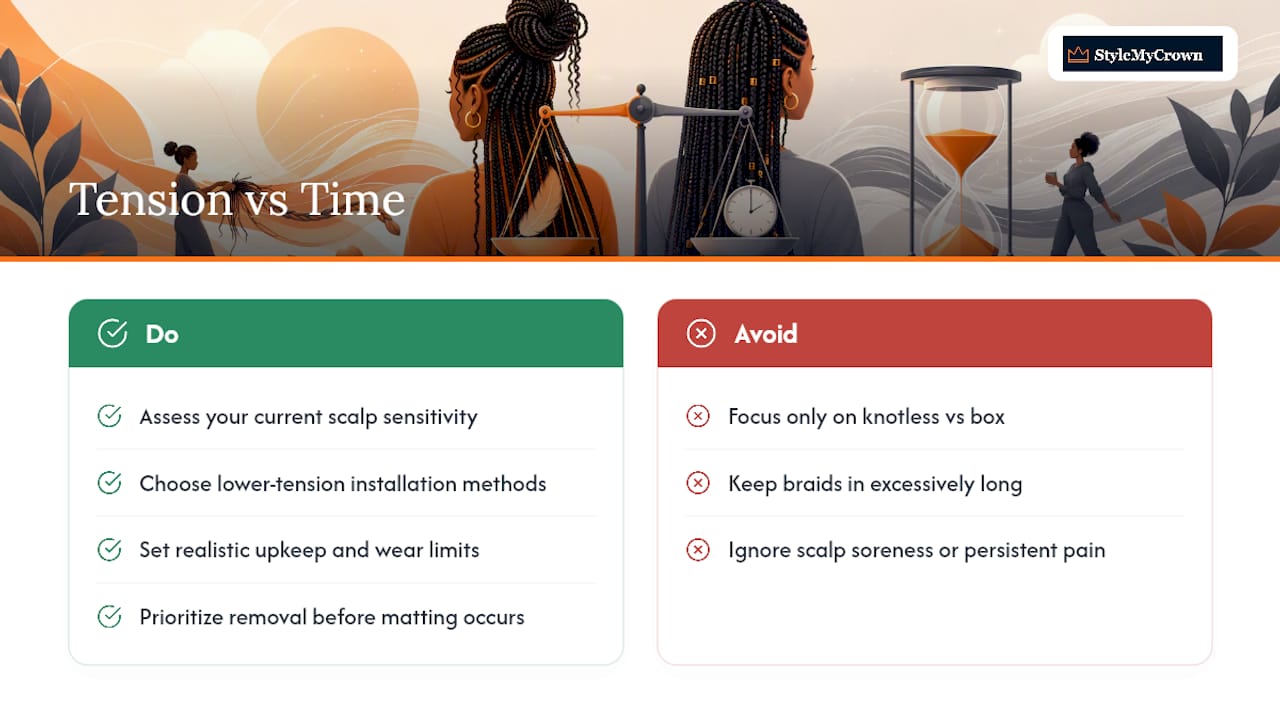
Where I think the conventional advice falls short is the obsession with which style lasts longer. Longevity sounds like a win until you’re the person who kept jumbo box braids in for 13 weeks because they “still looked fine.” Stylists see the aftermath of that decision more than they see the compliments. Wear time guidance exists because matting and follicle stress build quietly, not because anyone wants to rush you back into the chair.
What should come first is honest self-assessment: how sensitive is your scalp right now, and how much upkeep can you realistically commit to. Everything else, size, cost, style, is negotiable once you answer that.
— Christelle
Sources
- Hair
- Knotless braids 101: A beginner’s tutorial (L’Oréal Paris)
- Box braids vs knotless braids (The4Chair)
FAQ
What Are the Disadvantages of Knotless Braids?
Knotless braids can shift or loosen faster than box braids since there’s no root knot holding the extension in place, which sometimes means earlier frizz or slippage. They also cost more and take longer to install because the feed-in technique requires more precision from your braider.
Which Braids Are Better for Hair Growth?
Knotless braids generally put less strain on the scalp from the start, which supports healthier hairlines over time, but neither style guarantees faster growth. The bigger factor is avoiding chronic tension altogether, since repeated pulling can contribute to traction alopecia regardless of which braid style you choose.
What Is the Least Damaging Braid Style?
Knotless braids, installed with proper tension control, tend to be gentler on the scalp because the feed-in method distributes weight gradually instead of concentrating it at the root. That said, any style becomes damaging if it’s installed too tight or worn past the recommended removal window.
Why Do Knotless Braids Not Last as Long?
Knotless braids typically last 4 to 8 weeks because there’s no knot anchoring the extension at the root, so the braid can loosen or shift sooner, especially in larger sizes. Jumbo knotless installs may need a refresh in as little as two to four weeks, while smaller sizes tend to hold up closer to the eight week mark.


